Winter Christian, Hiester Andreas
Department of Urology, University of Duesseldorf, Medical Faculty, Heinrich-Heine-University, Duesseldorf, Germany.
Asian J Urol. 2021 Apr;8(2):161-169. doi: 10.1016/j.ajur.2021.03.001. Epub 2021 Mar 6.
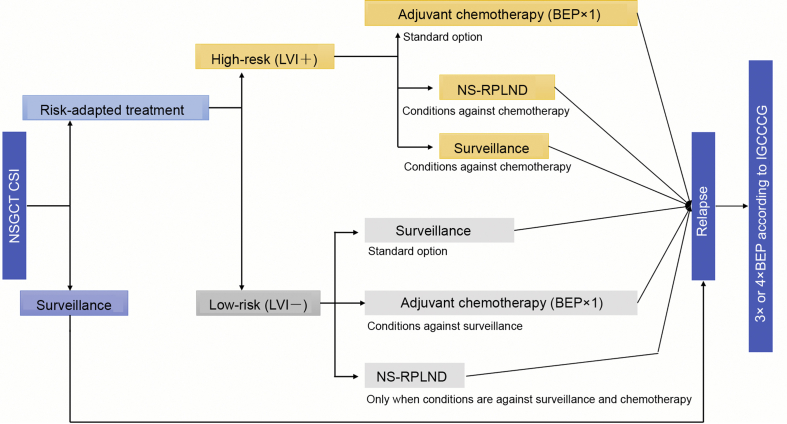
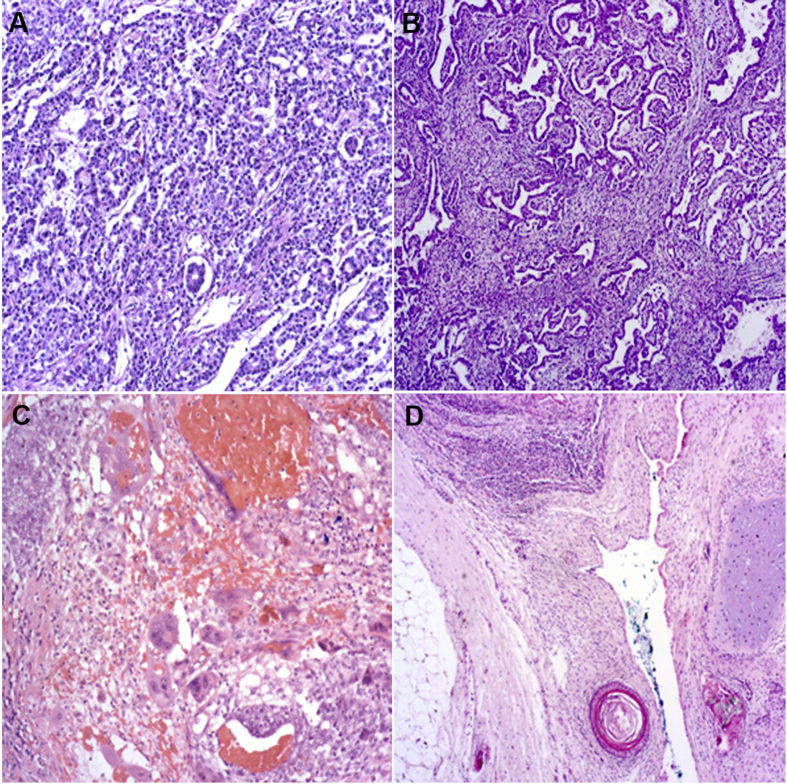
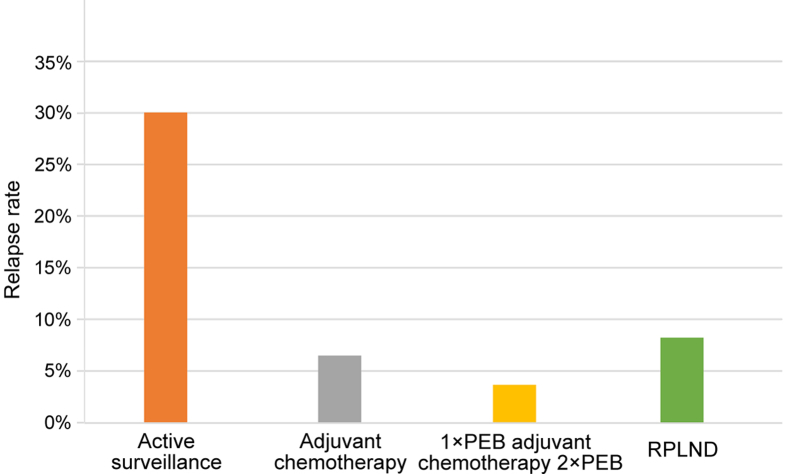
Germ cell cancers are the most common solid tumors among men between 15 and 40 years. Non-seminomatous germ cell tumors (NSGCTs) represent a unique and exclusive cohort of germ cell tumor patients. Non-seminoma can harbor different histologic components. The most commonly found histologies are embryonal cell cancer, teratoma, yolk sack tumor and choriocarcinoma, as well as teratocarcinoma and seminoma, in combination with non-seminomatous germ cell tumors histologic types. The clinical definition of stage I non-seminoma is the absence of metastatic lesions on imaging and normal tumor markers. The cure rate for clinical stage I NSGCT is 99% and this can be achieved by three therapeutic strategies: Active surveillance with treatment at the time of relapse, retroperitoneal lymph node dissection or adjuvant chemotherapy. The balancing of these various strategies should always be based on an individual risk profile of NGSCG patient depending on the lymphovascular invasion of the tumor.
生殖细胞癌是15至40岁男性中最常见的实体瘤。非精原细胞瘤性生殖细胞肿瘤(NSGCT)代表了生殖细胞肿瘤患者中一个独特且排他的群体。非精原细胞瘤可包含不同的组织学成分。最常见的组织学类型是胚胎性细胞癌、畸胎瘤、卵黄囊瘤和绒毛膜癌,以及畸胎癌和精原细胞瘤,与非精原细胞瘤性生殖细胞肿瘤的组织学类型相结合。临床I期非精原细胞瘤的定义是影像学上无转移病灶且肿瘤标志物正常。临床I期NSGCT的治愈率为99%,这可以通过三种治疗策略实现:复发时进行治疗的主动监测、腹膜后淋巴结清扫或辅助化疗。这些不同策略的权衡应始终基于NGSCG患者的个体风险状况,这取决于肿瘤的淋巴管浸润情况。