Yuminaga Yuigi, Rothe Chris, Kam Jonathan, Beattie Kieran, Arianayagam Mohan, Bui Chuong, Canagasingham Bertram, Ferguson Richard, Khadra Mohamed, Ko Raymond, Le Ken, Nguyen Diep, Varol Celi, Winter Matthew
Nepean Urology Research Group, Nepean Hospital, Penrith New South Wales, Australia.
Nepean Radiology Research Group, Nepean Hospital, Penrith New South Wales, Australia.
Asian J Urol. 2021 Apr;8(2):170-175. doi: 10.1016/j.ajur.2020.02.001. Epub 2020 Feb 10.
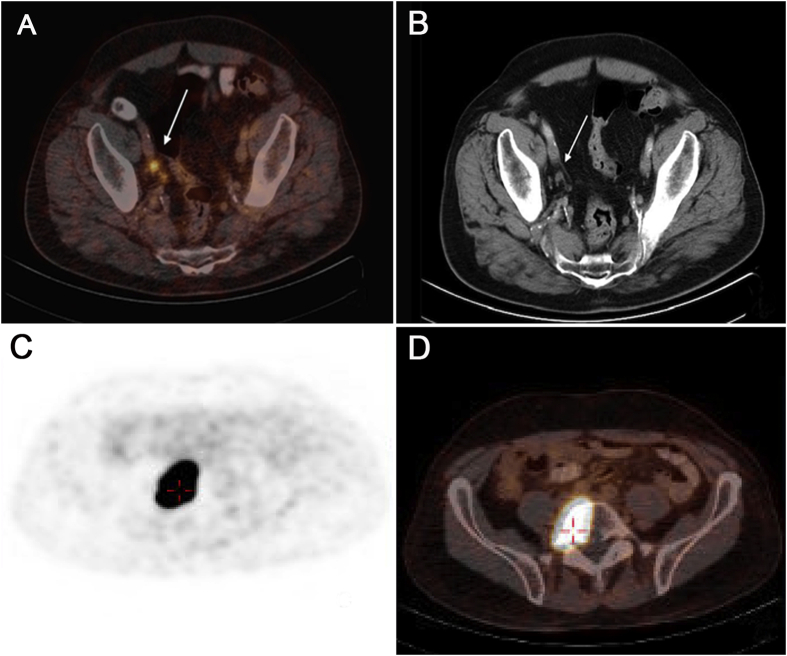
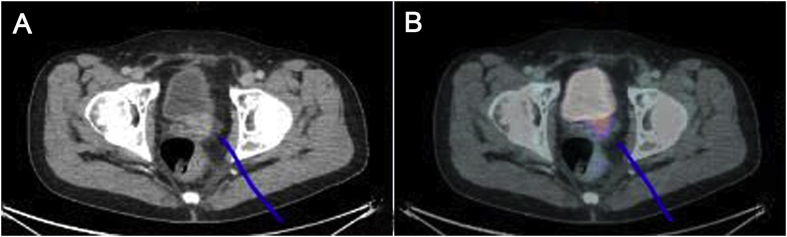
To evaluate the use of Gallium-68 prostate-specific membrane antigen positron emission tomography/computed tomography (Ga-PSMA PET/CT), compared with conventional CT abdomen/pelvis (CTAP) and whole body single photon emission CT bone scan (BS), for detection of local or distant metastasis following biochemical failure/recurrence in post-prostatectomy patients.
We conducted a review of our prospectively maintained, institutional database to identify 384 patients with post-prostatectomy biochemical failure/recurrence who underwent PSMA PET/CT, CTAP and BS from February 2015 to August 2017 in Nepean Hospital, tertiary referral centre. The results of the three imaging modalities were analysed for their ability to detect local recurrence and distant metastases. PSMA PET/CT and CTAP imaging were separately performed on the same day and the BS was performed within several days (mostly in 24 h). Difference in detection rates was determined between the modalities and the Chi square test was used to determine significance.
A total of 384 patients were identified with a median prostate-specific antigen (PSA) of 0.465 ng/mL (interquartile range =0.19-2.00 ng/mL). Overall, PSMA PET/CT was positive for 245 (63.8%) patients whereas CTAP and BS were positive in 174 patients (45.3%). A total of 98 patients (25.5%) had local or distant metastasis detected on PSMA only, while 20 patients (5.2%) had recurrences detected on CTAP but not on PSMA PET/CT.
The use of PSMA PET/CT has a higher detection rate of predicted local or distant metastasis compared to CTAP and BS in the staging of patients with biochemical recurrences after radical prostatectomy.
评估镓68前列腺特异性膜抗原正电子发射断层扫描/计算机断层扫描(Ga-PSMA PET/CT)与传统腹部/盆腔计算机断层扫描(CTAP)及全身单光子发射计算机断层扫描骨扫描(BS)相比,在前列腺切除术后患者生化失败/复发后检测局部或远处转移的应用价值。
我们对前瞻性维护的机构数据库进行了回顾,以确定2015年2月至2017年8月在三级转诊中心内佩恩医院接受PSMA PET/CT、CTAP和BS检查的384例前列腺切除术后生化失败/复发患者。分析了这三种成像方式检测局部复发和远处转移的能力。PSMA PET/CT和CTAP成像在同一天分别进行,BS在数天内(大多在24小时内)进行。确定各检查方式之间的检出率差异,并使用卡方检验确定其显著性。
共确定384例患者,前列腺特异性抗原(PSA)中位数为0.465 ng/mL(四分位间距=0.19 - 2.00 ng/mL)。总体而言,PSMA PET/CT检查中245例(63.8%)患者呈阳性,而CTAP和BS检查中174例(45.3%)患者呈阳性。共有98例(25.5%)患者仅在PSMA检查中发现局部或远处转移,而20例(5.2%)患者在CTAP检查中发现复发但在PSMA PET/CT检查中未发现。
在根治性前列腺切除术后生化复发患者的分期中,与CTAP和BS相比,PSMA PET/CT对预测局部或远处转移的检出率更高。