Haddad Naim, Melikyan Gayane, Alarcon Gonzalo, Shaheen Yanal, Siddiqi Maria, Ali Elfateh, Mesraoua Boulenouar, AlHail Hassan, Al-Abdulghani Abdulaziz, Alrabi Abdulraheem, Syamala Anitha, Kazi Farhana, Mahfoud Ziyad
Hamad Medical Corporation, PO Box 3050, Doha, Qatar.
Weill Cornell Medicine-Qatar, PO Box 24144, Education City, Doha, Qatar.
Clin Neurophysiol Pract. 2021 Apr 1;6:123-128. doi: 10.1016/j.cnp.2021.02.006. eCollection 2021.
To assess the gain in detection of epileptiform abnormalities in 24-hour EEG recordings following the first seizure.
We identified patients who underwent 24-hour video EEG (VEEG) with "first seizure" as an indication. We noted the presence or absence of epileptiform discharges (EDs) in the VEEG study and the latency for the appearance of such discharges. We compared the rate of EDs during the initial 60 min with those occurring only later during the recording.
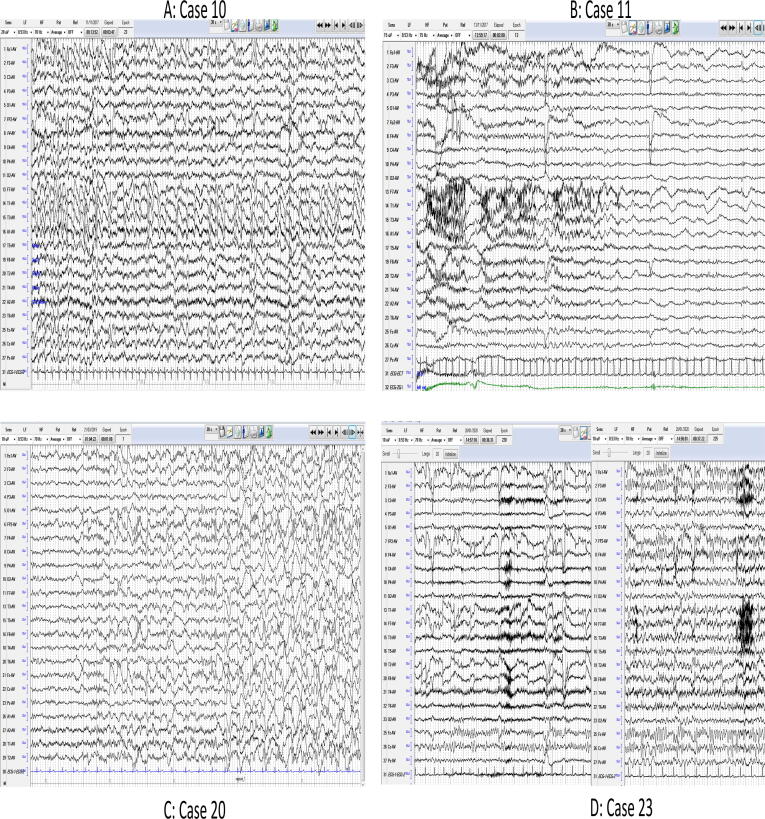
Data from 25 patients, aged 15 to 59, were included. Of the 11 patients with EDs, eight (73%) appeared only after 60 min of recording. This equates to a 32% absolute increase in the detection of EDs across all patients. The latency to first EDs varied from one to 1080 min with a median of 170 min. In four cases, actual subtle seizures were recorded.
This study suggests an increase in the detection of EDs with the 24-hour studies compared to the traditional shorter recordings, in the context of a first seizure.
A standard EEG can be performed close to the seizure, followed by a longer up to 24-hour recording if the initial shorter study is unrevealing.
评估首次发作后24小时脑电图记录中癫痫样异常的检出率增加情况。
我们确定了以“首次发作”为指征接受24小时视频脑电图(VEEG)检查的患者。我们记录了VEEG研究中癫痫样放电(EDs)的有无以及此类放电出现的潜伏期。我们比较了最初60分钟内的EDs发生率与仅在记录后期出现的EDs发生率。
纳入了25例年龄在15至59岁之间的患者。在11例有EDs的患者中,8例(73%)仅在记录60分钟后出现。这相当于所有患者中EDs检出率绝对增加了32%。首次出现EDs的潜伏期为1至1080分钟,中位数为170分钟。有4例记录到了实际的轻微发作。
本研究表明,在首次发作的情况下,与传统的较短记录相比,24小时研究中EDs的检出率有所增加。
在接近发作时可进行标准脑电图检查,如果最初较短的检查未发现异常,则随后进行长达24小时的更长记录。