Kneussel Matthias, Sánchez-Rodríguez Noelia, Mischak Michaela, Heisler Frank F
Department of Molecular Neurogenetics, Center for Molecular Neurobiology, ZMNH, University Medical Center HamburgEppendorf, Falkenried 94, 20251 Hamburg, Germany.
iScience. 2021 Apr 9;24(5):102416. doi: 10.1016/j.isci.2021.102416. eCollection 2021 May 21.
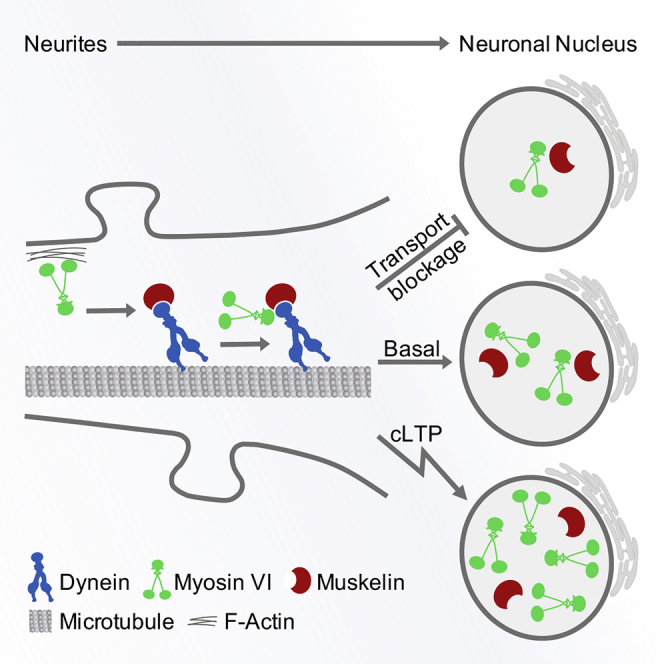
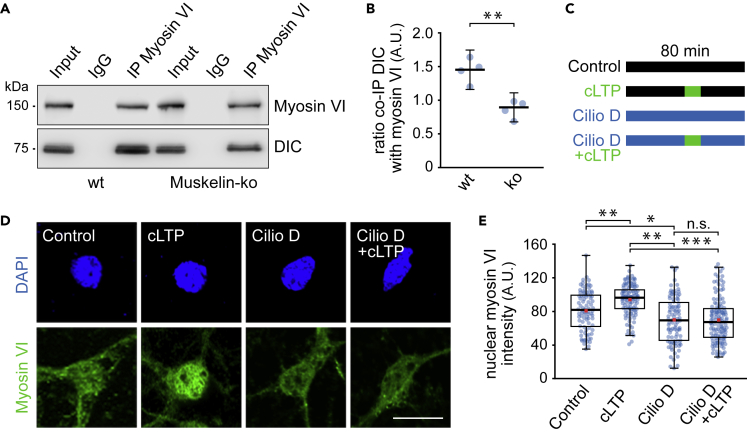
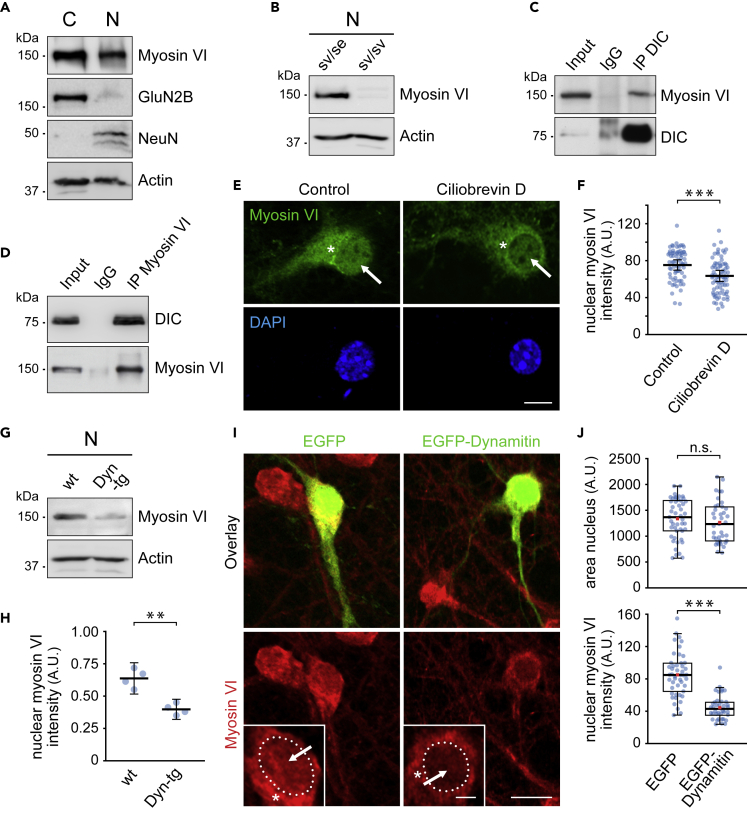
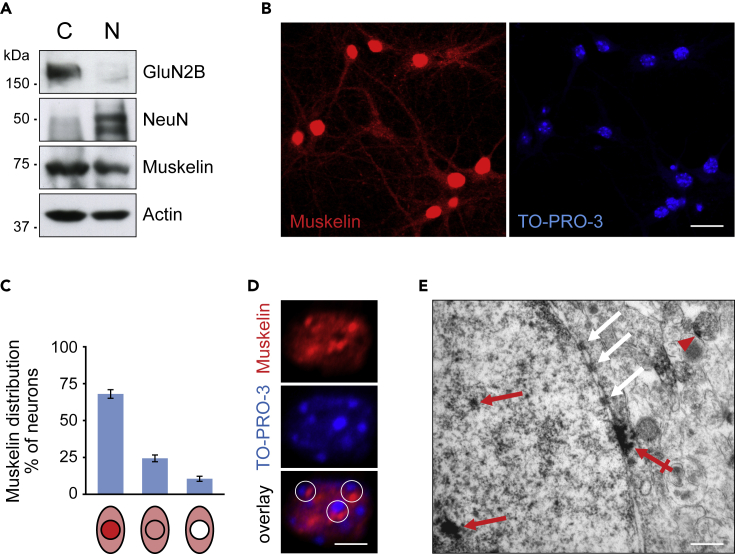
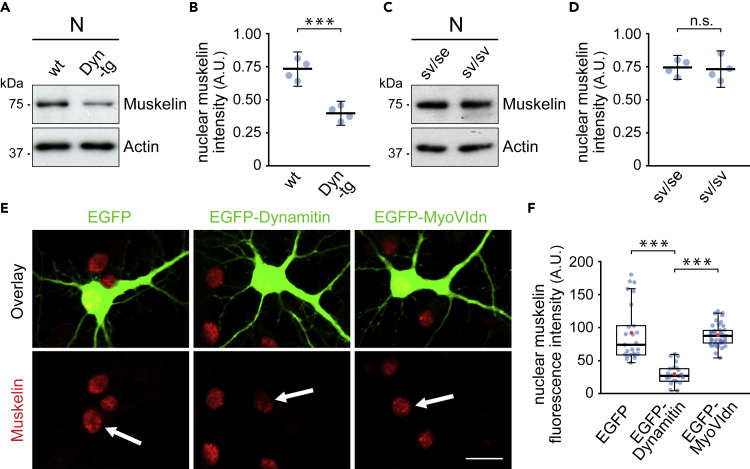
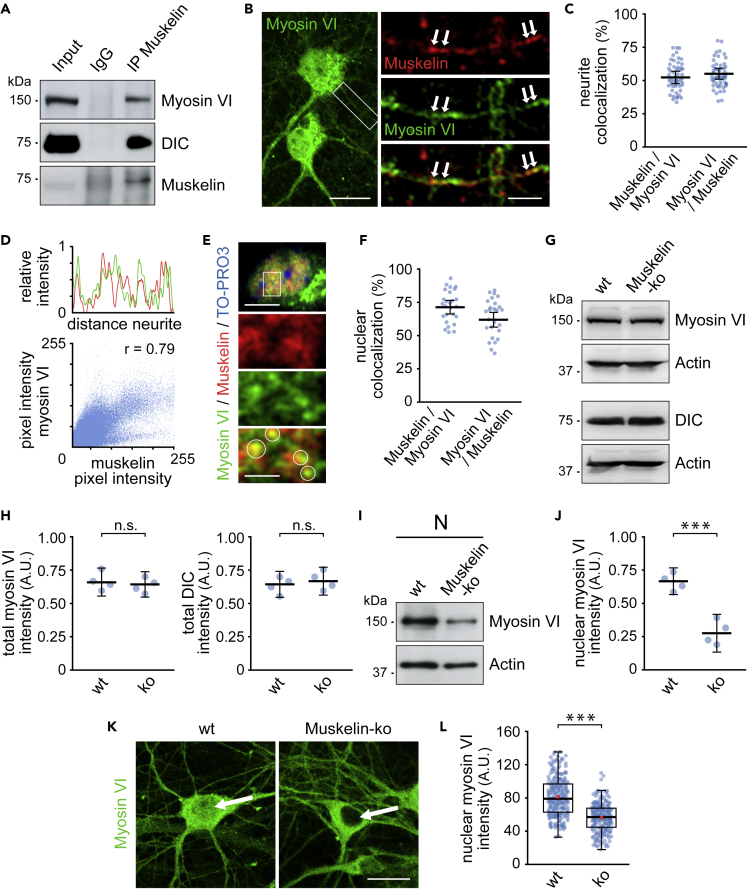
Protein transport toward the nucleus is important for translating molecular signals into gene expression changes. Interestingly, the unconventional motor protein myosin VI regulates RNA polymerase II-dependent gene transcription. Whether actin-filament-dependent myosins are actively transported to nuclear compartments remains unknown. Here, we report that neurons also contain myosin VI inside their nucleus. Notably, nuclear appearance of this actin-dependent motor depends on functional cytoplasmic dynein, a minus end-directed microtubule motor. We find that the trafficking factor muskelin assists in the formation of dynein-myosin VI interactions and further localizes to nuclear foci, enriched in the myosin. Impairment of dynein, but not myosin VI function, reduces nuclear muskelin levels. In turn, muskelin represents a critical determinant in regulating myosin VI nuclear targeting. Our data reveal that minus end-directed microtubule transport determines myosin VI subcellular localization. They suggest a pathway of cytoplasm-to-nucleus trafficking that requires muskelin and is based on dynein-myosin cross talk.
蛋白质向细胞核的运输对于将分子信号转化为基因表达变化至关重要。有趣的是,非常规运动蛋白肌球蛋白VI调节RNA聚合酶II依赖性基因转录。肌动蛋白丝依赖性肌球蛋白是否被主动运输到核区室仍然未知。在这里,我们报告神经元的细胞核内也含有肌球蛋白VI。值得注意的是,这种肌动蛋白依赖性运动蛋白的核定位取决于功能性胞质动力蛋白,一种向微管负端运动的马达蛋白。我们发现运输因子肌动蛋白结合蛋白有助于动力蛋白-肌球蛋白VI相互作用的形成,并进一步定位于富含肌球蛋白的核灶。动力蛋白功能受损,但肌球蛋白VI功能不受影响,会降低细胞核内肌动蛋白结合蛋白水平。反过来,肌动蛋白结合蛋白是调节肌球蛋白VI核靶向的关键决定因素。我们的数据表明,向微管负端的运输决定了肌球蛋白VI的亚细胞定位。它们提示了一条从细胞质到细胞核的运输途径,该途径需要肌动蛋白结合蛋白,并且基于动力蛋白-肌球蛋白的相互作用。