Brown Caitlin S, Rabinstein Alejandro A, Nystrom Erin M, Britton Jeffrey W, Singh Tarun D
Department of Pharmacy, Mayo Clinic, Rochester, MN, United States.
Department of Neurology, Mayo Clinic, Rochester, MN, United States.
Epilepsy Behav Rep. 2021 Mar 22;16:100439. doi: 10.1016/j.ebr.2021.100439. eCollection 2021.
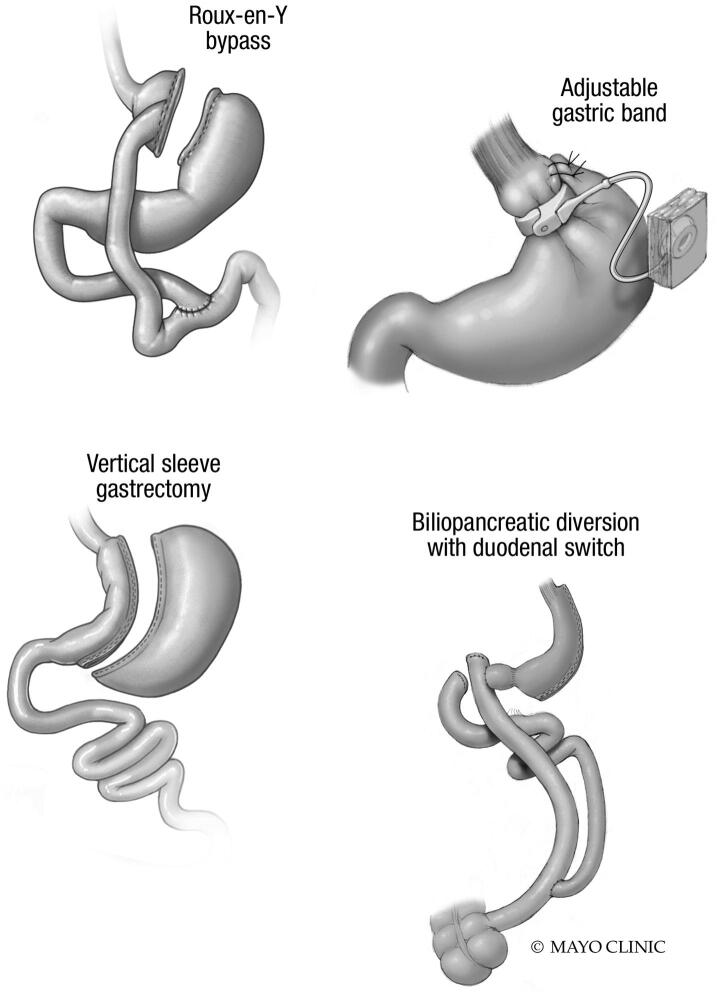
Healthcare professionals are encountering an increasing number of patients who have undergone bariatric surgeries. Antiseizure medications (ASM) have a narrow therapeutic window, and patients with malabsorptive states receiving ASM present a complex situation as the pharmacokinetics of these drugs have only been studied in patients with a normal functioning gastrointestinal tract. Patients with malabsorptive states may have altered pharmacokinetics, and there is limited literature to guide drug selection and dosage adjustment in patients with malabsorptive states. This review highlights pharmacokinetic parameters of common ASM, and considerations when managing patients on them. The effect of pH, lipophilicity, absorption, and metabolism should be taken into account when selecting and managing ASMs in this patient population. Based on these parameters, levetiracetam, and topiramate have fewer issues referable to absorption related to bariatric surgery while oral formulations of phenytoin, carbamazepine, oxcarbamazepine and valproic acid have reduced absorption due to effects of bariatric surgery based on the pharmacokinetic properties of these medications. Extended formulations should be avoided and ASM serum concentrations should be checked before and after surgery. The care of patients with epilepsy who are scheduled to undergo bariatric surgery should be guided by a multidisciplinary team including a pharmacist and a neurologist who should be involved in the adjustment of the ASMs throughout the pre-surgical and post-surgical periods.
医疗保健专业人员正面临越来越多接受过减肥手术的患者。抗癫痫药物(ASM)的治疗窗较窄,而接受ASM治疗的吸收不良状态患者情况复杂,因为这些药物的药代动力学仅在胃肠道功能正常的患者中进行过研究。吸收不良状态的患者可能会有改变的药代动力学,并且指导吸收不良状态患者药物选择和剂量调整的文献有限。本综述强调了常见ASM的药代动力学参数,以及在管理使用这些药物的患者时的注意事项。在该患者群体中选择和管理ASM时,应考虑pH值、亲脂性、吸收和代谢的影响。基于这些参数,左乙拉西坦和托吡酯与减肥手术相关的吸收问题较少,而苯妥英、卡马西平、奥卡西平和丙戊酸的口服制剂由于减肥手术的影响,基于这些药物的药代动力学特性,吸收减少。应避免使用缓释制剂,术前和术后应检查ASM血清浓度。计划接受减肥手术的癫痫患者的护理应由多学科团队指导,该团队包括一名药剂师和一名神经科医生,他们应在整个术前和术后期间参与ASM的调整。