Molecular Engineering Laboratory, Department of Applied Science and Technology, Politecnico di Torino, Corso Duca degli Abruzzi 24, Torino 10129, Italy.
Department of Pharmacy, Ludwig-Maximilians-University, 81377 Munich, Germany.
Mol Pharm. 2021 Jun 7;18(6):2322-2333. doi: 10.1021/acs.molpharmaceut.1c00135. Epub 2021 May 17.
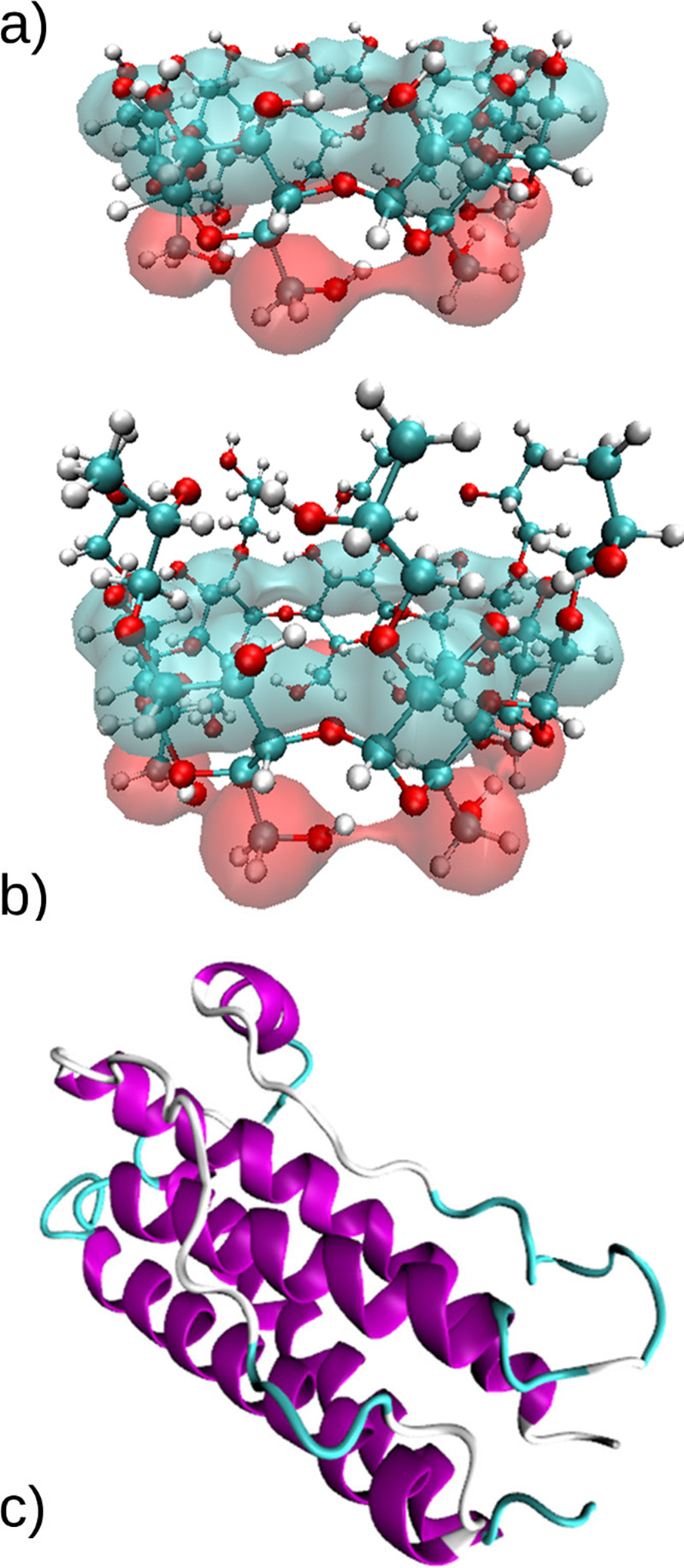
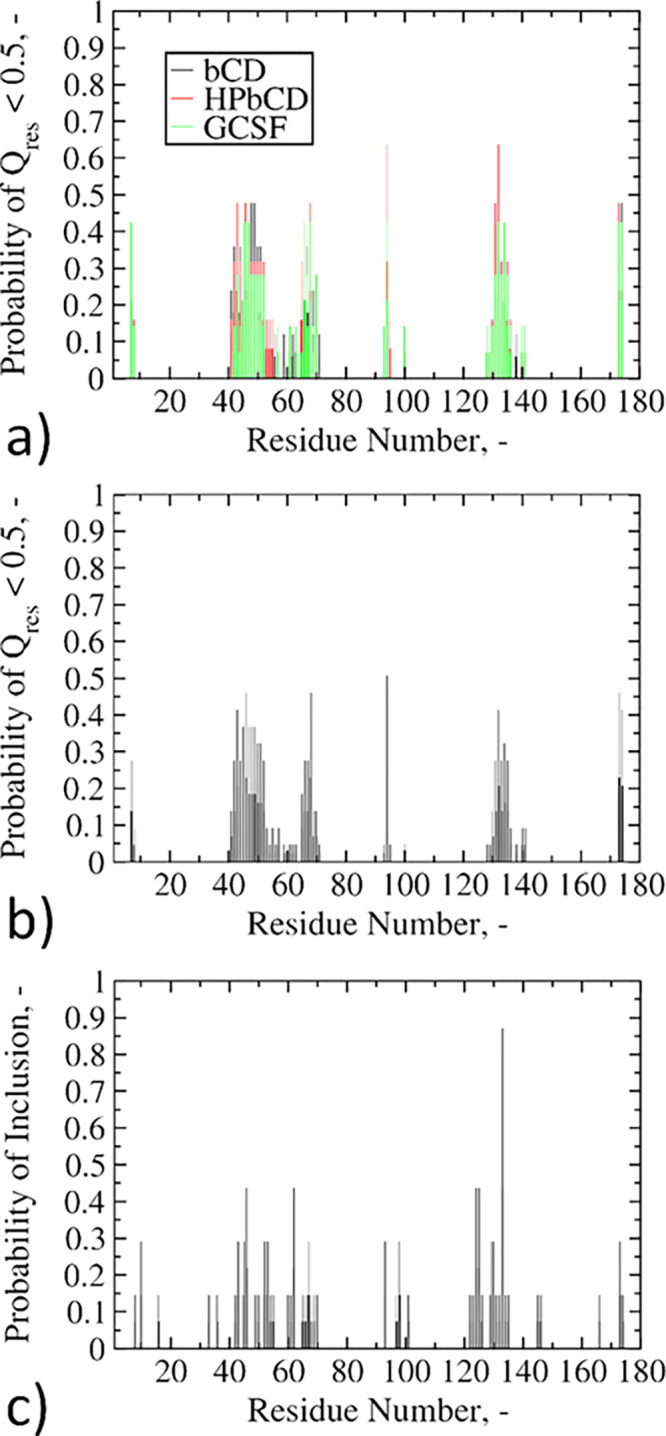
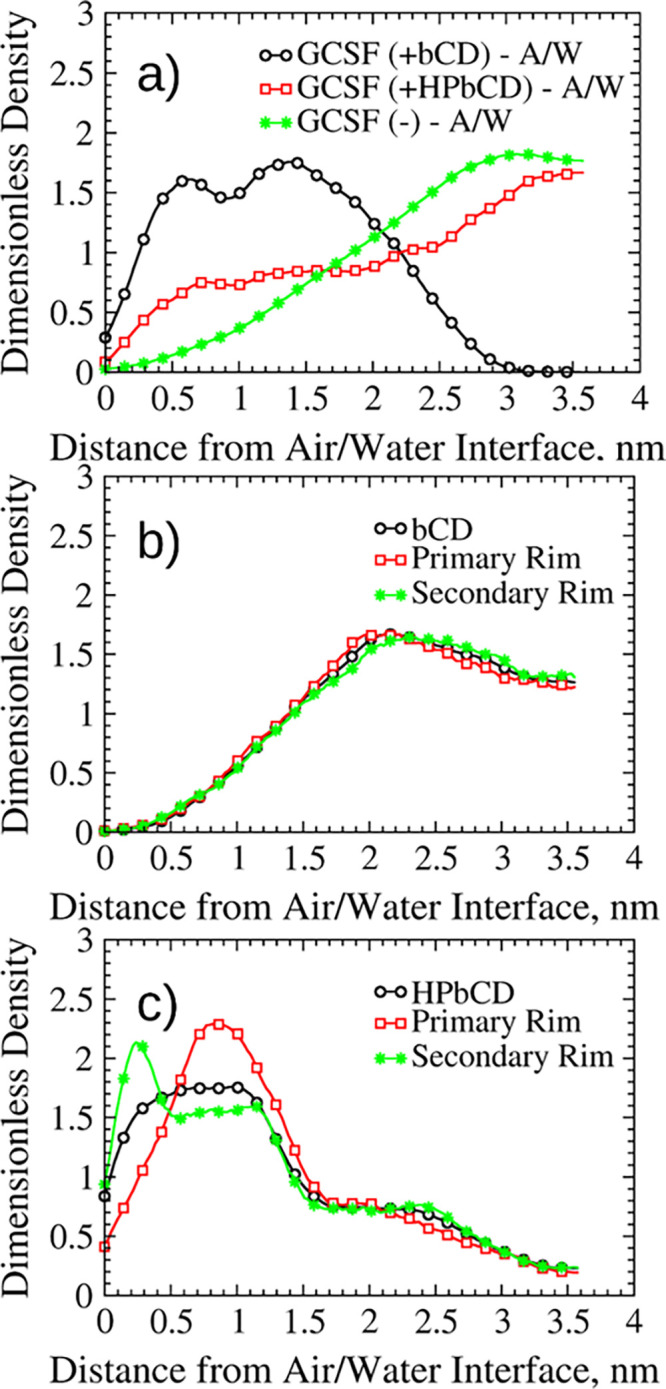
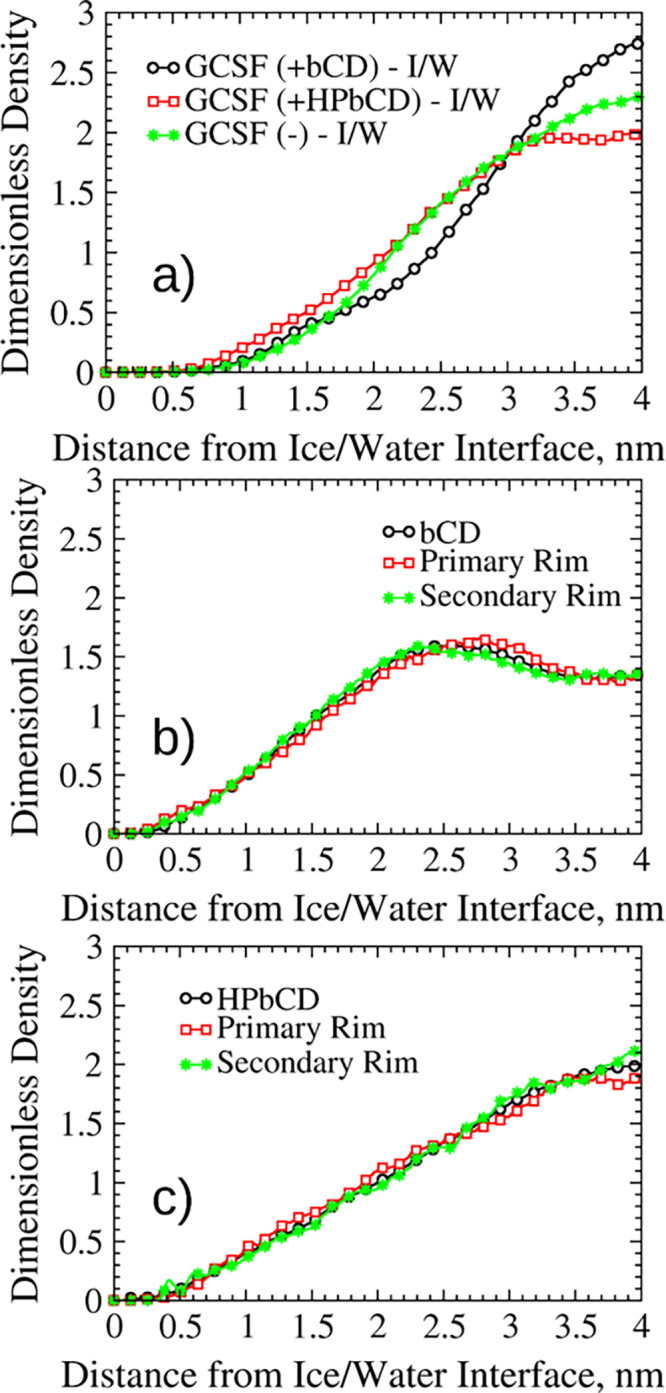
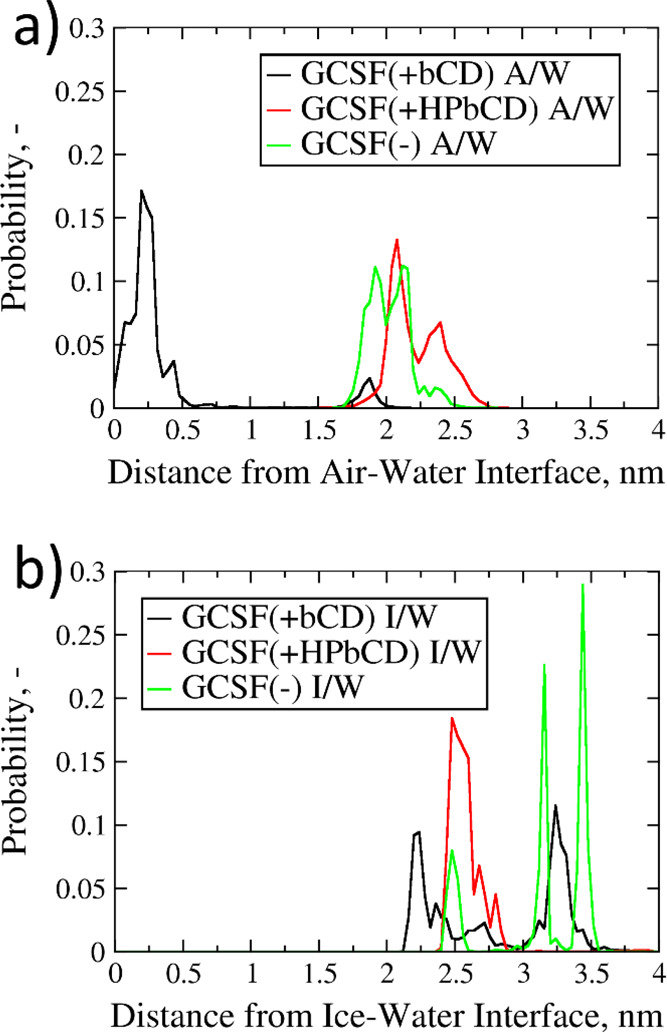
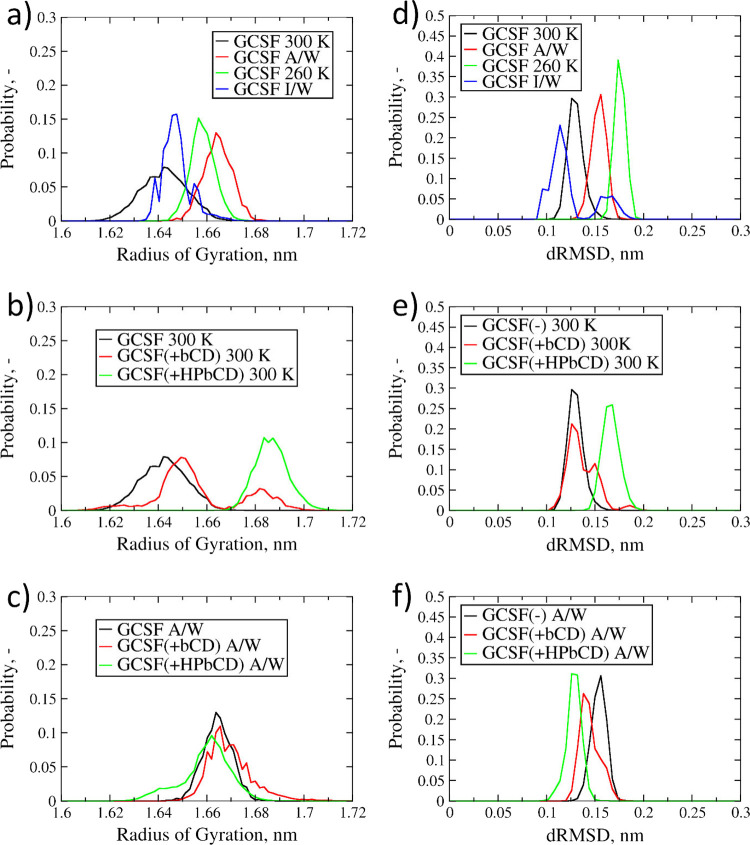
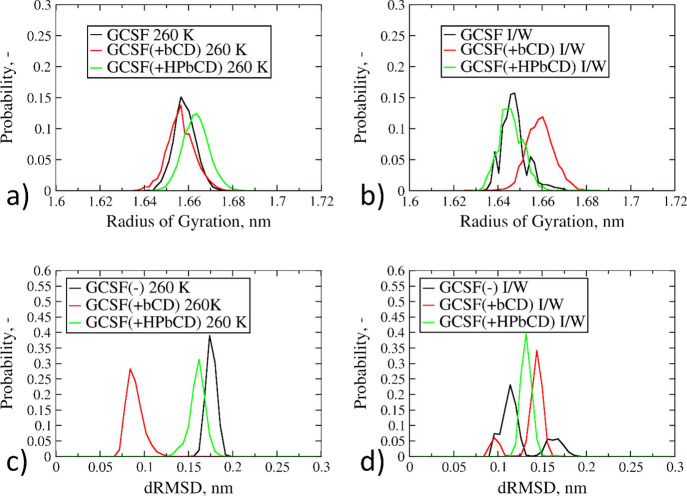
Protein-based pharmaceutical products are subject to a variety of environmental stressors, during both production and shelf-life. In order to preserve their structure, and, therefore, functionality, it is necessary to use excipients as stabilizing agents. Among the eligible stabilizers, cyclodextrins (CDs) have recently gained interest in the scientific community thanks to their properties. Here, a computational approach is proposed to clarify the role of β-cyclodextrin (βCD) and 2-hydroxypropyl-β-cyclodextrin (HPβCD) against granulocyte colony-stimulating (GCSF) factor denaturation at the air-water and ice-water interfaces, and also in bulk water at 300 or 260 K. Both traditional molecular dynamics (MD) simulations and enhanced sampling techniques (metadynamics, MetaD) are used to shed light on the underlying molecular mechanisms. Bulk simulations revealed that CDs were preferentially included within the surface hydration layer of GCSF, and even included some peptide residues in their hydrophobic cavity. HPβCD was able to stabilize the protein against surface-induced denaturation in proximity of the air-water interface, while βCD had a destabilizing effect. No remarkable conformational changes of GCSF, or noticeable effect of the CDs, were instead observed at the ice surface. GCSF seemed less stable at low temperature (260 K), which may be attributed to cold-denaturation effects. In this case, CDs did not significantly improve conformational stability. In general, the conformationally altered regions of GCSF seemed not to depend on the presence of excipients that only modulated the extent of destabilization with either a positive or a negative effect.
蛋白质类药物产品在生产和保质期内会受到各种环境胁迫因素的影响。为了保持其结构和功能,需要使用赋形剂作为稳定剂。在合格的稳定剂中,环糊精(CDs)由于其特性最近引起了科学界的兴趣。在这里,提出了一种计算方法来阐明β-环糊精(βCD)和 2-羟丙基-β-环糊精(HPβCD)在空气-水和冰-水界面以及在 300 或 260 K 时的体相水中对抗粒细胞集落刺激因子(GCSF)变性的作用。传统的分子动力学(MD)模拟和增强采样技术(元动力学,MetaD)都用于阐明潜在的分子机制。体相模拟表明,CDs 优先包含在 GCSF 的表面水合层中,甚至将一些肽残基包含在其疏水性腔中。HPβCD 能够在靠近空气-水界面的位置稳定蛋白质免受表面诱导的变性,而βCD 则具有使蛋白质不稳定的作用。在冰表面,没有观察到 GCSF 的明显构象变化或 CDs 的明显作用。GCSF 在低温(260 K)下似乎不太稳定,这可能归因于冷变性效应。在这种情况下,CDs 并没有显著改善构象稳定性。总的来说,GCSF 的构象改变区域似乎不依赖于赋形剂的存在,赋形剂仅以正或负的影响调节失稳的程度。