Beresford Thomas, Ronan Patrick J, Hipp Daniel
Laboratory for Clinical and Translational Research in Psychiatry, Rocky Mountain Regional VA Medical Center, Aurora, CO, United States.
Department of Psychiatry, School of Medicine, University of Colorado, Aurora, CO, United States.
JMIR Form Res. 2021 Jun 14;5(6):e26417. doi: 10.2196/26417.
Early clinical experience during the COVID-19 pandemic has begun to elucidate that the disease can cause brain function changes that may result in compromised cognition both acutely and during variable recovery periods. Reports on cognitive assessment of patients with COVID-19 are often limited to orientation alone. Further assessment may seem to create an inappropriate burden for patients with acute COVID-19, which is characterized by fatigue and confusion, and may also compromise examiner safety.
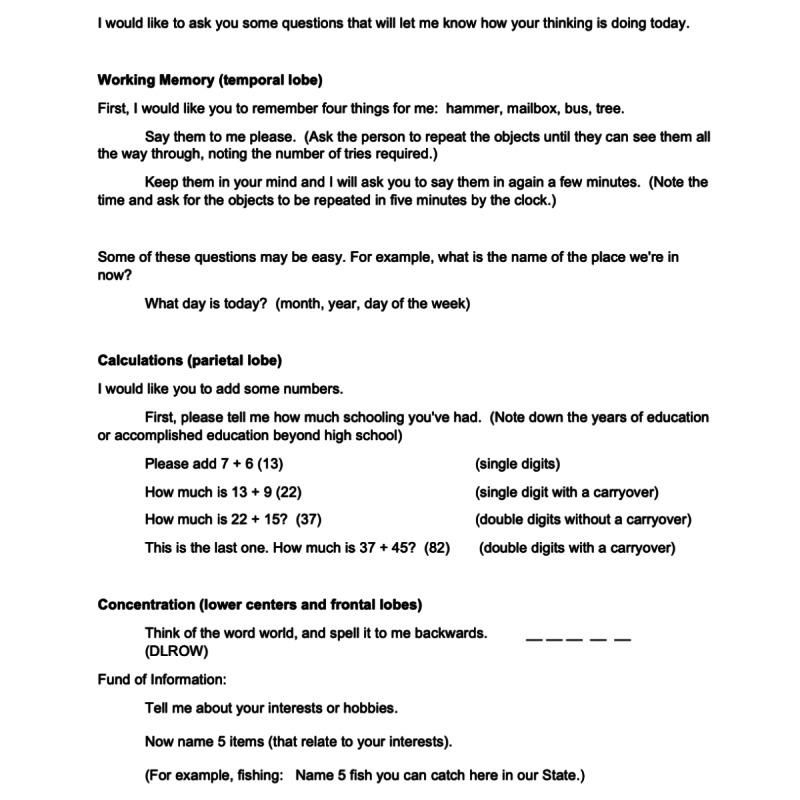
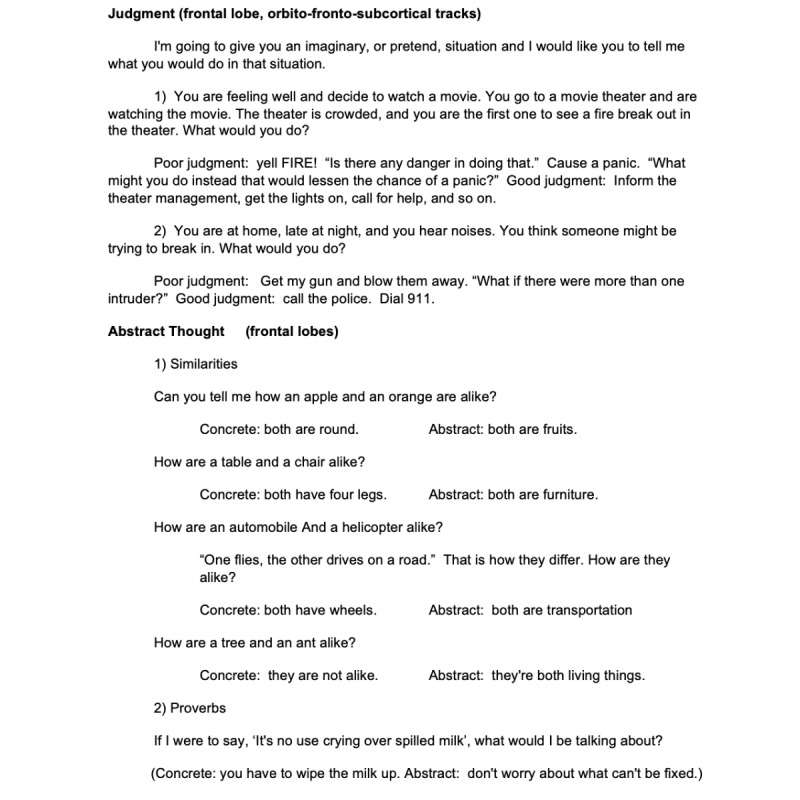
The aims of this study were to assess cognition in patients with COVID-19 as comprehensively as possible in a brief format, while observing safety precautions, and to establish a clear face value of the external validity of the assessment.
We adapted a brief cognitive assessment, previously applied to liver transplant candidates and medical/surgical inpatients, for remote use in patients hospitalized for COVID-19 treatment. Collecting quality assurance data from telephone-administered assessments, this report presents a series of 6 COVID-19 case vignettes to illustrate the use of this 5-minute assessment in the diagnosis and treatment of brain effects. Primary medical teams referred the cases for neuropsychiatric consultation.
The age of the patients varied over four decades, and none of them were able to engage meaningfully with their surroundings on admission. On follow-up examination 6 to 10 days later, 4 of the 6 patients had recovered working memory, and only 1 had recovered calculation ability. Of the 6 patients, 2 were capable of complex judgment responses, while none of the cases completed frontal executive function testing in the normal range.
Cognitive assessment in patients with COVID-19 using this remote examination reveals patterns of cognitive recovery that vary among cases and are far more complex than loss of orientation. In this series, testing of specific temporal, parietal, and frontal lobe functions suggests that calculation ability, judgment, and especially frontal executive functions may characterize the effects of COVID-19 on the brain. Used widely and serially, this examination method can potentially inform our understanding of the effects of COVID-19 on the brain and of healing from the virus.
2019年冠状病毒病(COVID-19)大流行期间的早期临床经验已开始表明,该疾病可导致脑功能变化,这可能在急性期以及不同的恢复期导致认知受损。关于COVID-19患者认知评估的报告往往仅局限于定向评估。进一步的评估对于患有急性COVID-19的患者而言似乎会造成不适当的负担,这类患者的特点是疲劳和意识模糊,而且这也可能危及检查人员的安全。
本研究的目的是在遵守安全预防措施的同时,以简短的形式尽可能全面地评估COVID-19患者的认知情况,并确定该评估外部效度的明确表面价值。
我们采用了一种先前应用于肝移植候选者以及内科/外科住院患者的简短认知评估方法,供住院接受COVID-19治疗的患者远程使用。本报告通过收集电话评估的质量保证数据,呈现了6个COVID-19病例 vignette,以说明这种5分钟评估方法在脑部效应诊断和治疗中的应用。初级医疗团队将这些病例转介进行神经精神科会诊。
患者年龄跨度超过40年,且入院时均无法有效地与周围环境互动。在6至10天后的随访检查中,6名患者中有4名恢复了工作记忆,只有1名恢复了计算能力。6名患者中,2名能够做出复杂的判断反应,而所有病例均未在正常范围内完成额叶执行功能测试。
使用这种远程检查对COVID-19患者进行认知评估发现,认知恢复模式因病例而异,且远比定向障碍复杂。在本系列研究中,对特定颞叶、顶叶和额叶功能的测试表明,计算能力、判断力,尤其是额叶执行功能可能是COVID-19对大脑影响的特征。广泛且连续地使用这种检查方法可能会增进我们对COVID-19对大脑的影响以及从该病毒中恢复情况的理解。