Department of Orthopaedics Surgery, Saga Handicapped Children's Hospital, Saga, Japan.
Belarusian Research Institute of Traumatology and Orthopaedics, Minsk, Belarus and.
J Pediatr Orthop B. 2022 May 1;31(3):254-259. doi: 10.1097/BPB.0000000000000883.
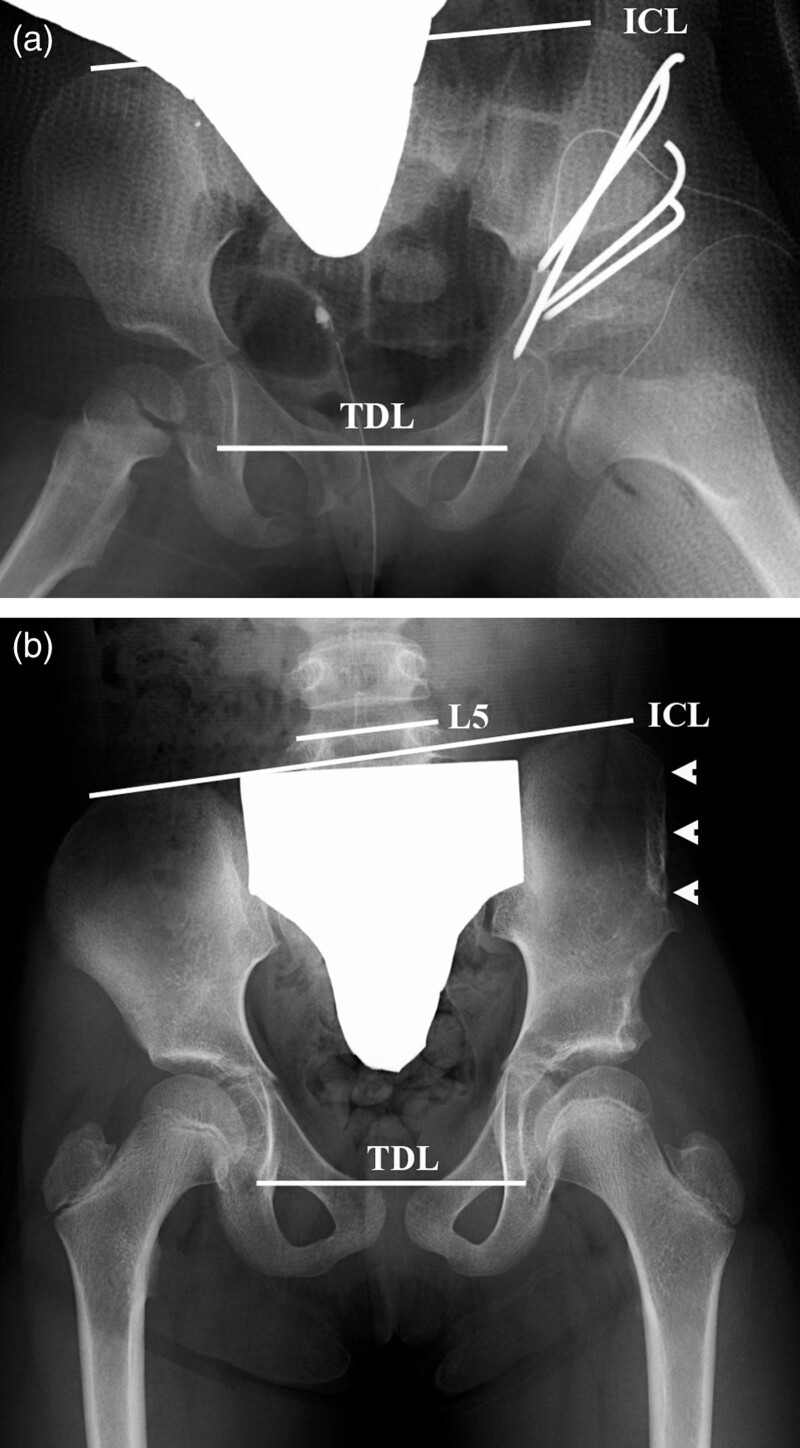
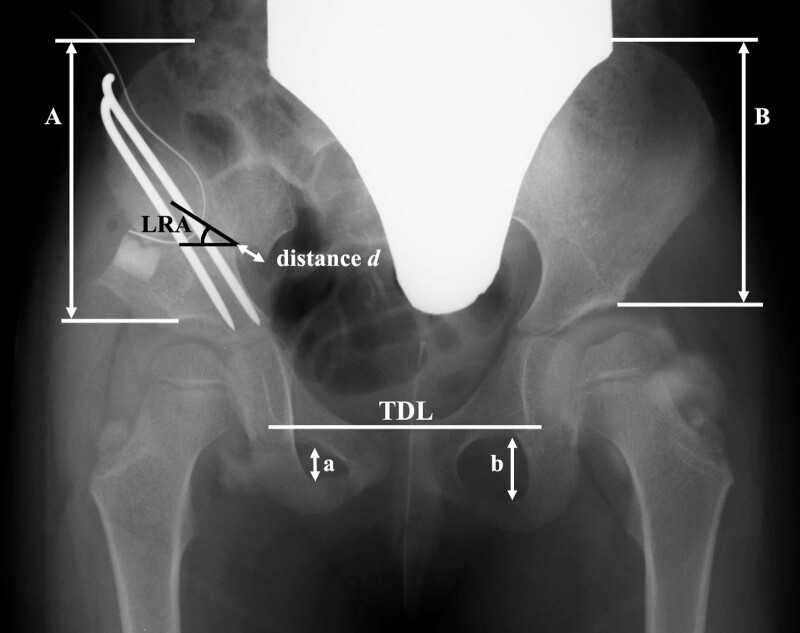
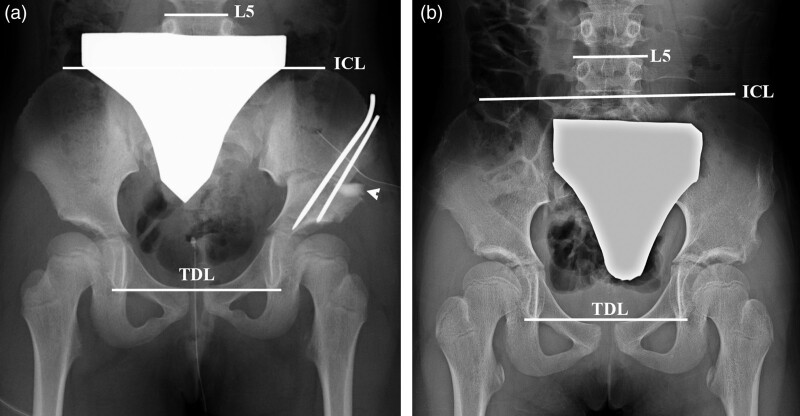
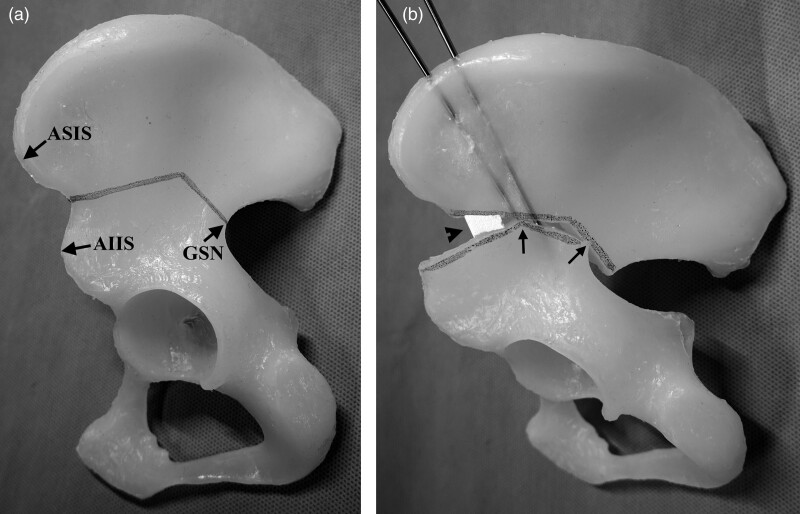
Salter osteotomy is widely used to improve acetabular coverage in the treatment of developmental dysplasia of the hip. Herein we describe angulated Salter osteotomy (ASO) as the modified Salter osteotomy, which creates a two-point contact between the proximal and distal fragments and better stabilizes the fixation of the fragments. We reported our results of ASO and compared it with that of Salter osteotomy performed previously by us. We retrospectively reviewed 41 unilateral hips that underwent ASO, with no other accompanying procedures, between 2012 and 2018. We investigated the radiographic measurements included the preoperative values of the acetabular index and center-edge angle (CEA), immediate postoperative values of distance d (lateral displacement of the distal fragment), lateral rotation angle (LRA), the ratio of the obturator height (ROH), pelvic height increase percentage (PHIP) and the values of acetabular index and CEA during the last follow-up. Measurements were compared with 20 unilateral hips that underwent Salter osteotomy. The mean age at the time of surgery was 5.4 years, and the mean follow-up duration was 3.3 years. Immediately after surgery, the mean distance d, LRA, ROH and PHIP were 8 mm, 19°, 70 and 1%, respectively. The last follow-up values of acetabular index and CEA significantly improved from the preoperative values by 18° and 21°, respectively. Patients treated with ASO showed significantly larger distance d, more improvement in CEA, and lesser PHIP than those treated with Salter osteotomy. The short-term outcomes of ASO are favorable. ASO was as effective as or better than Salter osteotomy in pulling out and stabilizing the distal fragment anterolaterally. ASO prevents elongation of the ilium, which causes pelvic obliquity.
Salter 截骨术被广泛用于改善髋臼覆盖,治疗发育性髋关节发育不良。在此,我们描述了成角 Salter 截骨术(ASO)作为改良的 Salter 截骨术,它在近段和远段骨块之间形成两点接触,从而更好地稳定骨块的固定。我们报告了 ASO 的结果,并将其与我们之前进行的 Salter 截骨术进行了比较。我们回顾性分析了 2012 年至 2018 年期间接受 ASO 治疗的 41 例单侧髋关节,无其他伴随手术。我们研究了包括术前髋臼指数和中心边缘角(CEA)、即刻术后距离 d(远段骨块外侧移位)、外侧旋转角(LRA)、闭孔高度比(ROH)、骨盆高度增加百分比(PHIP)以及最后随访时髋臼指数和 CEA 值在内的影像学测量值。这些测量值与 20 例接受 Salter 截骨术的单侧髋关节进行了比较。手术时的平均年龄为 5.4 岁,平均随访时间为 3.3 年。术后即刻,平均距离 d、LRA、ROH 和 PHIP 分别为 8mm、19°、70%和 1%。髋臼指数和 CEA 的最后随访值分别比术前改善了 18°和 21°。与接受 Salter 截骨术的患者相比,接受 ASO 治疗的患者的距离 d 更大,CEA 改善更多,PHIP 更小。ASO 的短期疗效良好。ASO 在向外和向前稳定远段骨块方面与 Salter 截骨术同样有效,甚至更有效。ASO 可防止髂骨延长,从而导致骨盆倾斜。