Reddy Rajiv P, Chang Robert, Coutinho Dominic V, Meinert Justin W, Anetakis Katherine M, Crammond Donald J, Balzer Jeffrey R, Shaw Jeremy D, Lee Joon Y, Thirumala Parthasarathy D
Department of Orthopaedic Surgery, 6595University of Pittsburgh Medical Center, Pittsburgh, PA, USA.
Department of Neurological Surgery, 6595University of Pittsburgh Medical Center, Pittsburgh, PA, USA.
Global Spine J. 2022 Jun;12(5):1003-1011. doi: 10.1177/21925682211018472. Epub 2021 May 20.
Systematic review and meta-analysis.
Malposition of pedicle screws during instrumentation in the lumbar spine is associated with complications secondary to spinal cord or nerve root injury. Intraoperative triggered electromyographic monitoring (t-EMG) may be used during instrumentation for early detection of malposition. The association between lumbar pedicle screws stimulated at low EMG thresholds and postoperative neurological deficits, however, remains unknown. The purpose of this study is to assess whether a low threshold t-EMG response to lumbar pedicle screw stimulation can serve as a predictive tool for postoperative neurological deficit.
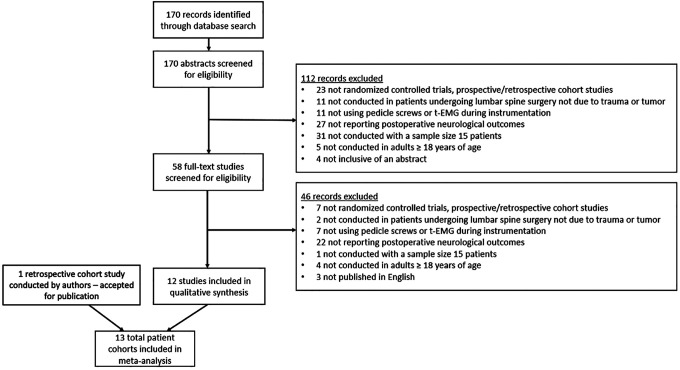
The present study is a meta-analysis of the literature from PubMed, Web of Science, and Embase identifying prospective/retrospective studies with outcomes of patients who underwent lumbar spinal fusion with t-EMG testing.
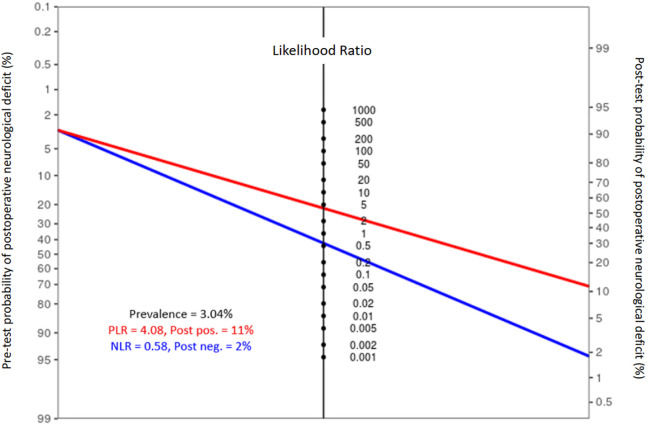
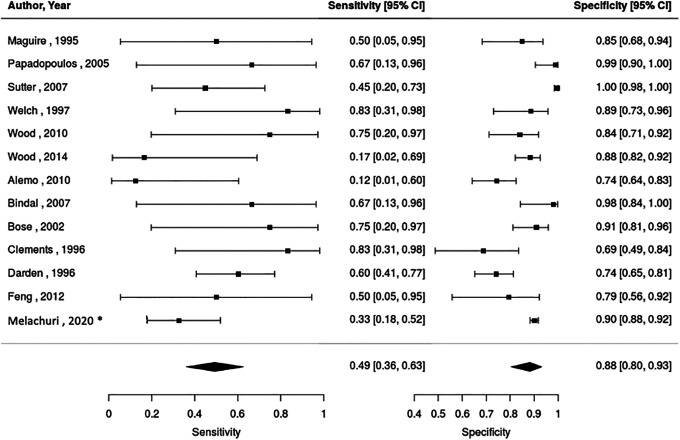
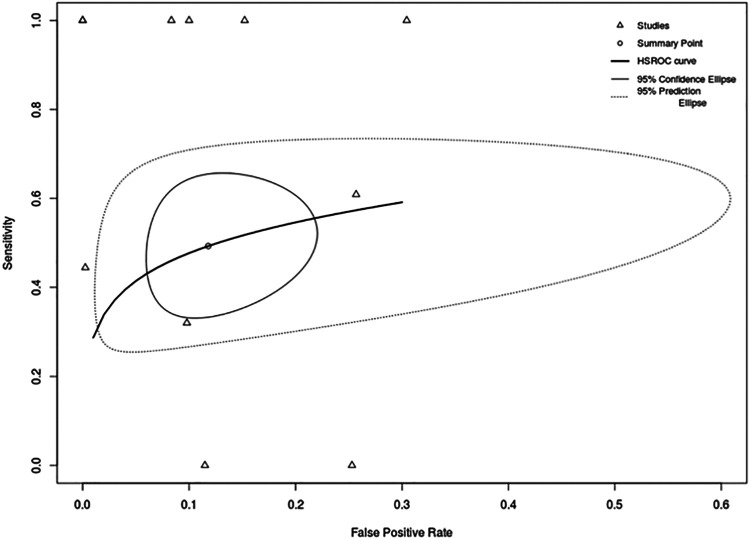
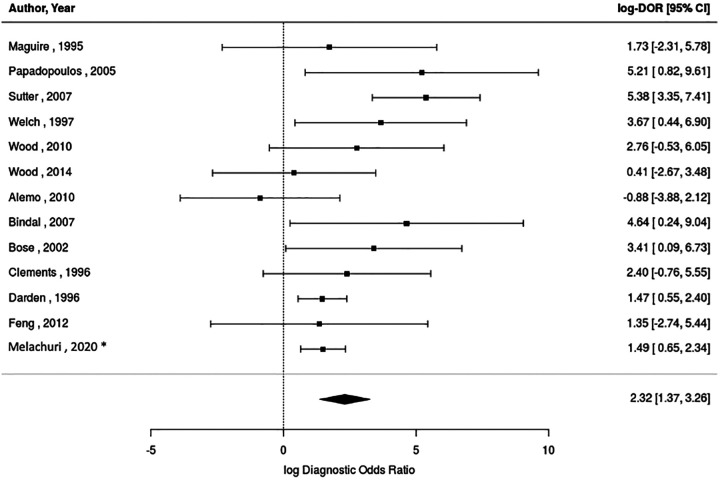
The total study cohort consisted of 2,236 patients and the total postoperative neurological deficit rate was 3.04%. 10.78% of the patients incurred at least 1 pedicle screw that was stimulated below the respective EMG alarm threshold intraoperatively. The incidence of postoperative neurological deficits in patients with a lumbar pedicle screw stimulated below EMG alarm threshold during placement was 13.28%, while only 1.80% in the patients without. The pooled DOR was 10.14. Sensitivity was 49% while specificity was 88%.
Electrically activated lumbar pedicle screws resulting in low t-EMG alarm thresholds are highly specific but weakly sensitive for new postoperative neurological deficits. Patients with new postoperative neurological deficits after lumbar spine surgery were 10 times more likely to have had a lumbar pedicle screw stimulated at a low EMG threshold.
系统评价与荟萃分析。
腰椎器械植入过程中椎弓根螺钉位置不当与脊髓或神经根损伤继发的并发症相关。术中触发式肌电图监测(t-EMG)可在器械植入过程中用于早期发现位置不当情况。然而,低肌电图阈值刺激的腰椎椎弓根螺钉与术后神经功能缺损之间的关联仍不清楚。本研究的目的是评估对腰椎椎弓根螺钉刺激的低阈值t-EMG反应是否可作为术后神经功能缺损的预测工具。
本研究是一项对来自PubMed、科学网和Embase的文献的荟萃分析,确定了对接受腰椎融合术并进行t-EMG测试的患者结局的前瞻性/回顾性研究。
总研究队列包括2236例患者,术后神经功能缺损总发生率为3.04%。10.78%的患者术中至少有1枚椎弓根螺钉在各自的肌电图警报阈值以下受到刺激。术中放置时腰椎椎弓根螺钉在肌电图警报阈值以下受到刺激的患者术后神经功能缺损发生率为13.28%,而未受刺激的患者中仅为1.80%。合并的比值比为10.14。敏感性为49%,特异性为88%。
导致低t-EMG警报阈值的电激活腰椎椎弓根螺钉对新的术后神经功能缺损具有高度特异性,但敏感性较弱。腰椎手术后出现新的术后神经功能缺损的患者,其腰椎椎弓根螺钉在低肌电图阈值下受到刺激的可能性要高10倍。