Institute of Eye Research, Hualien Tzu Chi Hospital, Buddhist Tzu Chi Medical Foundation, Hualien, Taiwan.
Department of Ophthalmology, National Taiwan University Hospital, Taipei, Taiwan.
Invest Ophthalmol Vis Sci. 2021 May 3;62(6):21. doi: 10.1167/iovs.62.6.21.
This study investigated the neuroprotective effects of administration of ROCK inhibitor E212 on ischemic optic neuropathy.
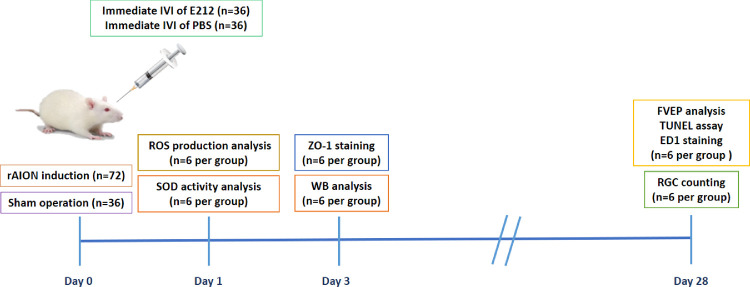
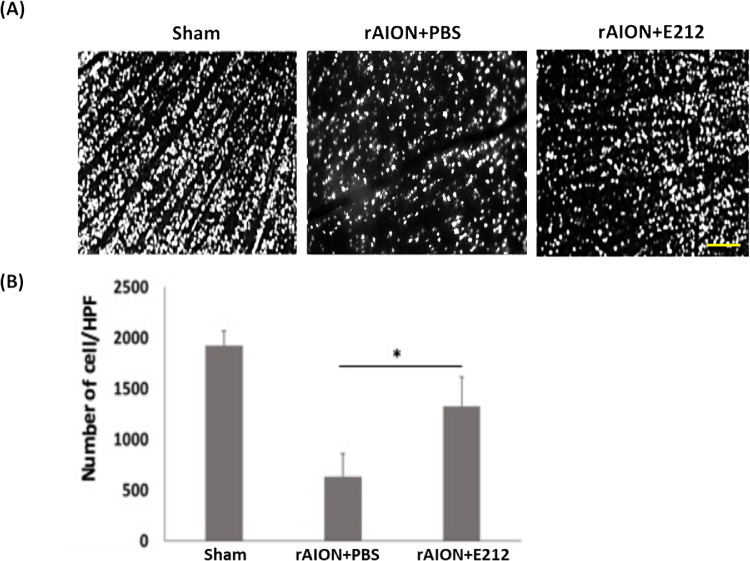
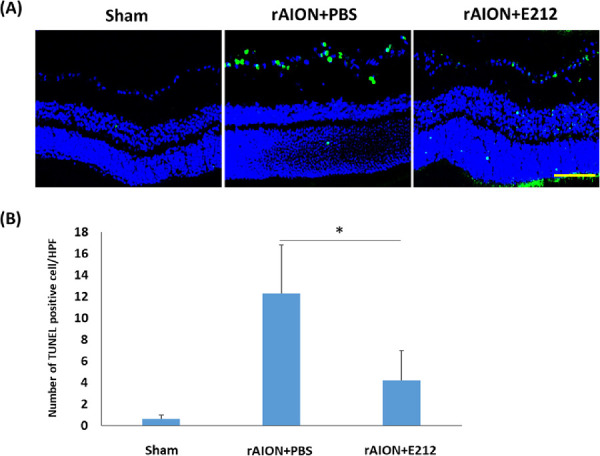
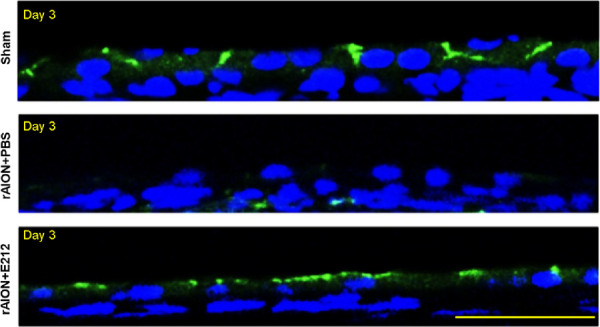
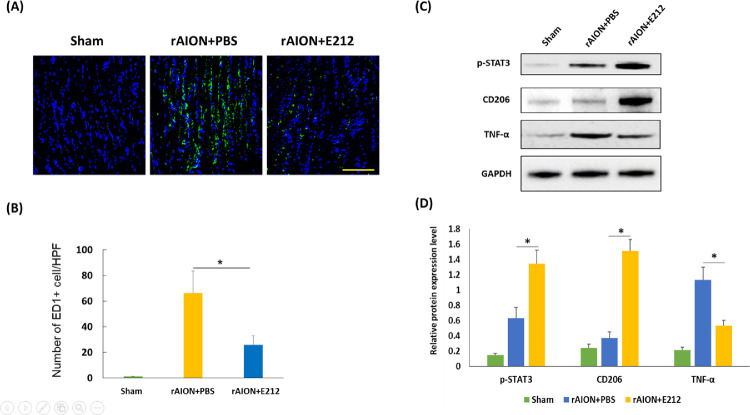
Rats received an intravitreal injection of either E212 or PBS immediately after optic nerve infarct. The oxidative stress in the retina was detected by performing superoxide dismutase activity and CellROX assays. The integrity of retinal pigment epithelium was determined by staining of zona occludens 1. The visual function, retinal ganglion cell (RGC) density, and RGC apoptosis were determined by using flash visual-evoked potential analysis, retrograde FluoroGold labeling, and TdT-dUTP nick end-labeling assay. Macrophage infiltration was detected by staining for ED1. The protein levels of TNF-α, p-CRMP, p-AKT1, p-STAT3, and CD206 were evaluated using Western blotting.
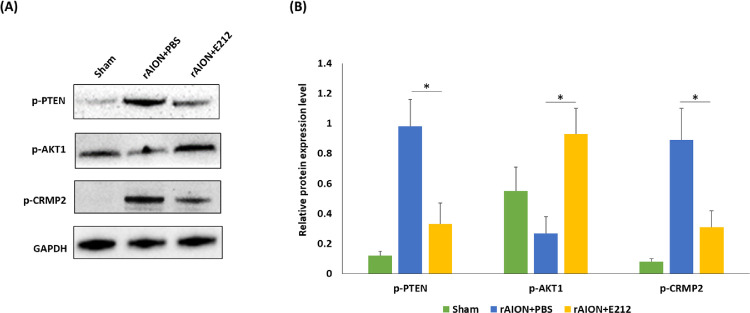
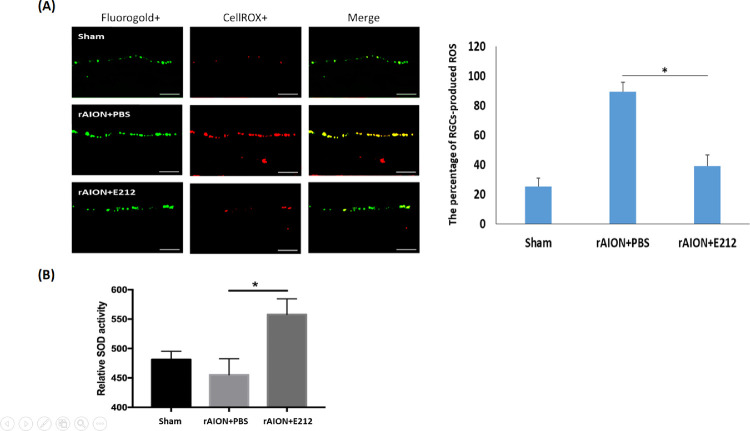
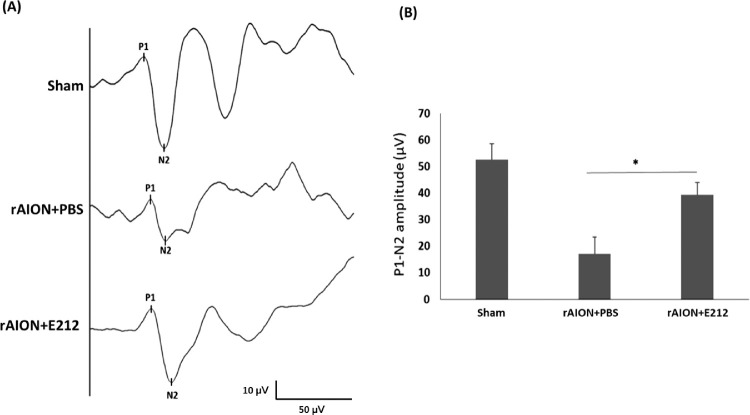
Administration of E212 resulted in a 1.23-fold increase in the superoxide dismutase activity of the retina and 2.28-fold decrease in RGC-produced reactive oxygen species as compared to the levels observed upon treatment with PBS (P < 0.05). Moreover, E212 prevented the disruption of the blood-retinal barrier (BRB) in contrast to PBS. The P1-N2 amplitude and RGC density in the E212-treated group were 1.75- and 2.05-fold higher, respectively, than those in the PBS-treated group (P < 0.05). The numbers of apoptotic RGCs and macrophages were reduced by 2.93- and 2.54-fold, respectively, in the E212-treated group compared with those in the PBS-treated group (P < 0.05). The levels of p-AKT1, p-STAT3, and CD206 were increased, whereas those of p-PTEN, p-CRMP2, and TNF-α were decreased after treatment with E212 (P < 0.05).
Treatment with E212 suppresses oxidative stress, BRB disruption, and neuroinflammation to protect the visual function in ischemic optic neuropathy.
本研究旨在探讨 ROCK 抑制剂 E212 对视神经缺血性病变的神经保护作用。
大鼠视神经梗死即刻玻璃体腔内注射 E212 或 PBS。通过超氧化物歧化酶活性和 CellROX 测定检测视网膜中的氧化应激。通过染色封闭蛋白 1 测定视网膜色素上皮细胞的完整性。通过闪光视觉诱发电位分析、逆行 FluoroGold 标记和 TdT-dUTP 缺口末端标记测定来确定视觉功能、视网膜神经节细胞(RGC)密度和 RGC 凋亡。通过 ED1 染色检测巨噬细胞浸润。通过 Western blot 评估 TNF-α、p-CRMP、p-AKT1、p-STAT3 和 CD206 的蛋白水平。
与 PBS 处理组相比,E212 处理组视网膜中超氧化物歧化酶活性增加 1.23 倍,RGC 产生的活性氧减少 2.28 倍(P < 0.05)。此外,E212 防止了血视网膜屏障(BRB)的破坏,而 PBS 处理组则没有。E212 处理组的 P1-N2 振幅和 RGC 密度分别比 PBS 处理组高 1.75 倍和 2.05 倍(P < 0.05)。E212 处理组的凋亡 RGC 数和巨噬细胞数分别减少 2.93 倍和 2.54 倍(P < 0.05)。E212 处理后,p-AKT1、p-STAT3 和 CD206 的水平增加,而 p-PTEN、p-CRMP2 和 TNF-α的水平降低(P < 0.05)。
E212 治疗可抑制氧化应激、BRB 破坏和神经炎症,从而保护缺血性视神经病变的视力。