Latvian Biomedical Research and Study Centre, Ratsupites Street 1, Riga, Latvia.
Parasit Vectors. 2021 May 20;14(1):266. doi: 10.1186/s13071-021-04756-9.
Canine babesiosis and anaplasmosis, caused by Babesia canis and Anaplasma phagocytophilum, respectively, are significant tick-borne diseases in Baltic countries. Both diseases can be diagnosed on the basis of clinicopathological findings, by direct pathogen detection in blood smears or by indirect pathogen detection; however, because of high selectivity and specificity, molecular methods may be advantageous. The goal of this study was to develop a duplex real-time polymerase chain reaction (RT-PCR) method for the detection of B. canis and A. phagocytophilum in canine clinical samples.
Sequence-based polymorphism analysis of genes encoding B. canis-specific merozoite surface protein Bc28.1 (Bc28.1) and A. phagocytophilum malate dehydrogenase (mdh) was performed on pathogen isolates present in Latvian domestic dogs. The obtained results were used to design a species-specific duplex RT-PCR assay.
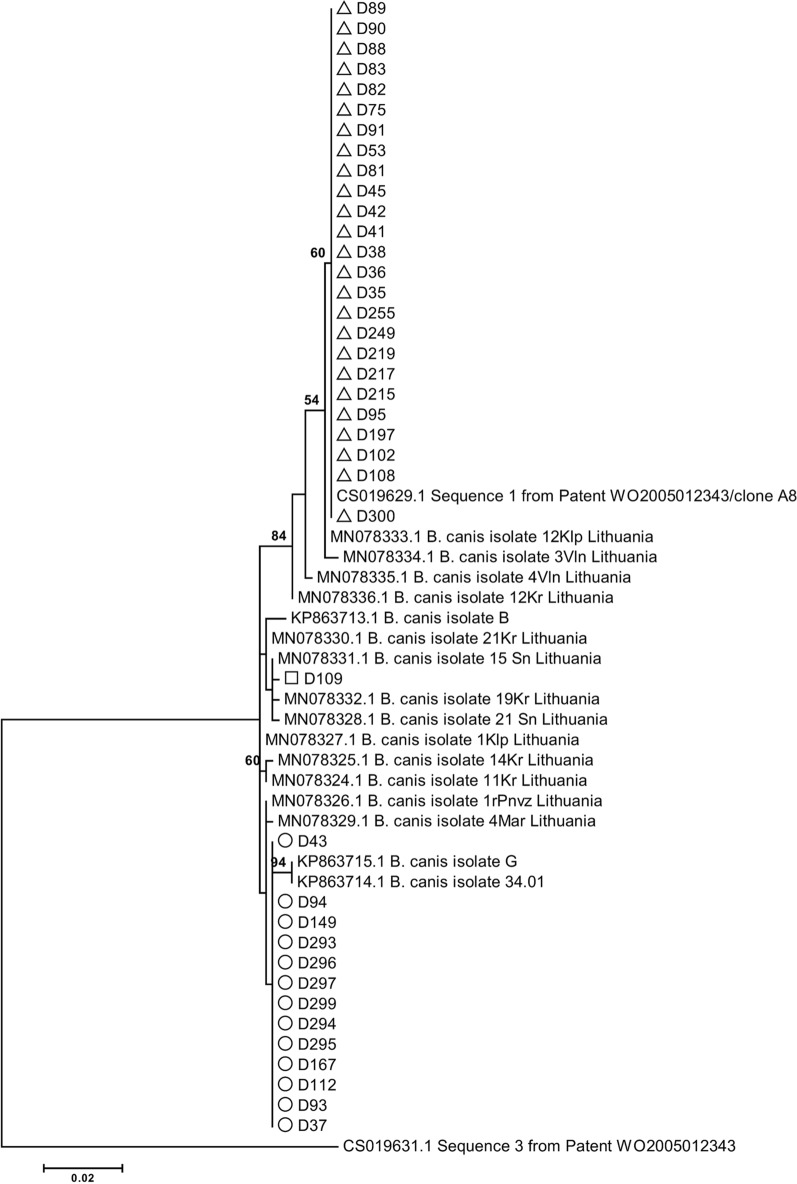
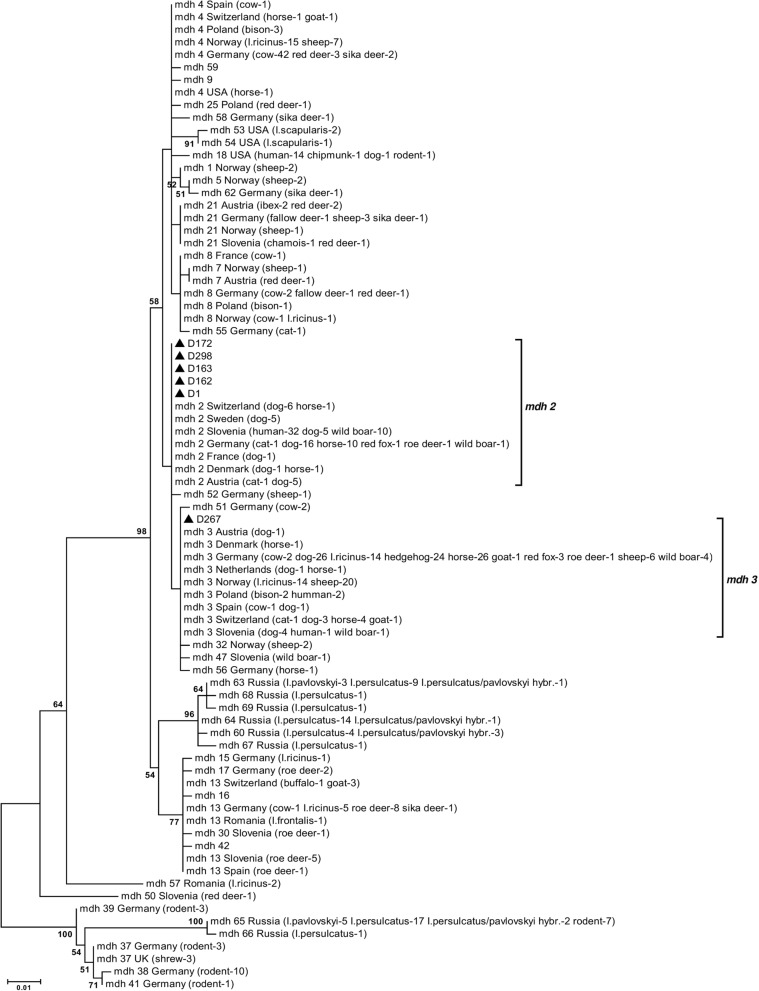
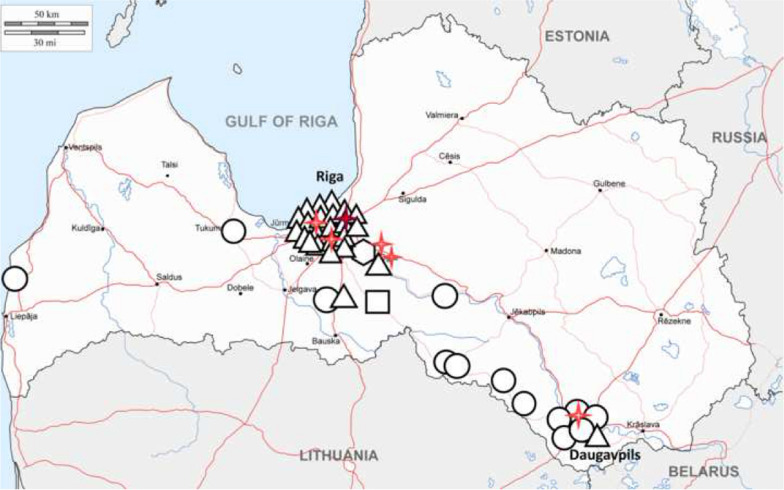
The presence of three B. canis Bc28.1 gene sequence types was revealed in canine samples with a nonuniform geographical distribution, and two types of A. phagocytophilum mdh genes were detected. The novel duplex RT-PCR assay provided correct classification of samples positive and negative for B. canis and A. phagocytophilum. The analytical sensitivity of this assay was ten gene copies/ reaction for both pathogens.
A novel duplex RT-PCR molecular method was developed for the detection of B. canis and A. phagocytophilum in canine clinical samples. Sequence variability of Bc28.1 and mdh genes indicated the genetic variability of B. canis and A. phagocytophilum isolates occurring in Latvian domestic dogs.
犬巴贝斯虫病和粒细胞无形体病分别由犬巴贝斯虫和嗜吞噬细胞无形体引起,是波罗的海国家重要的蜱传疾病。这两种疾病均可基于临床病理发现、血液涂片直接病原体检测或间接病原体检测进行诊断;然而,由于分子方法具有高选择性和特异性,因此可能具有优势。本研究旨在开发一种用于检测犬临床样本中犬巴贝斯虫和嗜吞噬细胞无形体的双重实时聚合酶链反应(RT-PCR)方法。
对存在于拉脱维亚家犬中的病原体分离株进行基于基因编码的犬巴贝斯虫特异性裂殖体表面蛋白 Bc28.1(Bc28.1)和嗜吞噬细胞无形体苹果酸脱氢酶(mdh)的序列基 因多态性分析。根据获得的结果设计了一种种特异性双重 RT-PCR 检测方法。
在犬样本中发现了三种非均匀地理分布的犬巴贝斯虫 Bc28.1 基因序列类型,并且检测到两种类型的嗜吞噬细胞无形体 mdh 基因。新型双重 RT-PCR 检测方法可正确分类犬巴贝斯虫和嗜吞噬细胞无形体阳性和阴性样本。该检测方法的分析灵敏度对于两种病原体均为 10 个基因拷贝/反应。
开发了一种用于检测犬临床样本中犬巴贝斯虫和嗜吞噬细胞无形体的新型双重 RT-PCR 分子方法。Bc28.1 和 mdh 基因的序列变异性表明了拉脱维亚家犬中存在的犬巴贝斯虫和嗜吞噬细胞无形体分离株的遗传变异性。