Laboratory of Biochemistry and Genetics, National Institute of Diabetes and Digestive and Kidney Diseases, National Institutes of Health, Bethesda, MD, USA.
Postdoctoral Research Associate Training Program, National Institute of General Medical Sciences, National Institutes of Health, Bethesda, MD, USA.
Nat Commun. 2021 May 20;12(1):2976. doi: 10.1038/s41467-021-23223-8.
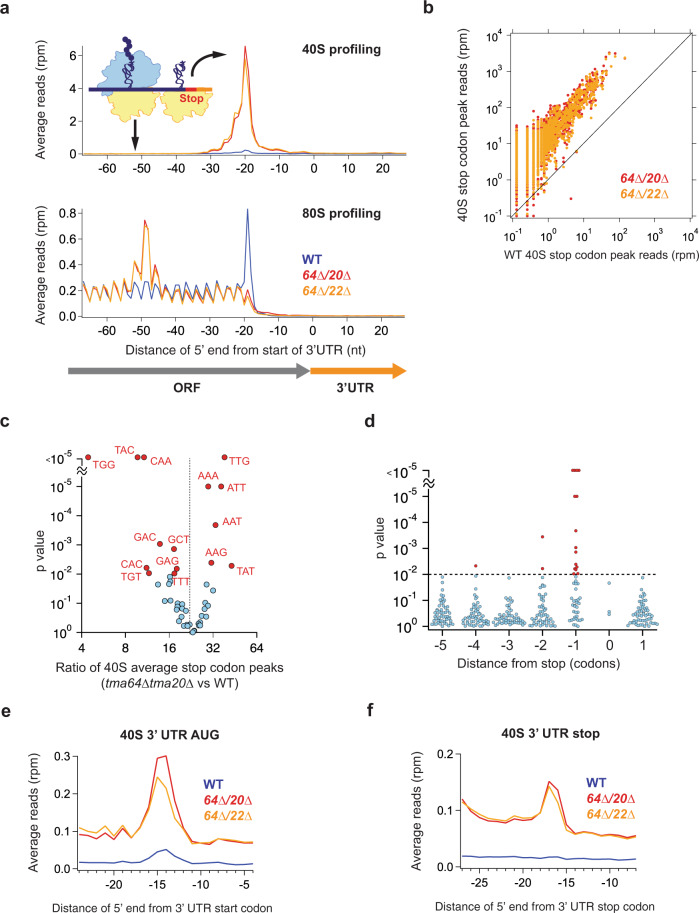
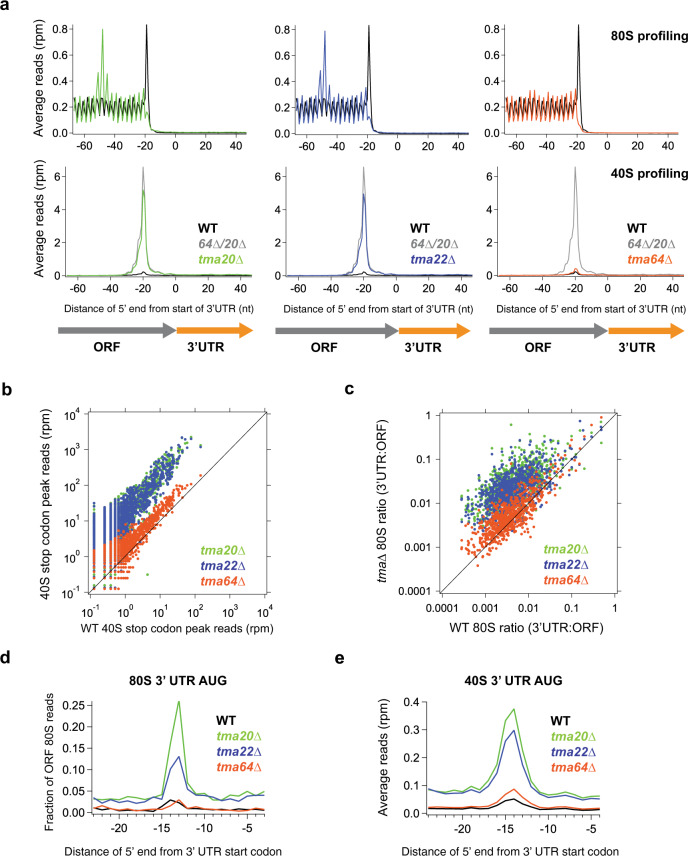
The recycling of ribosomes at stop codons for use in further rounds of translation is critical for efficient protein synthesis. Removal of the 60S subunit is catalyzed by the ATPase Rli1 (ABCE1) while removal of the 40S is thought to require Tma64 (eIF2D), Tma20 (MCT-1), and Tma22 (DENR). However, it remains unclear how these Tma proteins cause 40S removal and control reinitiation of downstream translation. Here we used a 40S ribosome footprinting strategy to directly observe intermediate steps of ribosome recycling in cells. Deletion of the genes encoding these Tma proteins resulted in broad accumulation of unrecycled 40S subunits at stop codons, directly establishing their role in 40S recycling. Furthermore, the Tma20/Tma22 heterodimer was responsible for a majority of 40S recycling events while Tma64 played a minor role. Introduction of an autism-associated mutation into TMA22 resulted in a loss of 40S recycling activity, linking ribosome recycling and neurological disease.
在翻译停止密码子时核糖体的循环利用对于蛋白质合成的高效性至关重要。60S 亚基的去除由 ATPase Rli1(ABCE1)催化,而 40S 的去除则被认为需要 Tma64(eIF2D)、Tma20(MCT-1)和 Tma22(DENR)。然而,这些 Tma 蛋白如何导致 40S 的去除以及控制下游翻译的重新起始仍然不清楚。在这里,我们使用 40S 核糖体足迹策略在细胞中直接观察核糖体循环的中间步骤。这些编码 Tma 蛋白的基因缺失导致在停止密码子时未循环的 40S 亚基大量积累,直接证明了它们在 40S 循环中的作用。此外,Tma20/Tma22 异二聚体负责大多数 40S 的循环回收事件,而 Tma64 则发挥较小的作用。将自闭症相关突变引入 TMA22 导致 40S 循环回收活性丧失,将核糖体循环与神经疾病联系起来。