Department of Chemistry and Industrial Chemistry, University of Pisa, via Moruzzi 13, 56124 Pisa, Italy.
J Org Chem. 2021 Jun 4;86(11):7381-7389. doi: 10.1021/acs.joc.1c00340. Epub 2021 May 21.
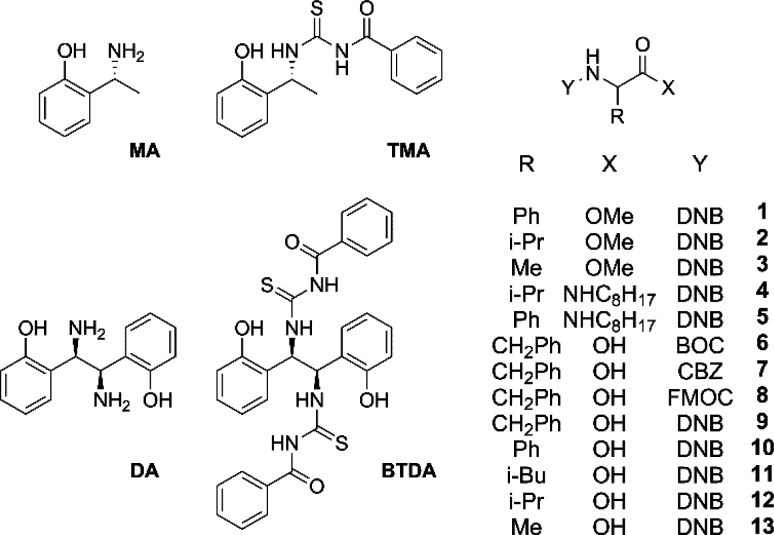
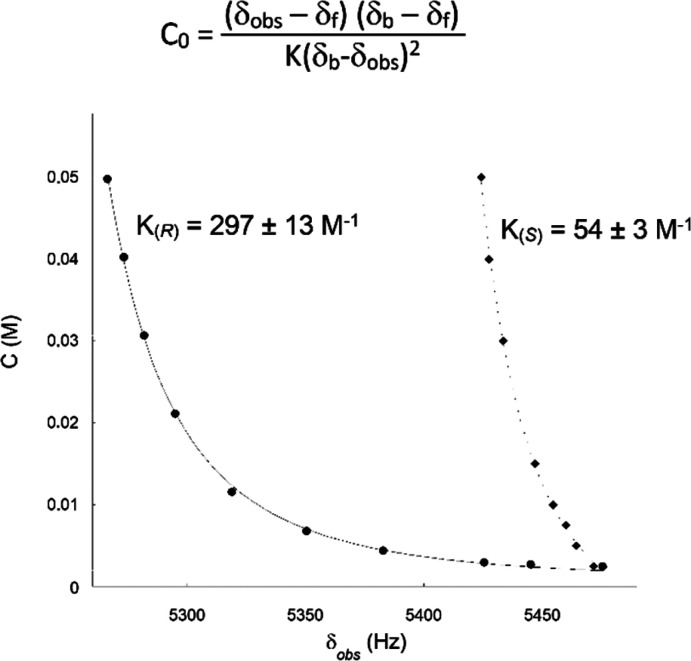
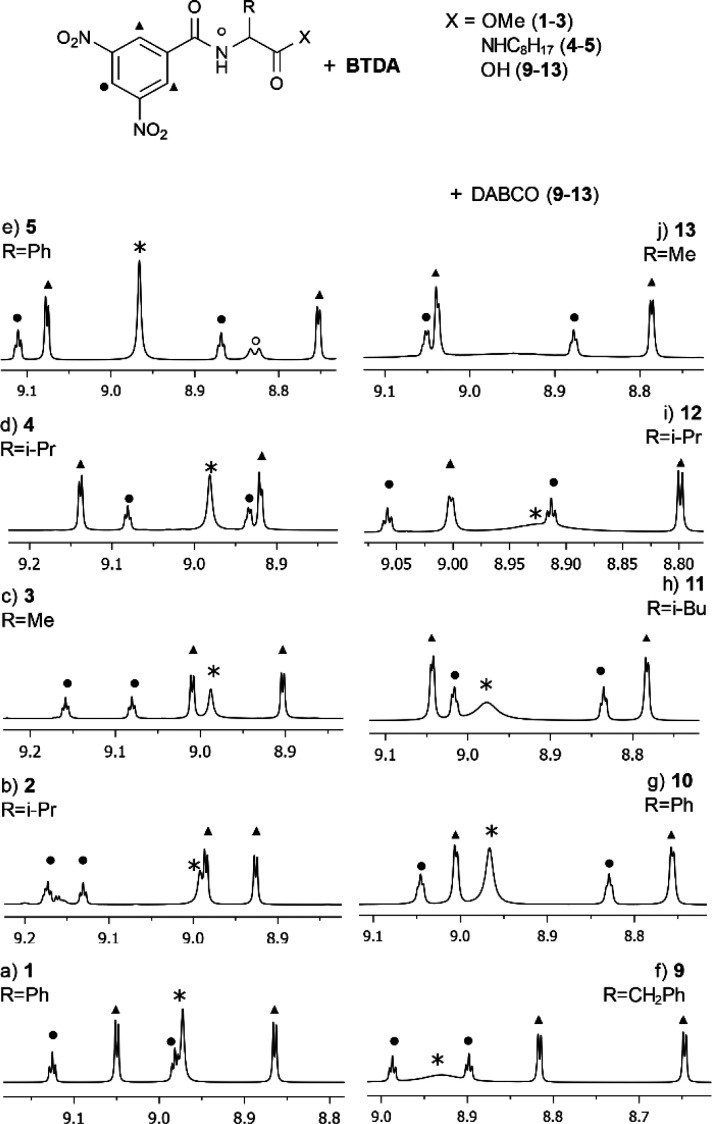
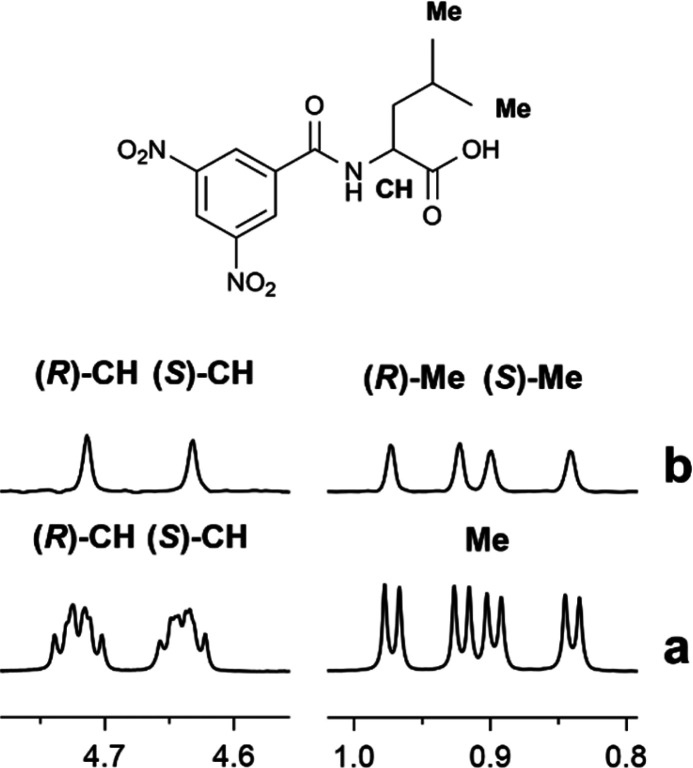
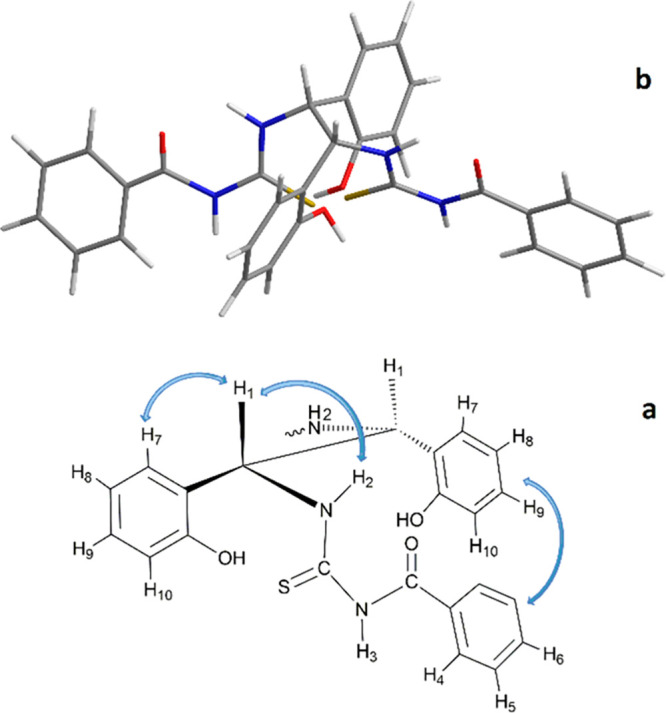
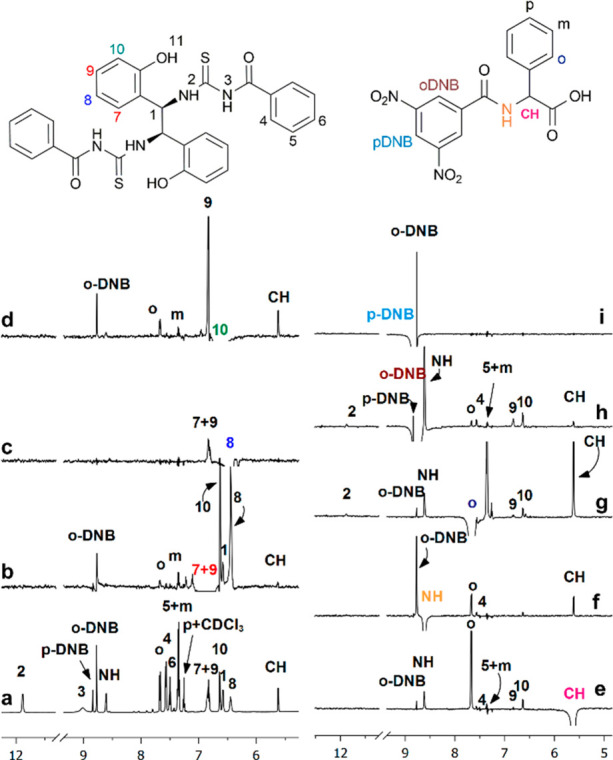
The reaction of benzoyl isothiocyanate with (1,2)-1,2-bis(2-hydroxyphenyl)ethylenediamine afforded a new thiourea chiral solvating agent (CSA) with a very high ability to differentiate H and C NMR signals of simple amino acid derivatives, even at low concentrations. The enantiodiscrimination efficiency was higher with respect to that of the parent monomer, a thiourea derivative of 2-((1)-1-aminoethyl)phenol, thus putting into light the relevance of the cooperativity between the two molecular portions of the dimer in a cleft conformation stabilized by interchain hydrogen bond interactions. An achiral base additive (DABCO or DMAP) played an active role in the chiral discrimination processes, mediating the interaction between the CSA and the enantiomeric mixtures. The chiral discrimination mechanism was investigated by NMR spectroscopy through the determination of complexation stoichiometries, association constants, and the stereochemistry of the diastereomeric solvates.
苯甲酰异硫氰酸酯与(1,2)-1,2-双(2-羟基苯基)乙二胺反应,得到一种新的硫脲手性溶剂(CSA),它具有非常高的能力来区分简单氨基酸衍生物的 H 和 C NMR 信号,即使在低浓度下也是如此。与母体单体(2-((1)-1-氨基乙基)苯酚的硫脲衍生物)相比,对映体的分辨效率更高,从而表明二聚体的两个分子部分在由链间氢键相互作用稳定的裂缝构象中协同作用的相关性。非手性碱添加剂(DABCO 或 DMAP)在手性识别过程中发挥了积极作用,介导 CSA 与对映体混合物之间的相互作用。通过确定配合物的化学计量、缔合常数和非对映异构体溶剂化物的立体化学,通过 NMR 光谱研究了手性识别机制。