Cold Spring Harbor Laboratory, Cold Spring Harbor, NY 11724.
Lustgarten Foundation Pancreatic Cancer Research Laboratory, Cold Spring Harbor, NY 11724.
Proc Natl Acad Sci U S A. 2021 May 25;118(21). doi: 10.1073/pnas.2016904118.
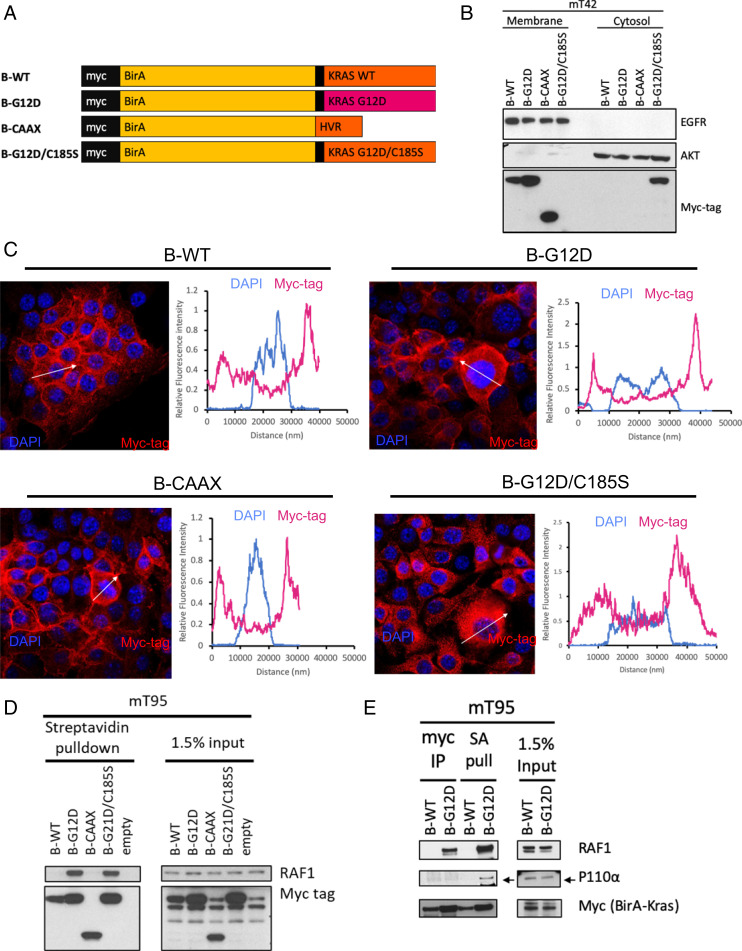
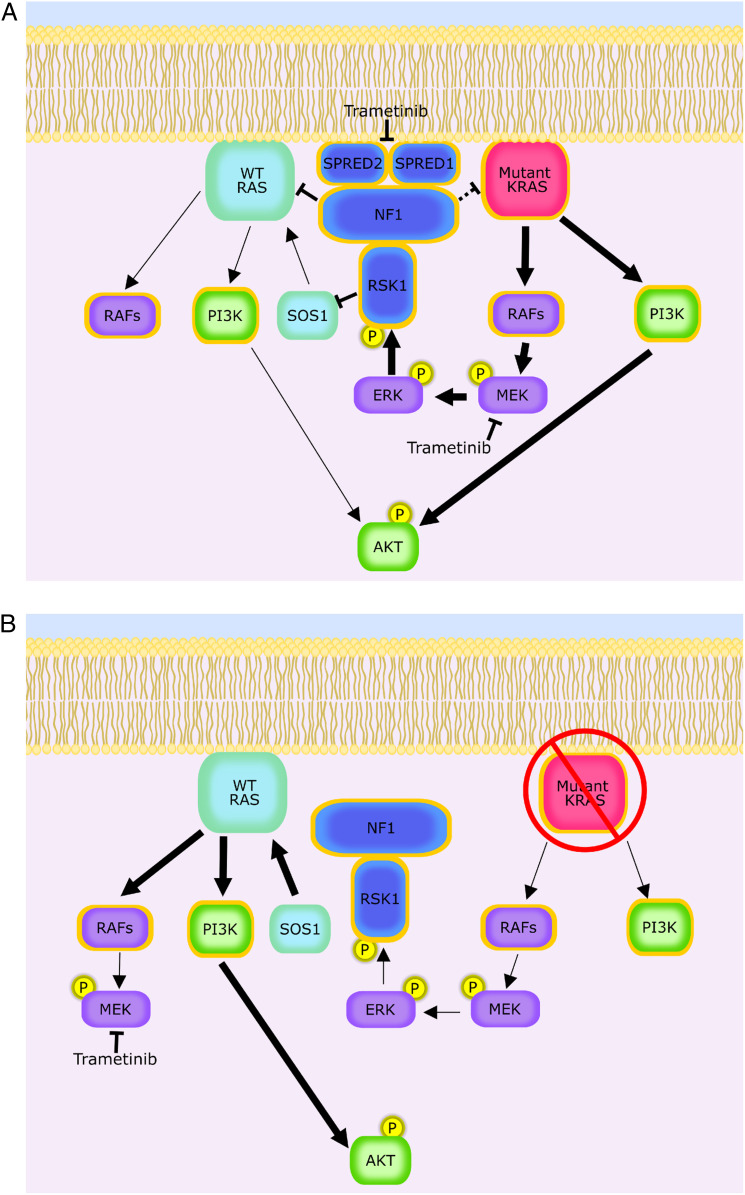
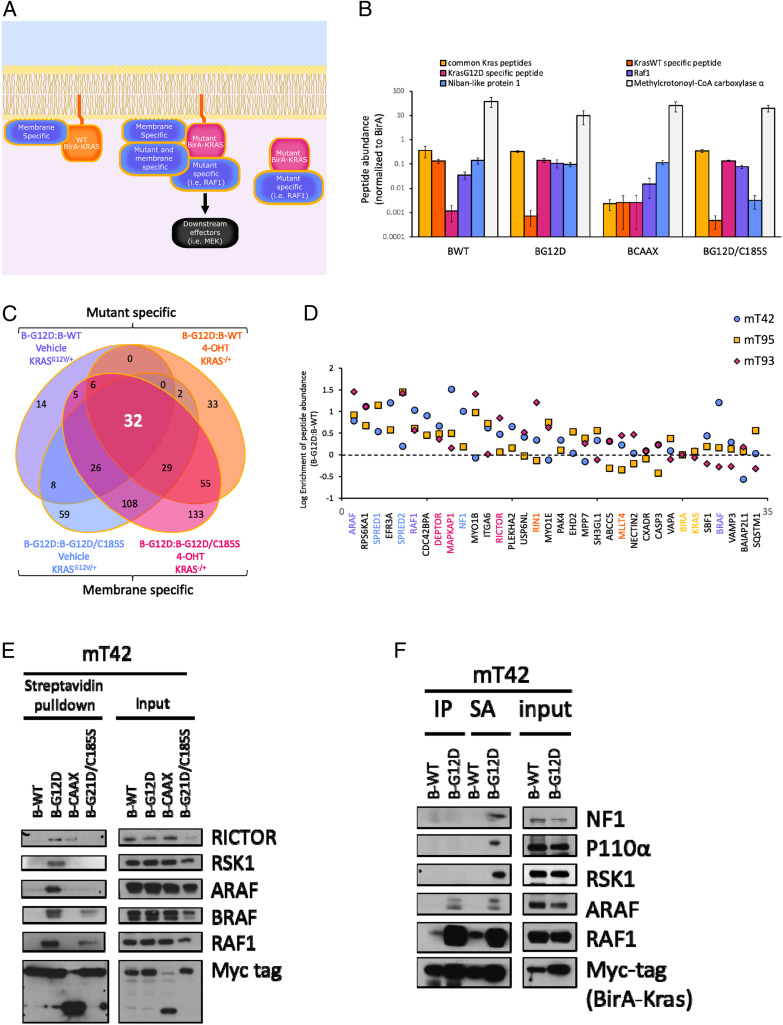
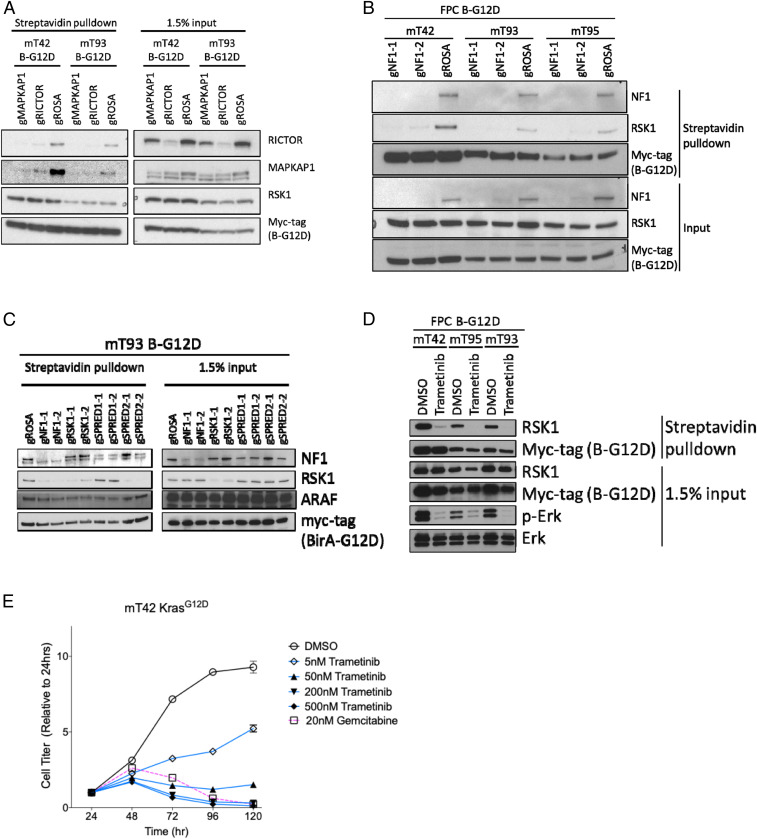
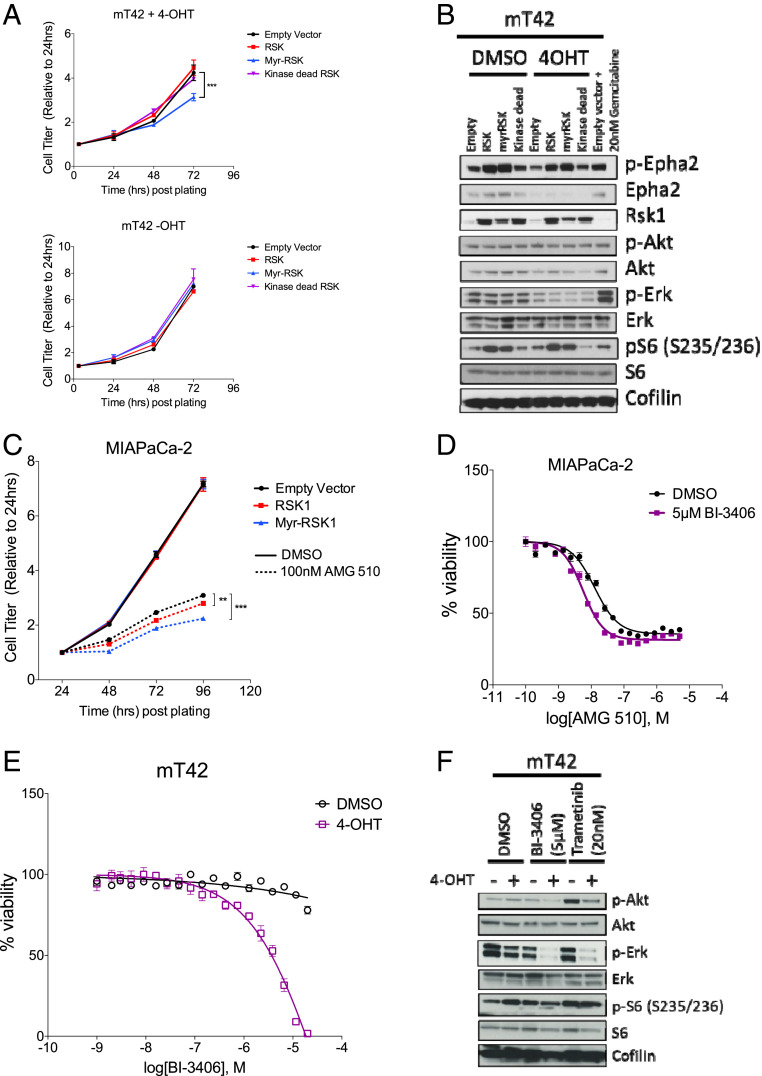
Pancreatic ductal adenocarcinoma (PDAC) is a lethal malignancy with limited treatment options. Although activating mutations of the KRAS GTPase are the predominant dependency present in >90% of PDAC patients, targeting KRAS mutants directly has been challenging in PDAC. Similarly, strategies targeting known KRAS downstream effectors have had limited clinical success due to feedback mechanisms, alternate pathways, and dose-limiting toxicities in normal tissues. Therefore, identifying additional functionally relevant KRAS interactions in PDAC may allow for a better understanding of feedback mechanisms and unveil potential therapeutic targets. Here, we used proximity labeling to identify protein interactors of active KRAS in PDAC cells. We expressed fusions of wild-type (WT) (BirA-KRAS4B), mutant (BirA-KRAS4B), and nontransforming cytosolic double mutant (BirA-KRAS4B) KRAS with the BirA biotin ligase in murine PDAC cells. Mass spectrometry analysis revealed that RSK1 selectively interacts with membrane-bound KRAS, and we demonstrate that this interaction requires NF1 and SPRED2. We find that membrane RSK1 mediates negative feedback on WT RAS signaling and impedes the proliferation of pancreatic cancer cells upon the ablation of mutant KRAS. Our findings link NF1 to the membrane-localized functions of RSK1 and highlight a role for WT RAS signaling in promoting adaptive resistance to mutant KRAS-specific inhibitors in PDAC.
胰腺导管腺癌(PDAC)是一种致命的恶性肿瘤,治疗选择有限。尽管 KRAS GTPase 的激活突变是 >90% PDAC 患者中存在的主要依赖性,但直接针对 KRAS 突变体在 PDAC 中具有挑战性。同样,由于反馈机制、替代途径和正常组织中的剂量限制毒性,针对已知 KRAS 下游效应物的策略在临床上的成功有限。因此,鉴定 PDAC 中额外的功能相关 KRAS 相互作用可能有助于更好地理解反馈机制,并揭示潜在的治疗靶点。在这里,我们使用邻近标记法鉴定了 PDAC 细胞中活性 KRAS 的蛋白相互作用体。我们在小鼠 PDAC 细胞中表达了野生型(WT)(BirA-KRAS4B)、突变型(BirA-KRAS4B)和非转化胞质双突变体(BirA-KRAS4B)与 BirA 生物素连接酶融合的 KRAS。质谱分析显示,RSK1 选择性地与膜结合的 KRAS 相互作用,我们证明这种相互作用需要 NF1 和 SPRED2。我们发现,膜 RSK1 介导对 WT RAS 信号的负反馈,并在消除突变型 KRAS 后阻碍胰腺癌细胞的增殖。我们的发现将 NF1 与 RSK1 的膜定位功能联系起来,并强调了 WT RAS 信号在促进对 PDAC 中突变型 KRAS 特异性抑制剂的适应性耐药中的作用。