Leidos Life Sciences, Leidos Inc., Frederick, MD, United States.
Sanofi Pasteur, Orlando, FL, United States.
Front Immunol. 2021 May 7;12:684116. doi: 10.3389/fimmu.2021.684116. eCollection 2021.
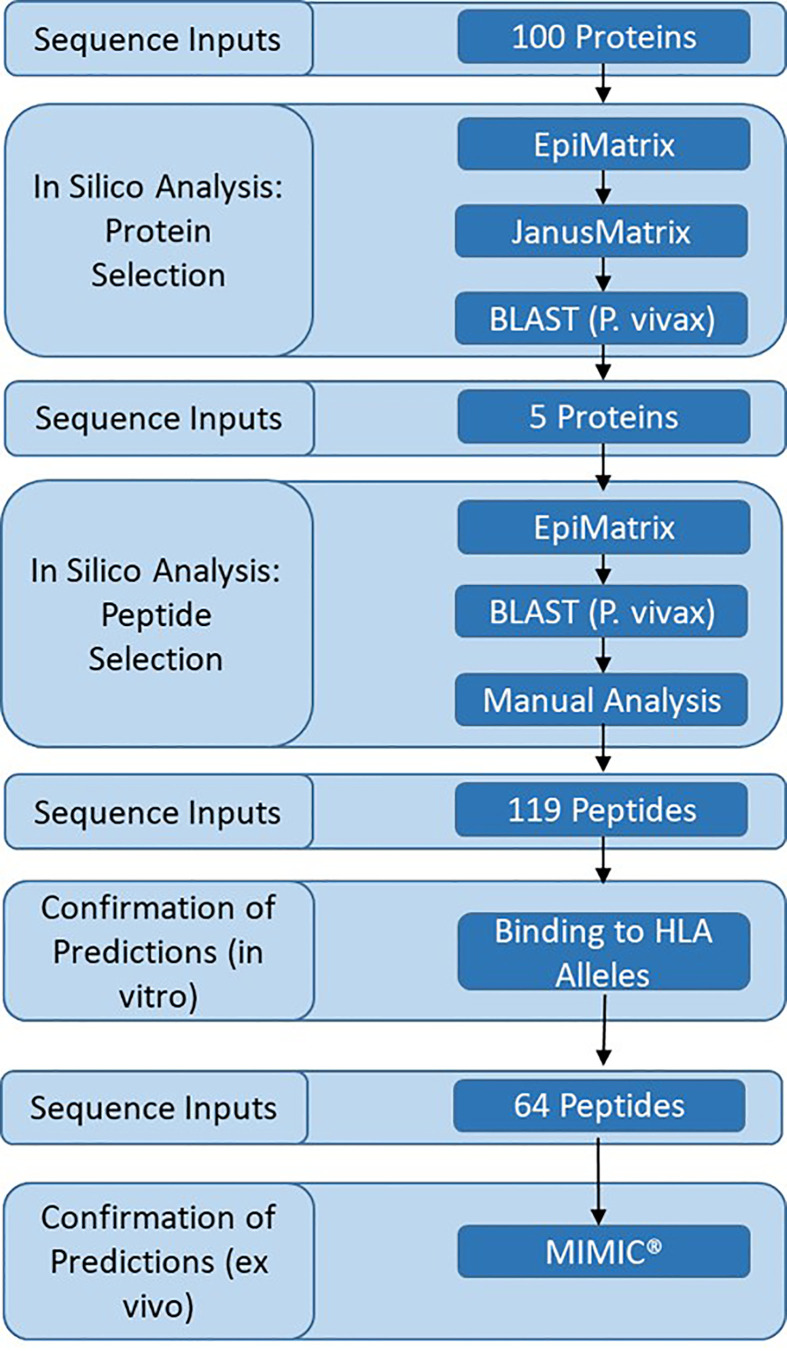
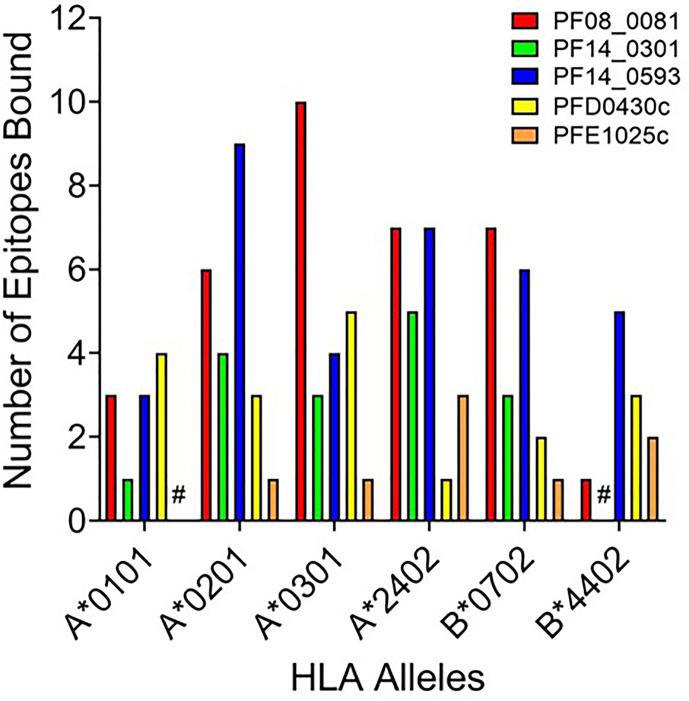
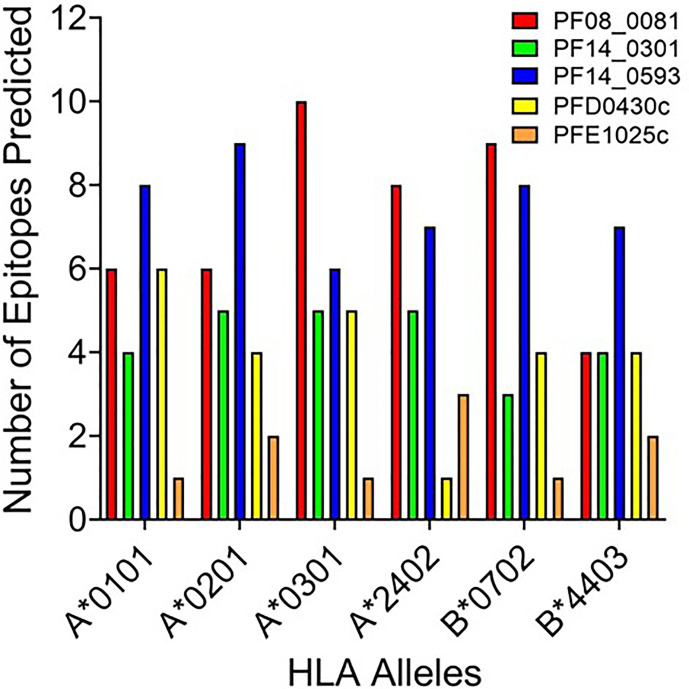
Immunization with radiation-attenuated sporozoites (RAS) has been shown to protect against malaria infection, primarily through CD8 T cell responses, but protection is limited based on parasite strain. Therefore, while CD8 T cells are an ideal effector population target for liver stage malaria vaccine development strategies, such strategies must incorporate conserved epitopes that cover a large range of class I human leukocyte antigen (HLA) supertypes to elicit cross-strain immunity across the target population. This approach requires identifying and characterizing a wide range of CD8 T cell epitopes for incorporation into a vaccine such that coverage across a large range of class I HLA alleles is attained. Accordingly, we devised an experimental framework to identify CD8 T cell epitopes from novel and minimally characterized antigens found at the pre-erythrocytic stage of parasite development. Through in silico analysis we selected conserved proteins, using orthologues to establish stringent conservation parameters, predicted to have a high number of T cell epitopes across a set of six class I HLA alleles representative of major supertypes. Using the decision framework, five proteins were selected based on the density and number of predicted epitopes. Selected epitopes were synthesized as peptides and evaluated for binding to the class I HLA alleles to verify in silico binding predictions, and subsequently for stimulation of human T cells using the Modular IMmune In-vitro Construct (MIMIC) technology to verify immunogenicity. By combining the in silico tools with the high throughput MIMIC platform, we identified 15 novel CD8 T cell epitopes capable of stimulating an immune response in alleles across the class I HLA panel. We recommend these epitopes should be evaluated in appropriate humanized immune system models to determine their protective efficacy for potential inclusion in future vaccines.
用减毒子孢子(RAS)进行免疫已被证明可以预防疟疾感染,主要是通过 CD8 T 细胞反应,但保护效果因寄生虫株而异。因此,虽然 CD8 T 细胞是肝脏阶段疟疾疫苗开发策略的理想效应细胞群体靶标,但此类策略必须包含保守表位,这些表位覆盖广泛的 I 类人类白细胞抗原(HLA)超型,以在目标人群中引发跨株免疫。这种方法需要鉴定和表征广泛的 CD8 T 细胞表位,以将其纳入疫苗中,从而在广泛的 I 类 HLA 等位基因中实现覆盖。因此,我们设计了一个实验框架,以鉴定来自寄生虫发育的前红细胞阶段的新型和特征最小的抗原的 CD8 T 细胞表位。通过计算机分析,我们选择了保守的蛋白质,使用同源物来建立严格的保守参数,预测在一组六个代表主要超型的 I 类 HLA 等位基因中具有大量 T 细胞表位。使用决策框架,根据预测的表位密度和数量选择了五个蛋白质。选择的表位被合成肽,并评估其与 I 类 HLA 等位基因的结合,以验证计算机结合预测,随后使用模块化免疫体外构建(MIMIC)技术刺激人类 T 细胞,以验证免疫原性。通过将计算机工具与高通量 MIMIC 平台相结合,我们确定了 15 个新的 CD8 T 细胞表位,这些表位能够刺激 I 类 HLA 面板中不同等位基因的免疫反应。我们建议应在适当的人源化免疫系统模型中评估这些表位,以确定其在未来疫苗中的潜在保护效果。