Department of Chemistry, University of Massachusetts Boston, Boston, Massachusetts, USA.
Department of Chemistry and Biochemistry, Suffolk University, Boston, Massachusetts, USA.
J Biol Chem. 2021 Jul;297(1):100823. doi: 10.1016/j.jbc.2021.100823. Epub 2021 May 23.
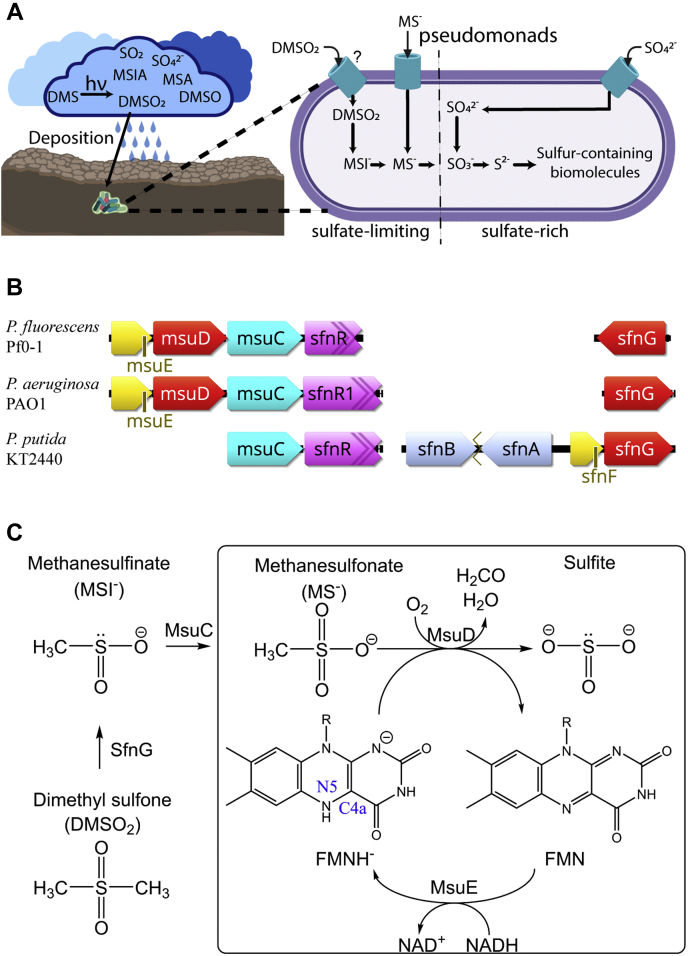
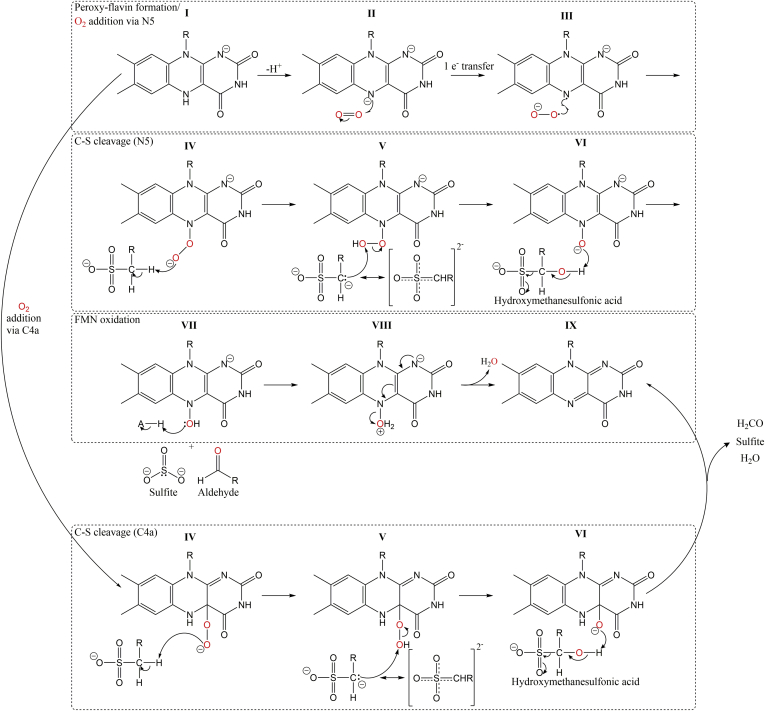
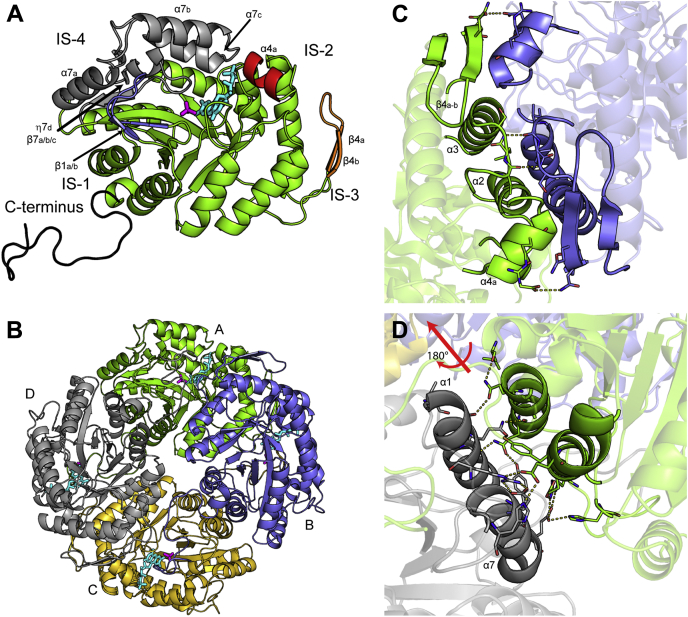
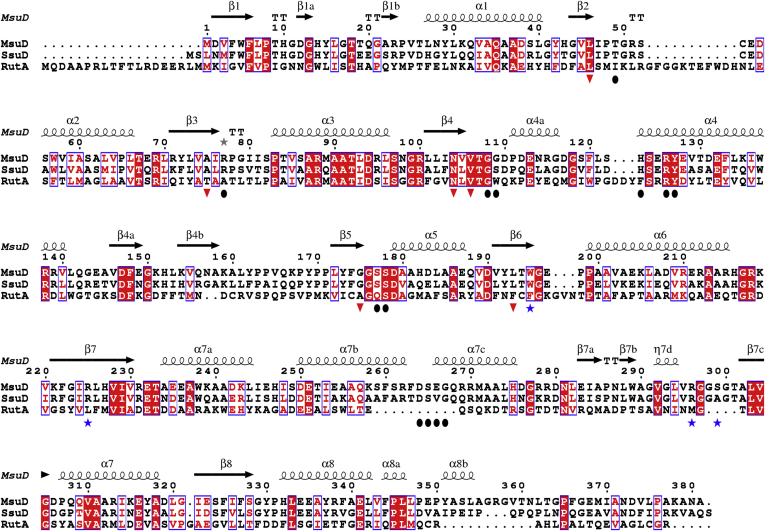
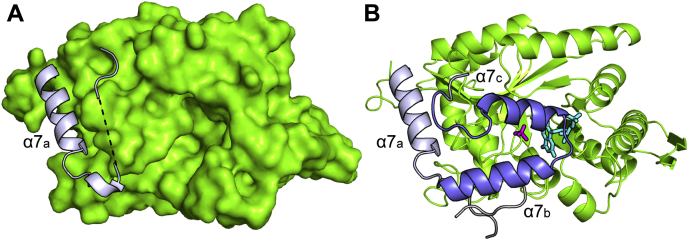
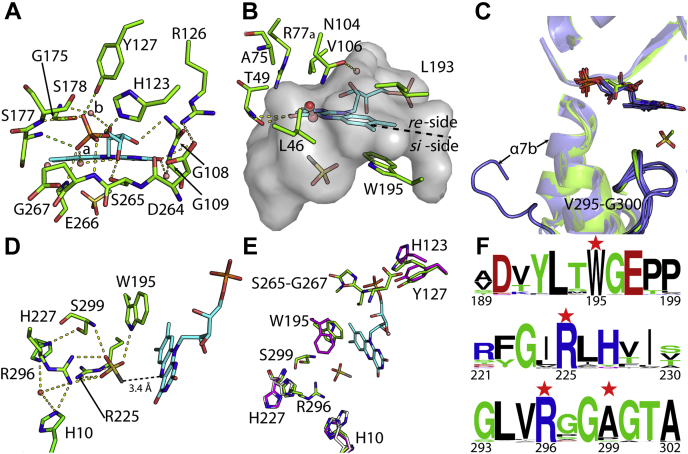
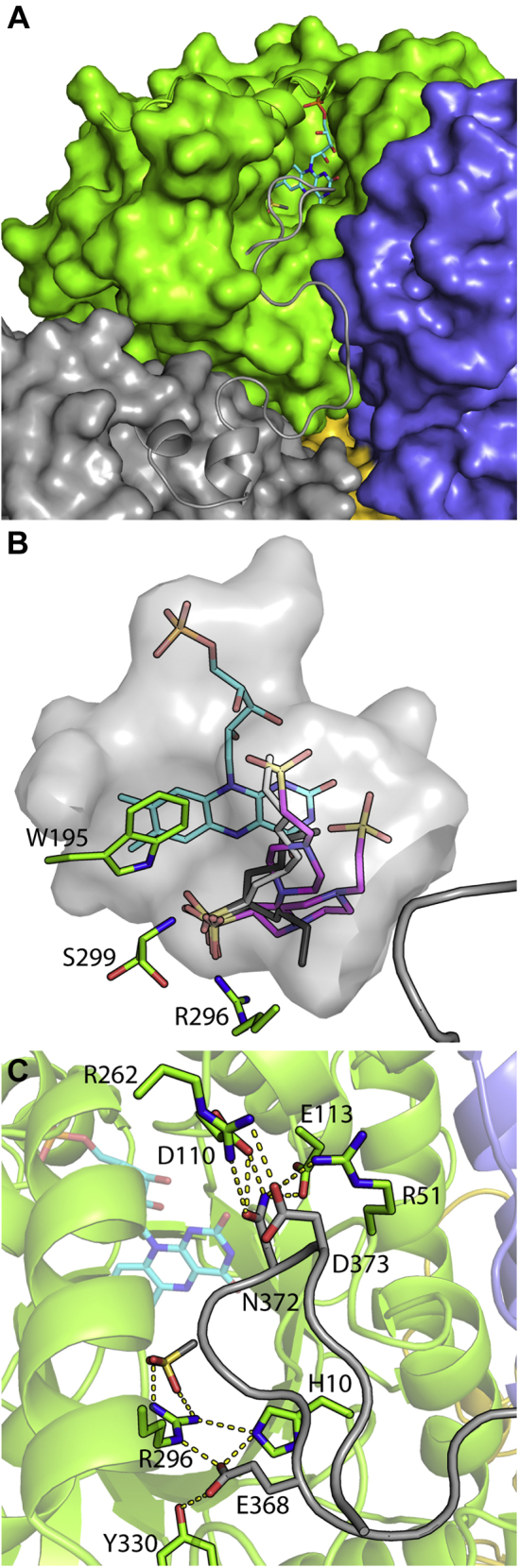
Bacterial two-component flavin-dependent monooxygenases cleave the stable C-S bond of environmental and anthropogenic organosulfur compounds. The monooxygenase MsuD converts methanesulfonate (MS) to sulfite, completing the sulfur assimilation process during sulfate starvation, but the mechanism of this conversion remains unclear. To explore the mechanism of C-S bond cleavage, we report a series of crystal structures of MsuD from Pseudomonas fluorescens in different liganded states. This report provides the first crystal structures of an alkanesulfonate monooxygenase with a bound flavin and alkanesulfonate, elucidating the roles of the active site lid, the protein C terminus, and an active site loop in flavin and/or alkanesulfonate binding. These structures position MS closest to the flavin N5 position, consistent with an N5-(hydro)peroxyflavin mechanism rather than a classical C4a-(hydro)peroxyflavin mechanism. A fully enclosed active site is observed in the ternary complex, mediated by interchain interaction of the C terminus at the tetramer interface. These structures identify an unexpected function of the protein C terminus in this protein family in stabilizing tetramer formation and the alkanesulfonate-binding site. Spurred by interest from the crystal structures, we conducted biochemical assays and molecular docking that redefine MsuD as a small- to medium-chain alkanesulfonate monooxygenase. Functional mutations verify the sulfonate-binding site and reveal the critical importance of the protein C terminus for monooxygenase function. These findings reveal a deeper understanding of MsuD's functionality at the molecular level and consequently how it operates within its role as part of the sulfur assimilation pathway.
细菌双组分黄素依赖性单加氧酶可裂解环境和人为有机硫化合物中的稳定 C-S 键。单加氧酶 MsuD 将甲磺酸盐 (MS) 转化为亚硫酸盐,完成硫酸盐饥饿期间的硫同化过程,但该转化的机制仍不清楚。为了探索 C-S 键裂解的机制,我们报道了来自荧光假单胞菌的 MsuD 在不同配体状态下的一系列晶体结构。该报告提供了第一个与黄素和烷磺酸盐结合的烷磺酸盐单加氧酶的晶体结构,阐明了活性位点盖、蛋白质 C 末端和活性位点环在黄素和/或烷磺酸盐结合中的作用。这些结构使 MS 最接近黄素 N5 位置,与 N5-(羟)过氧黄素机制一致,而不是经典的 C4a-(羟)过氧黄素机制。在三元复合物中观察到完全封闭的活性位点,由四聚体界面处的 C 末端链间相互作用介导。这些结构确定了蛋白质 C 末端在该蛋白家族中稳定四聚体形成和烷磺酸盐结合位点的意外功能。受晶体结构的启发,我们进行了生化测定和分子对接,重新定义了 MsuD 为小至中链烷磺酸盐单加氧酶。功能突变验证了磺酸盐结合位点,并揭示了蛋白质 C 末端对单加氧酶功能的至关重要性。这些发现揭示了 MsuD 在分子水平上的功能的更深入理解,从而了解其在硫同化途径中的作用。