Department of Oral and Maxillofacial Surgery, University Hospitals Leuven, Kapucijnenvoer 33, 3000, Leuven, Belgium.
OMFS-IMPATH Research Group, Department of Imaging and Pathology, Faculty of Medicine, University Leuven, Leuven, Belgium.
J Headache Pain. 2021 May 24;22(1):44. doi: 10.1186/s10194-021-01261-3.
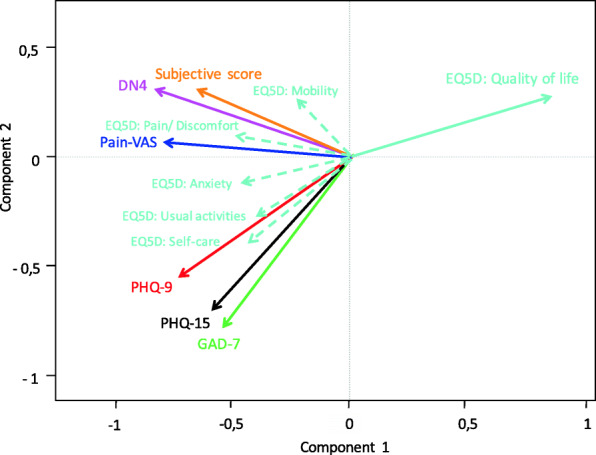
Post-traumatic trigeminal neuropathy (PTN) can have a substantial effect on patient well-being. However, the relation between the neuropathic symptoms and their effect on psychosocial functioning remains a matter of debate. The purpose of this study was to evaluate the association between objective and subjective assessments of neurosensory function in PTN and predict neurosensory outcome using baseline measurements.
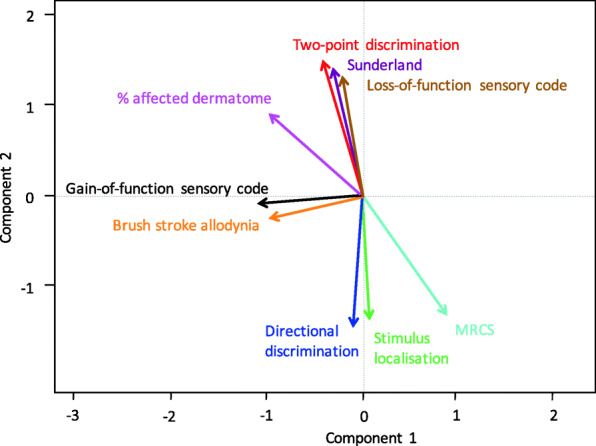
This prospective observational cohort study included patients diagnosed with PTN at the Department of Oral and Maxillofacial Surgery, University Hospital Leuven, Belgium, between April 2018 and May 2020. Standardized objective and subjective neurosensory examinations were recorded simultaneously on multiple occasions during the follow-up period. Correlation analyses and principal component analysis were conducted, and a prediction model of neurosensory recovery was developed.
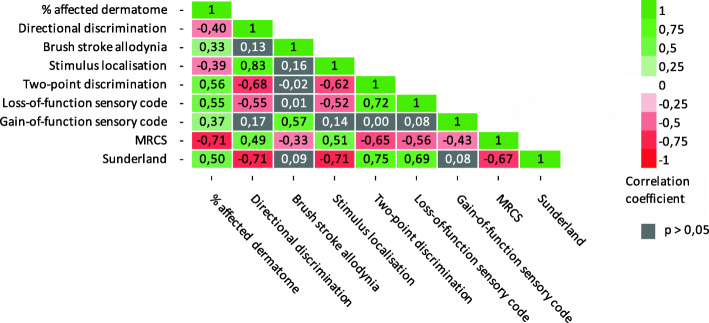
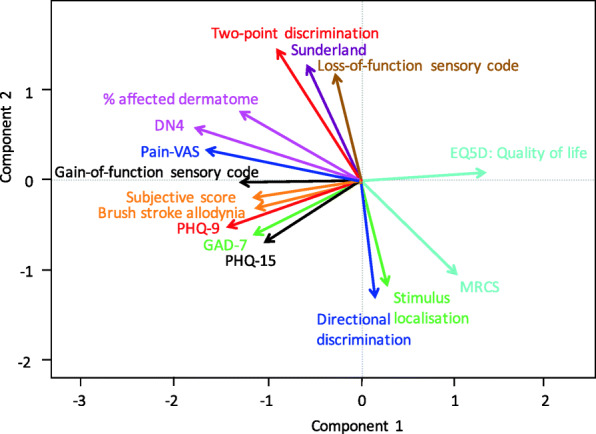
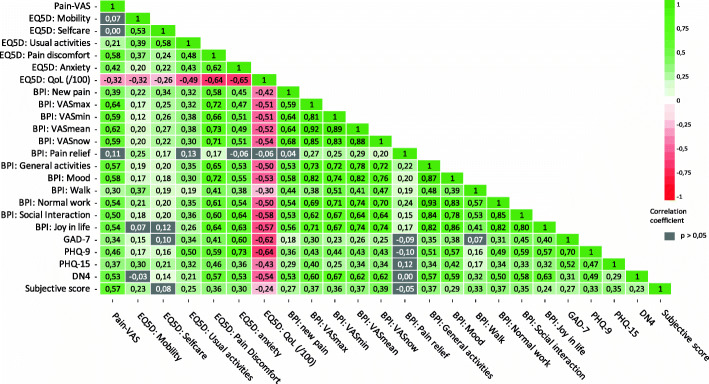
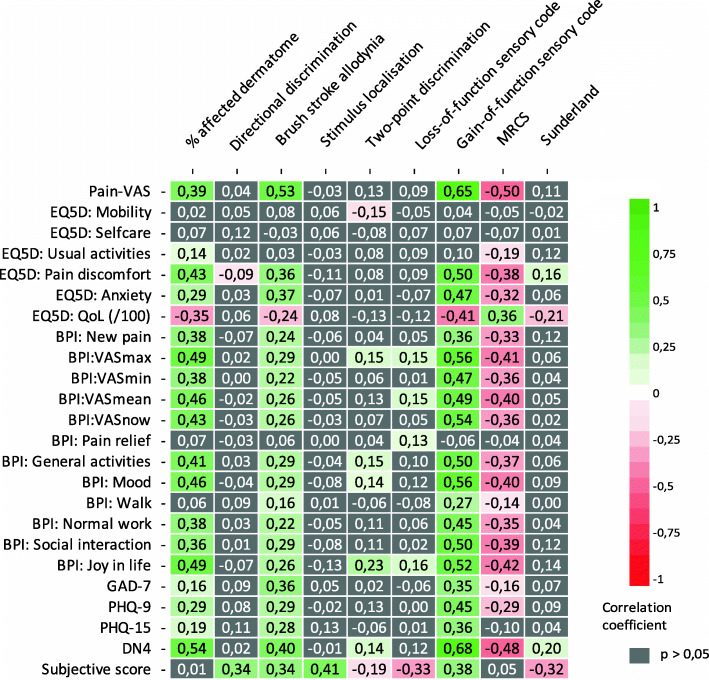
Quality of life correlated significantly (P < 0.05) with percentage of affected dermatome (ρ = - 0.35), the presence of brush stroke allodynia (ρ = - 0.24), gain-of-function sensory phenotype (ρ = - 0.41), Medical Research Council Scale (ρ = 0.36), and Sunderland classification (ρ = - 0.21). Quality of life was not significantly correlated (P > 0.05) with directional discrimination, stimulus localization, two-point discrimination, or sensory loss-of-function. The prediction model showed a negative predictive value for neurosensory recovery after 6 months of 87%.
We found a strong correlation of subjective well-being with the presence of brush stroke allodynia, thermal and/or mechanical hyperesthesia, and the size of the neuropathic area. These results suggest that positive symptoms dominate the effect on affect. In patients reporting poor subjective well-being in the absence of positive symptoms or a large neuropathic area, additional attention towards psychosocial triggers might enhance treatment outcome. The prediction model could contribute to establishing realistic expectations about the likelihood of neurosensory recovery but remains to be validated in future studies.
创伤后三叉神经病变(PTN)会对患者的健康状况产生重大影响。然而,神经病理性症状与其对社会心理功能的影响之间的关系仍存在争议。本研究的目的是评估 PTN 患者神经感觉功能的客观和主观评估之间的关系,并使用基线测量值预测神经感觉结果。
这是一项前瞻性观察队列研究,纳入了 2018 年 4 月至 2020 年 5 月期间在比利时鲁汶大学医院口腔颌面外科诊断为 PTN 的患者。在随访期间的多个时间点同时记录标准化的客观和主观神经感觉检查。进行了相关分析和主成分分析,并开发了神经感觉恢复的预测模型。
生活质量与受累皮区的百分比(ρ=-0.35)、刷状痛觉过敏的存在(ρ=-0.24)、功能获得性感觉表型(ρ=-0.41)、医学研究委员会量表(ρ=0.36)和桑德兰分类(ρ=-0.21)显著相关(P<0.05)。生活质量与方向辨别力、刺激定位、两点辨别力或感觉功能丧失无显著相关性(P>0.05)。预测模型对 6 个月后神经感觉恢复的阴性预测值为 87%。
我们发现主观幸福感与刷状痛觉过敏、热和/或机械性感觉过敏以及神经病变区域的大小密切相关。这些结果表明,阳性症状主导了对情感的影响。在报告主观幸福感不佳但无阳性症状或较大神经病变区域的患者中,对社会心理触发因素的额外关注可能会提高治疗效果。该预测模型有助于对神经感觉恢复的可能性建立现实的预期,但仍需要在未来的研究中验证。