Centre for Integrative Ecology, School of Life and Environmental Sciences, Deakin University, Burwood, Victoria, Australia.
PLoS One. 2021 May 25;16(5):e0252092. doi: 10.1371/journal.pone.0252092. eCollection 2021.
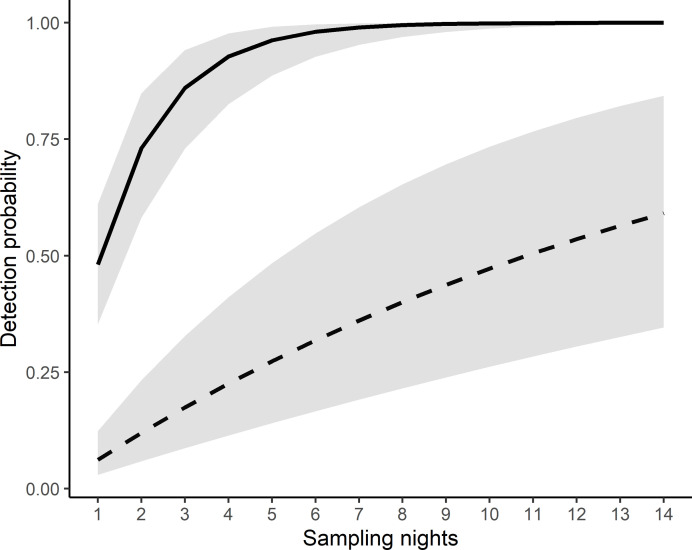
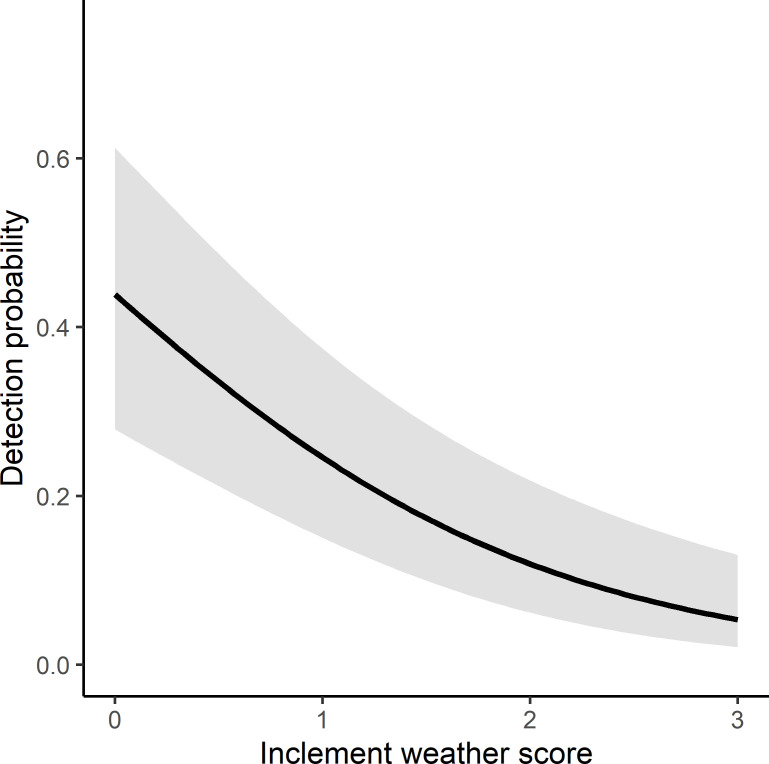
Passive acoustic monitoring (PAM) is increasingly being used for the survey of vocalising wildlife species that are otherwise cryptic and difficult to survey. Our study aimed to develop PAM guidelines for detecting the Yellow-bellied Glider, a highly vocal arboreal marsupial that occurs in native Eucalyptus forests in eastern and south-eastern Australia. To achieve this, we considered the influence of background noise, weather conditions, lunar illumination, time since sunset and season on the probability of detecting vocalisations. We deployed Autonomous Recording Units (ARUs) at 43 sites in the Central Highlands of Victoria during two periods: spring/summer (October 2018 to January 2019), and autumn/winter (May to August 2019). ARUs were programmed to record for 11 hours from sunset for 14 consecutive days during each period. Background noise resulted from inclement weather (wind and rain) and masked vocalisations in spectrograms of the recordings, thus having the greatest influence on detection probability. Vocalisations were most common in the four hours after sunset. Rainfall negatively influenced detection probability, especially during the autumn/winter sampling period. Detection of Yellow-bellied Gliders with PAM requires deploying ARUs programmed to record for four hours after sunset, for a minimum of six nights with minimal inclement weather (light or no wind or rain). The survey period should be extended to 12 nights when rain or wind are forecast. Because PAM is less labour intensive than active surveys (i.e., spotlighting and call playbacks with multiple observers and several nights' survey per site), its use will facilitate broad-scale surveys for Yellow-bellied Gliders.
被动声学监测(PAM)越来越多地用于调查那些原本难以探测的发声野生动物。我们的研究旨在为检测黄腹袋狸制定 PAM 指南,黄腹袋狸是一种高度发声的树栖有袋动物,分布于澳大利亚东部和东南部的原生桉树森林中。为了实现这一目标,我们考虑了背景噪声、天气条件、月照、日落时间和季节对检测发声概率的影响。我们在维多利亚州中部高地的 43 个地点部署了自动录音器(ARUs),在两个时期进行了监测:春季/夏季(2018 年 10 月至 2019 年 1 月)和秋季/冬季(2019 年 5 月至 8 月)。每个时期,ARUs 都被编程为从日落开始连续记录 14 天,每天记录 11 小时。背景噪声来自恶劣天气(风和雨),掩盖了录音的声谱图中的发声,因此对检测概率的影响最大。发声最常见于日落四小时后。降雨对检测概率有负面影响,特别是在秋季/冬季采样期间。使用 PAM 检测黄腹袋狸需要部署 ARUs,编程为在日落四小时后记录,最少需要六晚,且天气恶劣(无风和无雨或轻微风/雨)。当预报有雨或风时,应将调查时间延长至 12 晚。由于 PAM 比主动调查(即使用多个观察者进行灯光照射和叫声回放,每个地点进行数晚的调查)劳动强度低,因此其使用将有助于黄腹袋狸的大规模调查。