National Medicines Institute, Chełmska 30/34, 00-725, Warsaw, Poland.
International Institute of Translational Medicine, Jesionowa 11, 55-114, Malin, Wisznia Mała, Poland.
Cell Commun Signal. 2021 May 25;19(1):61. doi: 10.1186/s12964-021-00735-w.
Chronic superphysiological glucose and insulin concentrations are known to trigger several tissue and organ failures, including insulin resistance, oxidative stress and chronic low-grade inflammation. Hence, the screening for molecules that may counteract such conditions is essential in current existing therapeutic strategies, thereby the use of medicinal plant derivatives represents a promising axis in this regard.
In this study, the effect of a selected traditional medicinal plant, Hyoscyamus albus from which, calystegines have been isolated, was investigated in an experimental model of hyperinsulinemia and hyperglycemia induced on HepG2 cells. The mRNA and protein expression levels of different insulin signaling, gluconeogenic and inflammatory pathway- related molecules were examined. Additionally, cell viability and apoptosis, oxidative stress extent and mitochondrial dysfunctions were assayed using flow cytometric and qRT-PCR techniques.
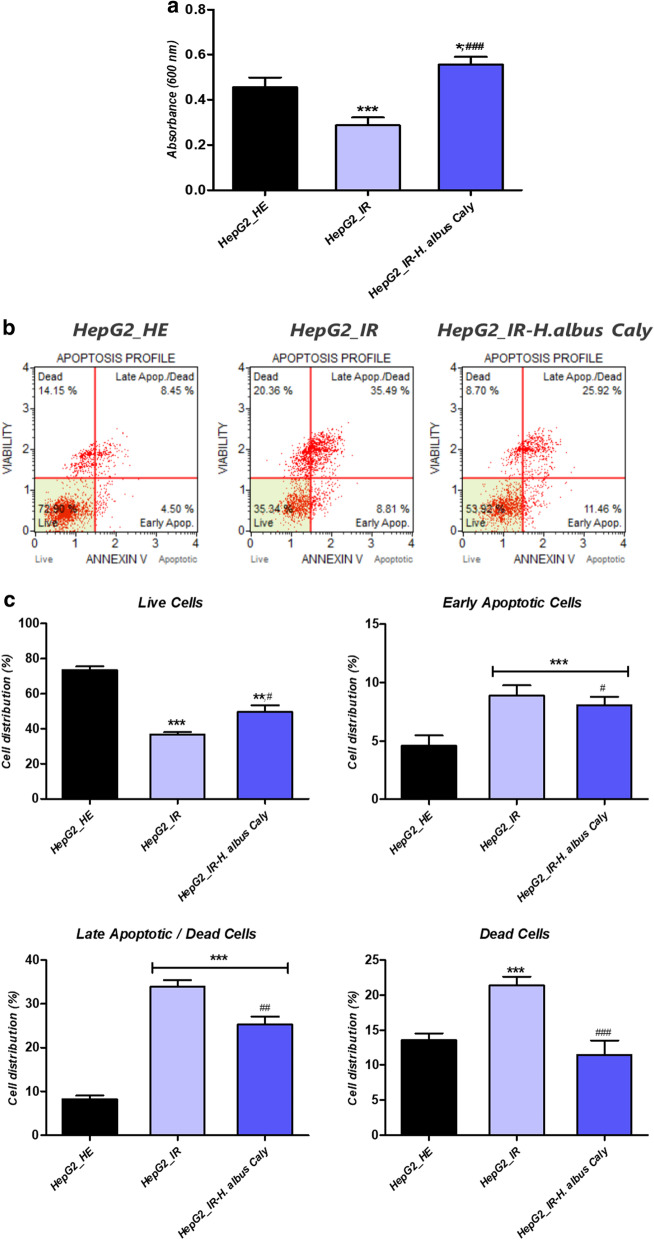
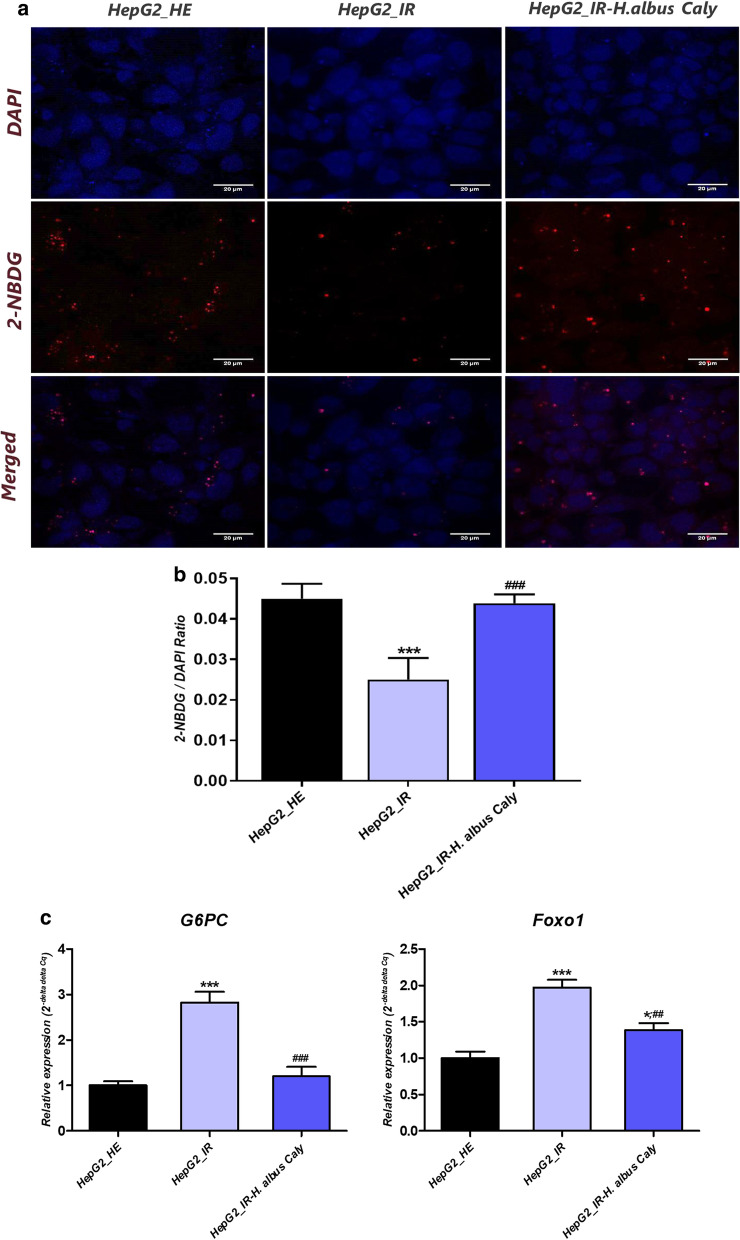
Treatment of IR HepG2 cells with calystegines strongly protected the injured cells from apoptosis, oxidative stress and mitochondrial integrity loss. Interestingly, nortropane alkaloids efficiently regulated the impaired glucose metabolism in IR HepG2 cells, through the stimulation of glucose uptake and the modulation of SIRT1/Foxo1/G6PC/mTOR pathway, which is governing the hepatic gluconeogenesis. Furthermore, the alkaloidal extract restored the defective insulin signaling pathway, mainly by promoting the expression of Insr at the mRNA and protein levels. What is more, treated cells exhibited significant mitigated inflammatory response, as evidenced by the modulation and the regulation of the NF- κB/JNK/TLR4 axis and the downstream proinflammatory cytokines recruitment.
Overall, the present investigation demonstrates that calystegines from Hyoscyamus albus provide cytoprotection to the HepG2 cells against insulin/glucose induced insulin resistance and apoptosis due to the regulation of SIRT1/Foxo1/G6PC/mTOR and NF-κB/JNK/TLR4 signaling pathways. Video Abstract.
慢性超生理葡萄糖和胰岛素浓度已知会引发几种组织和器官衰竭,包括胰岛素抵抗、氧化应激和慢性低度炎症。因此,筛选可能对抗这种情况的分子对于当前现有的治疗策略至关重要,因此,使用药用植物衍生物代表了这方面的一个有前途的方向。
在这项研究中,研究了从白毛天仙子中分离出的 calystegines 的一种选定的传统药用植物对高胰岛素血症和高血糖诱导的 HepG2 细胞实验模型的影响。检查了不同胰岛素信号、糖异生和炎症途径相关分子的 mRNA 和蛋白质表达水平。此外,还使用流式细胞术和 qRT-PCR 技术测定了细胞活力和凋亡、氧化应激程度和线粒体功能障碍。
calystegines 处理 IR HepG2 细胞可强烈保护受损细胞免于凋亡、氧化应激和线粒体完整性丧失。有趣的是,托烷生物碱通过刺激葡萄糖摄取和调节 SIRT1/Foxo1/G6PC/mTOR 途径,有效地调节了 IR HepG2 细胞中受损的葡萄糖代谢,该途径控制着肝糖异生。此外,生物碱提取物恢复了受损的胰岛素信号通路,主要通过促进 Insr 在 mRNA 和蛋白质水平上的表达。更重要的是,处理后的细胞表现出明显减轻的炎症反应,这可以通过调节和调节 NF-κB/JNK/TLR4 轴及其下游促炎细胞因子的募集来证明。
总的来说,本研究表明,白毛天仙子中的 calystegines 通过调节 SIRT1/Foxo1/G6PC/mTOR 和 NF-κB/JNK/TLR4 信号通路,为 HepG2 细胞提供了针对胰岛素/葡萄糖诱导的胰岛素抵抗和凋亡的细胞保护作用。