Surgery, University of Virginia School of Medicine, Charlottesville, Virginia, USA.
Public Health Sciences, University of Virginia School of Medicine, Charlottesville, Virginia, USA.
J Immunother Cancer. 2021 May;9(5). doi: 10.1136/jitc-2020-002214.
Experimental cancer vaccines are traditionally administered by injection in subcutaneous tissue or muscle, commonly with adjuvants that create chronic inflammatory depots. Injection of melanoma-derived peptides induces T cell responses; however, the depots that form following injection may inhibit optimization of the immune response. In skin, epidermal Langerhans cells (LC) are a dominant source of professional antigen presenting cells. We hypothesized that: (1) applying melanoma-derived peptides topically, in proximity to LC, could be immunogenic and safe, with low vaccine-site toxicity and (2) topical toll-like receptor 7 (TLR7) agonist would increase immunogenicity of the peptide vaccine.
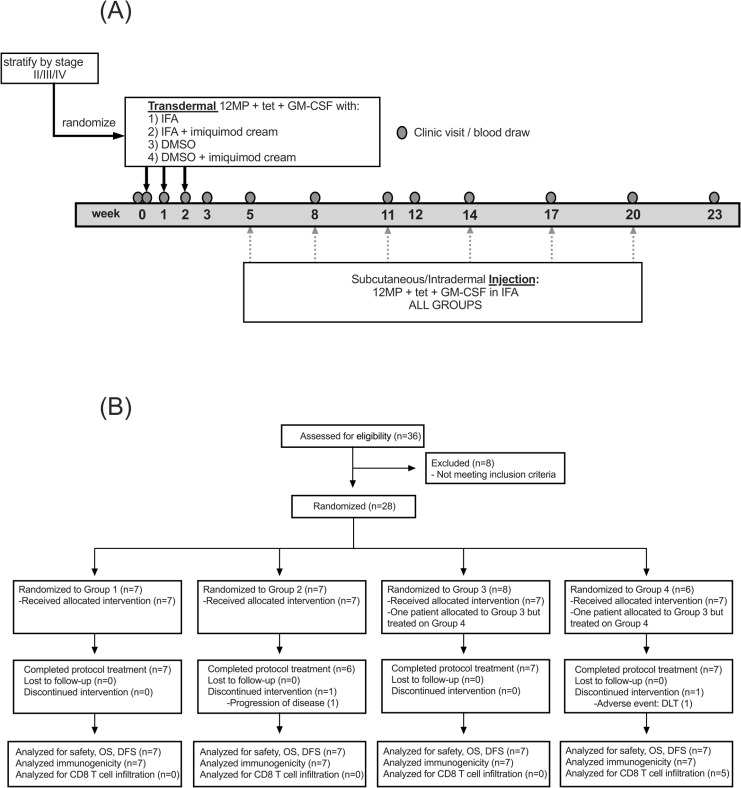
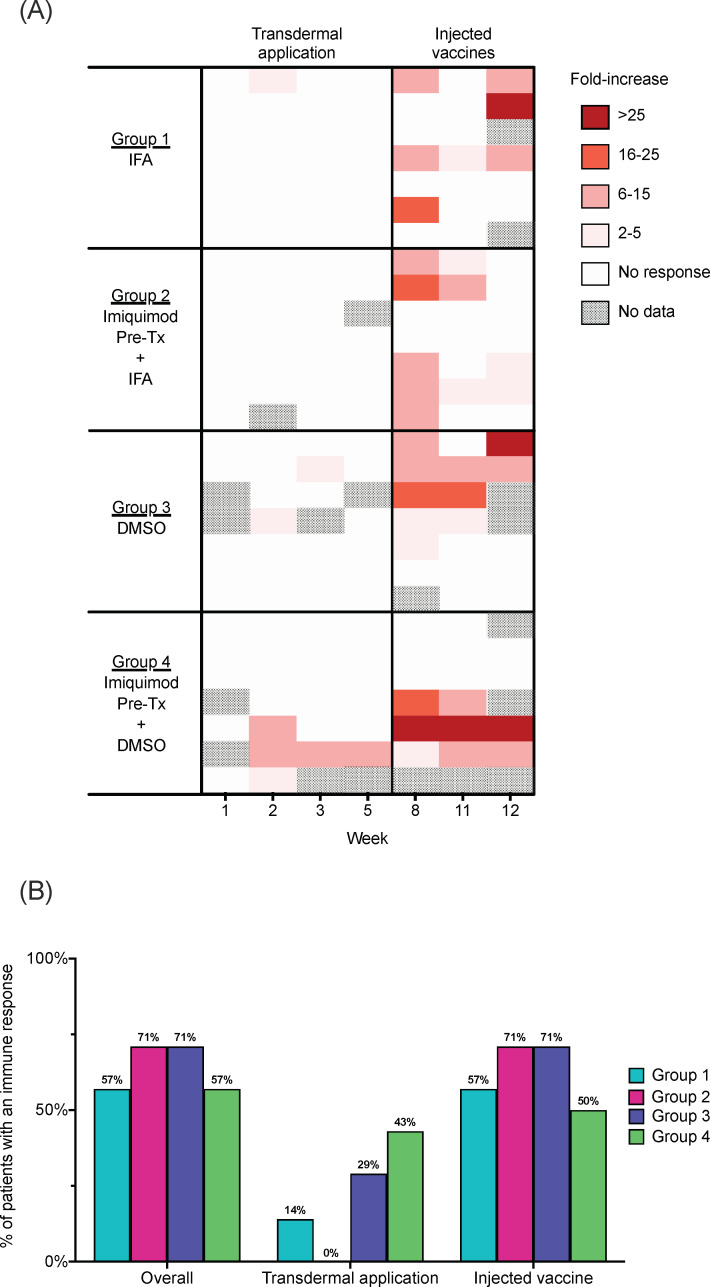
Twelve melanoma peptides plus a tetanus helper peptide were combined with granulocyte macrophage colony stimulating factor (GM-CSF) and were administered topically on days 1, 8, and 15, to 28 patients randomized to one of four adjuvant preparations: (1) incomplete Freund's adjuvant (IFA); (2) IFA plus a TLR7 agonist (imiquimod) administered on days 0, 7, 14; (3) dimethyl sulfoxide (DMSO) or (4) DMSO+ imiquimod administered on day 0, 7, 14. Every 3 weeks thereafter (x 6), the peptides were combined with GM-CSF and were injected into the dermis and subcutis in an emulsion with IFA. Toxicities were recorded and immune responses assayed by ELIspot.
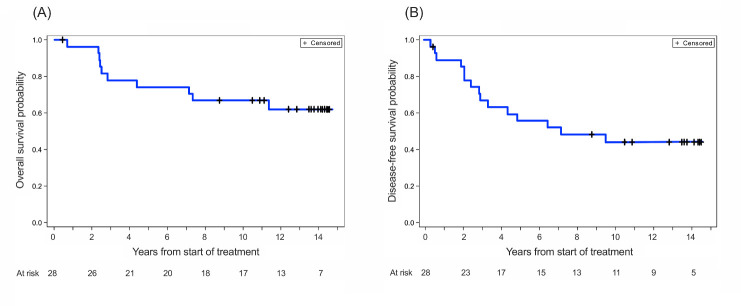
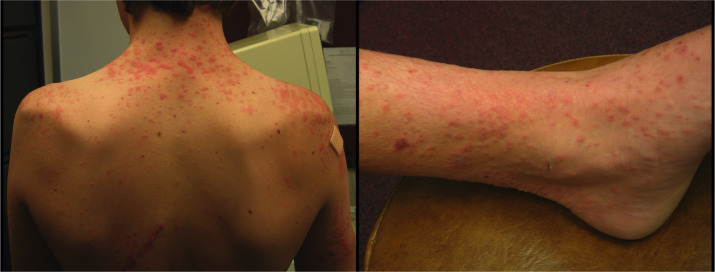
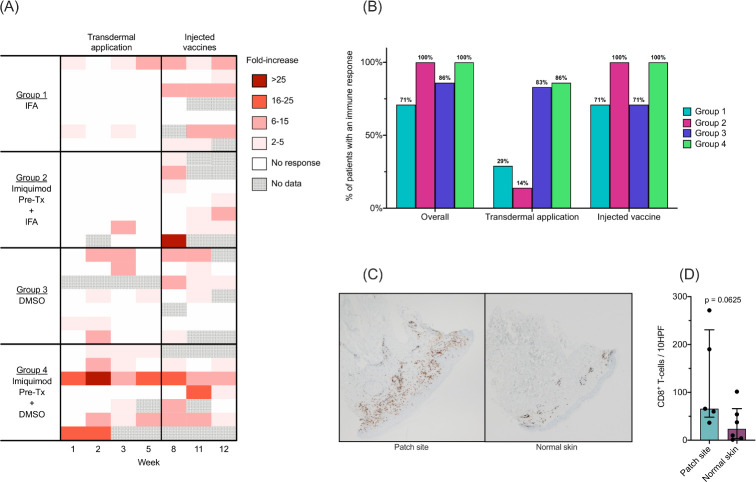
CD8 T cell responses to transdermal vaccination in DMSO occurred in 83% of participants in group 3 and 86% in group 4, and responses to vaccination in IFA were observed in 29% of participants in group 1 and 14% in group 2. Overall, 61% of participants had CD4 T cell immune responses to the tetanus peptide, with large, durable responses in groups 3 and 4. Five of seven participants in group 4 had a severe rash, one that was dose limiting. Ten-year overall survival was 67% and disease-free survival was 44%.
These data provide proof of principle for immunogenicity in humans of transdermal immunization using peptides in DMSO. Further study is warranted into the pharmacokinetics and immunobiology of TLR agonists as vaccine adjuvants during transcutaneous application. Overall survival is high, supporting further investigation of this immunization approach.
实验性癌症疫苗传统上通过皮下组织或肌肉注射给药,通常使用可产生慢性炎症储库的佐剂。注射黑色素瘤衍生肽可诱导 T 细胞反应;然而,注射后形成的储库可能会抑制免疫反应的优化。在皮肤中,表皮朗格汉斯细胞(LC)是主要的专业抗原提呈细胞来源。我们假设:(1)将黑色素瘤衍生肽局部应用于 LC 附近可能具有免疫原性和安全性,疫苗部位的毒性低,(2)局部 Toll 样受体 7(TLR7)激动剂可增加肽疫苗的免疫原性。
将 12 种黑色素瘤肽与破伤风辅助肽结合,并与粒细胞巨噬细胞集落刺激因子(GM-CSF)一起,在 28 名患者中随机分为以下四种佐剂方案之一:(1)不完全弗氏佐剂(IFA);(2)IFA 加 TLR7 激动剂(咪喹莫特)在第 0、7、14 天给药;(3)二甲亚砜(DMSO)或(4)DMSO+咪喹莫特在第 0、7、14 天给药。此后每 3 周(x6),将肽与 GM-CSF 混合,并以 IFA 乳剂注入真皮和皮下组织。记录毒性并通过 ELIspot 检测免疫反应。
在 DMSO 组中,83%的参与者发生了经皮疫苗接种的 CD8 T 细胞反应,在 DMSO+咪喹莫特组中为 86%,在 IFA 组中为 29%的参与者发生了疫苗接种反应,在 IFA+咪喹莫特组中为 14%。总体而言,61%的参与者对破伤风肽有 CD4 T 细胞免疫反应,在 DMSO+咪喹莫特组中反应较大且持久。在 DMSO+咪喹莫特组中,有 5 名参与者出现严重皮疹,其中 1 名皮疹严重限制了剂量。10 年总生存率为 67%,无病生存率为 44%。
这些数据为使用 DMSO 中的肽进行经皮免疫的人类免疫原性提供了原理证明。需要进一步研究 TLR 激动剂作为经皮应用时的疫苗佐剂的药代动力学和免疫生物学。总体生存率较高,支持进一步研究这种免疫接种方法。