Sheth Radhika, Menon Priya, Malik Devin
Internal Medicine, Henry Ford Health System, Jackson, USA.
Hematology/Oncology, Henry Ford Health System, Jackson, USA.
Cureus. 2021 Apr 20;13(4):e14582. doi: 10.7759/cureus.14582.
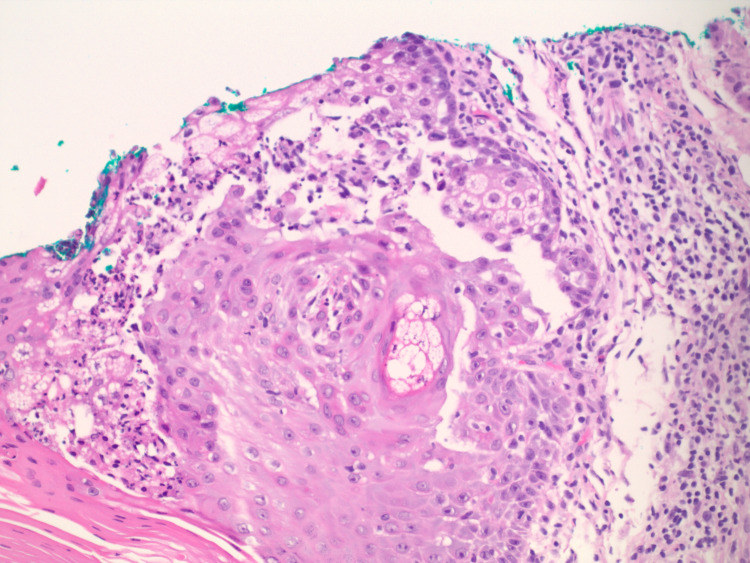
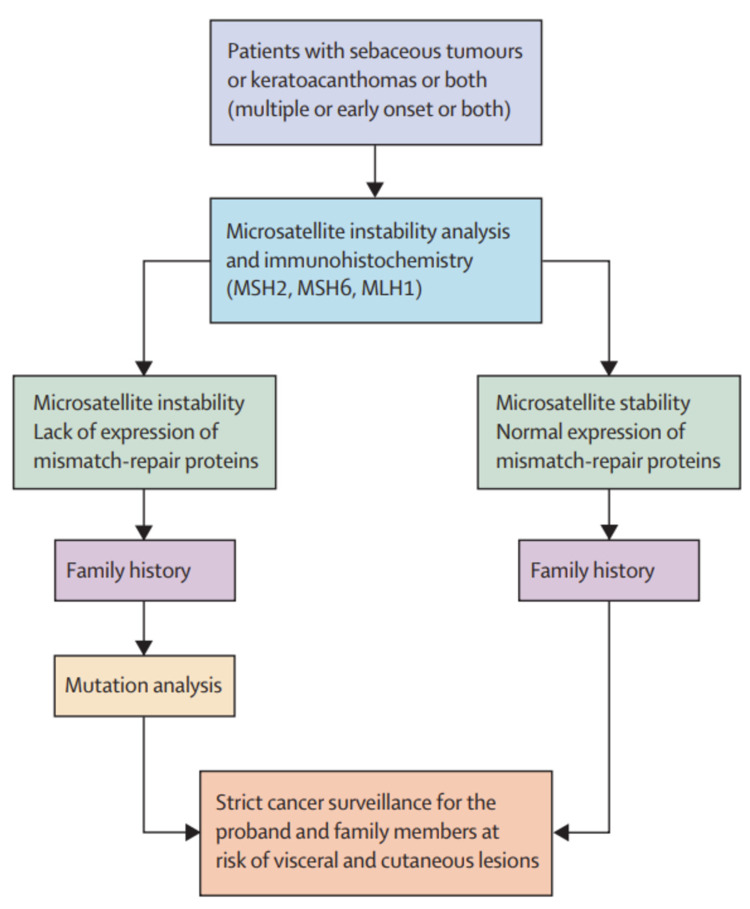
Muir-Torre syndrome (MTS) is an autosomal dominant condition characterized by dermatological tumors along with visceral malignancies. The dermatological manifestations include recurrent sebaceous adenomas and keratoacanthomas. The commonly seen visceral malignancies are colorectal, gynecological, and urological. It is a variant of hereditary non-polyposis colorectal carcinoma syndrome (HNPCC). The underlying genetic mechanism is germline mutations in the DNA mismatch repair (MMR) genes leading to microsatellite instability (MSI), conferring an increased risk of developing malignancies. This is a case of a 57-year-old male patient with a history of colon cancer diagnosed at age 32 and multiple sebaceous adenomas. The patient also has a strong family history of cancer. They were referred to oncology after the immunohistochemical staining of a sebaceous adenoma showed loss of expression for MSH2 and MSH6. Next-generation sequencing identified a mutation in the MSH2 gene. These patients require genetic testing, counseling, and close follow-up with regular screening for cancer.
穆尔-托雷综合征(MTS)是一种常染色体显性遗传病,其特征为皮肤肿瘤伴发内脏恶性肿瘤。皮肤表现包括复发性皮脂腺腺瘤和角化棘皮瘤。常见的内脏恶性肿瘤为结直肠癌、妇科肿瘤和泌尿系统肿瘤。它是遗传性非息肉病性结直肠癌综合征(HNPCC)的一种变体。潜在的遗传机制是DNA错配修复(MMR)基因的种系突变,导致微卫星不稳定(MSI),增加了发生恶性肿瘤的风险。这是一例57岁男性患者,有32岁时诊断为结肠癌及多发皮脂腺腺瘤的病史。该患者还有很强的癌症家族史。在对一个皮脂腺腺瘤进行免疫组化染色显示MSH2和MSH6表达缺失后,他们被转诊至肿瘤科。二代测序确定了MSH2基因存在突变。这些患者需要进行基因检测、咨询,并通过定期癌症筛查进行密切随访。