Hou Hongyan, Luo Ying, Tang Guoxing, Zhang Bo, Ouyang Renren, Wang Ting, Huang Min, Wu Shiji, Li Dengju, Wang Feng
Department of Laboratory Medicine, Tongji Hospital, Tongji Medical College, Huazhong University of Science and Technology, Jiefang Road 1095, Wuhan, 430030, China.
Department of Hematology, Tongji Hospital, Tongji Medical College, Huazhong University of Science and Technology, Wuhan, China.
Cancer Cell Int. 2021 May 27;21(1):282. doi: 10.1186/s12935-021-01978-w.
This study aimed to analyze the lymphocyte subsets, their activities and their dynamic changes during immunochemotherapy in patients newly diagnosed with diffuse large B cell lymphoma (DLBCL).
Patients with DLBCL (n = 33) were included in the present study. Their peripheral lymphocyte subsets, phenotypes and functions were detected using flow cytometry. The dynamic results of lymphocyte activities were available for 18 patients.
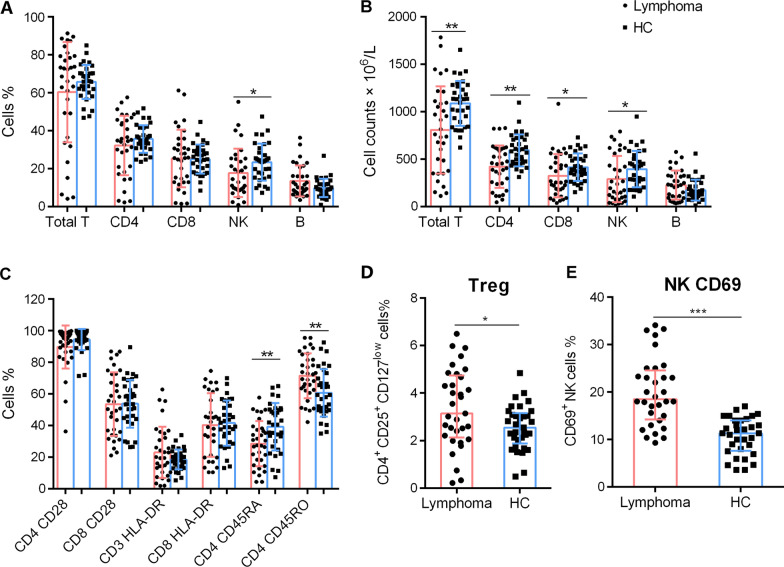
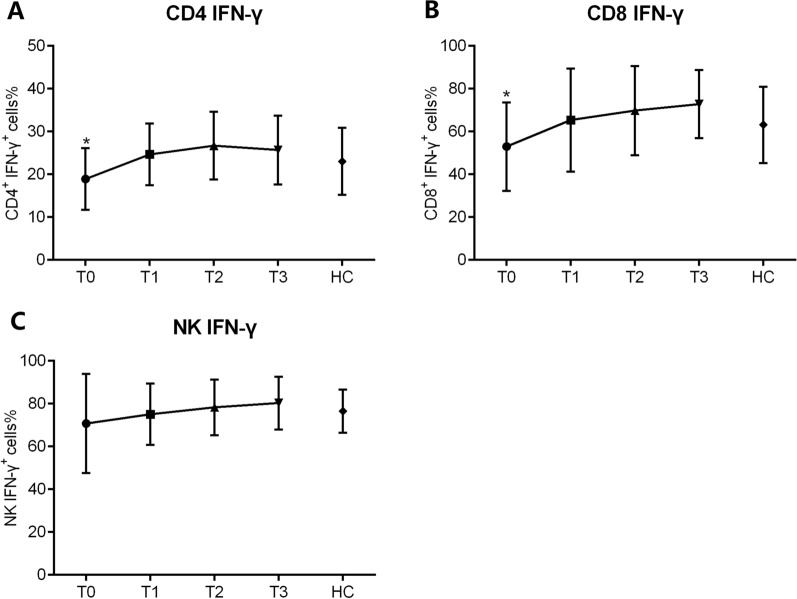
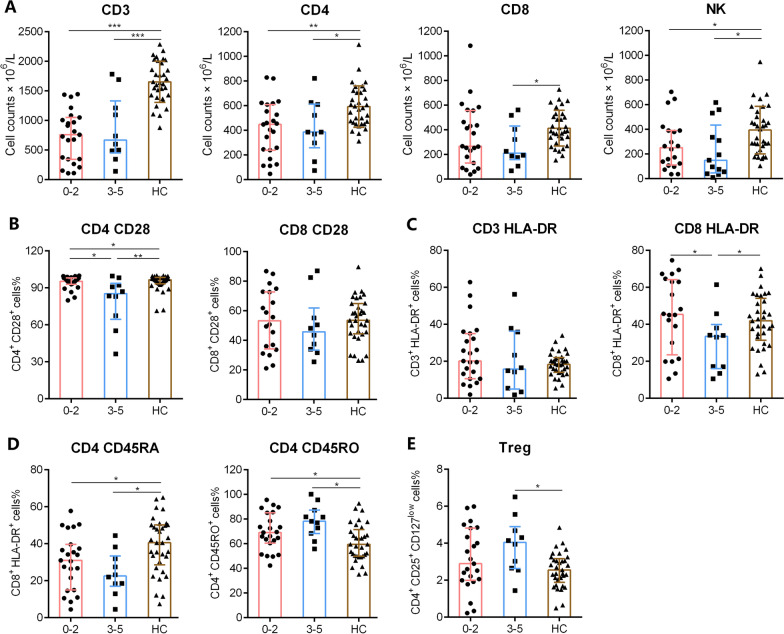
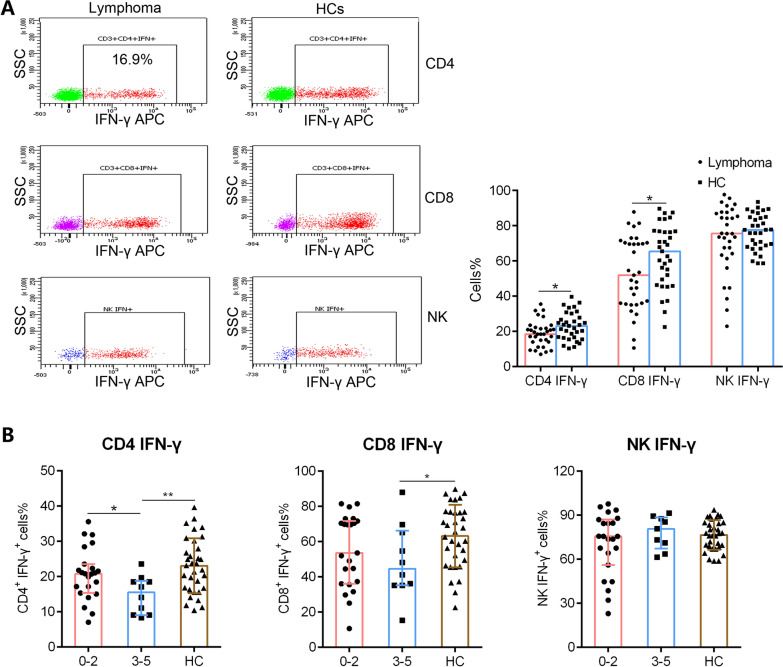
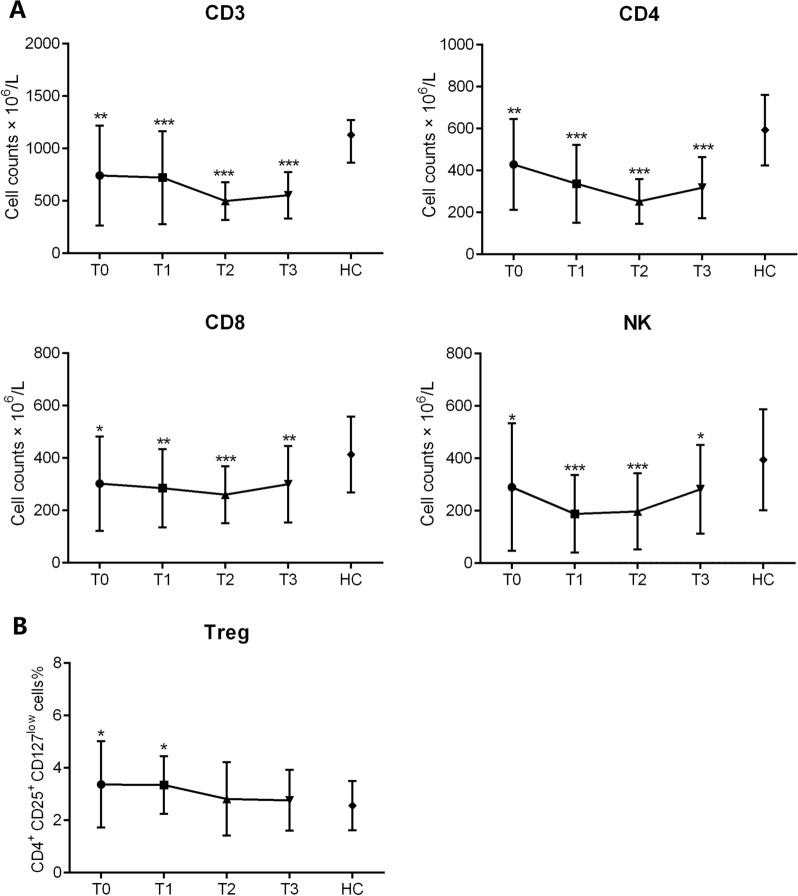
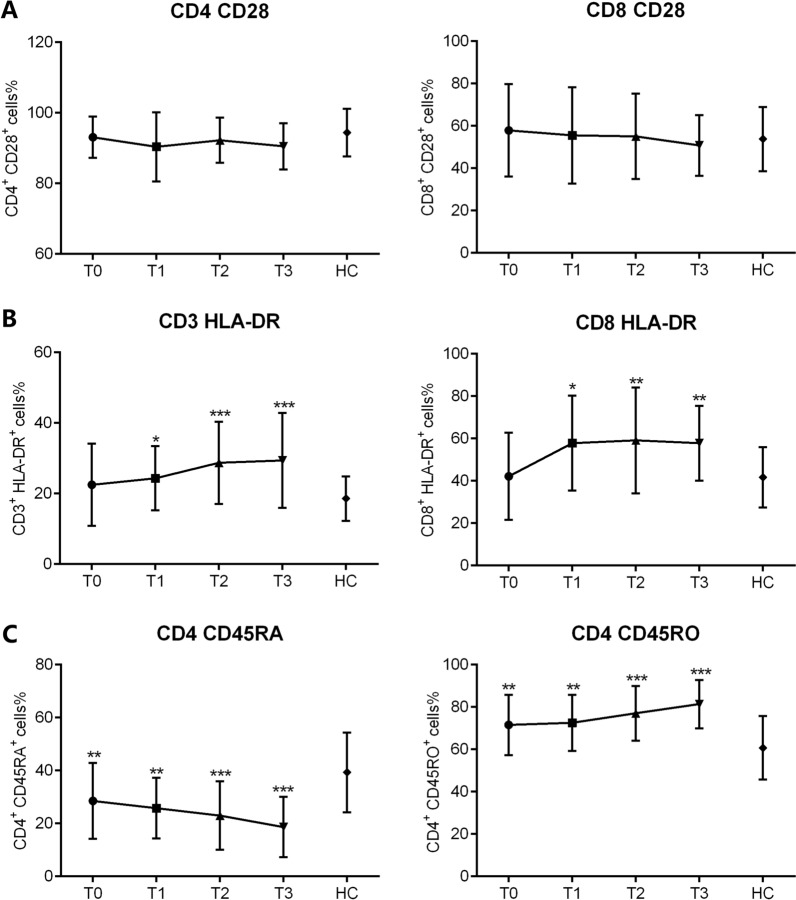
Compared with healthy controls (HCs), the counts of CD3, CD4, and CD8 T cells as well as those NK cells decreased in patients newly diagnosed with DLBCL, mainly attributed to patients with high risk of prognosis assessed by International Prognostic Index (IPI) score. Lymphocyte counts didn't present significant difference between high risk (IPI scores 3-5) and low risk patients (IPI scores 0-2), but CD4 T cells and CD8 T cells expressed higher levels of CD28 and HLA-DR, respectively, in patients with IPI score ranging from 3 to 5. Patients at high risk harbored higher percentage of regulatory T cells (Tregs), and their CD4 and CD8 T cells produced lower levels of IFN-γ, reflecting an impaired cellular immune response. The dynamic changes of lymphocyte numbers and functions during treatment were further investigated. Total counts of CD3, CD4, CD8 T and NK cells progressively decreased because of the cytotoxicity of chemotherapy and then gradually recovered after six cycles treatment (rituximab combined with cyclophosphamide, doxorubicin, vincristine and prednisone, R-CHOP). The functions of CD4 and CD8 T cells recovered by the end of two cycles R-CHOP treatment, although NK cell function was not significantly affected throughout treatment. These results suggest that the counts and functions of lymphocytes are significantly decreased in patients with DLBCL, particularly those of CD4 and CD8 T cells.
The absolute counts and functions of CD4, CD8 T cells, which were significantly lower in patients with DLBCL, gradually recovered after effective treatment. Therefore, combined detection of T cell counts and functions are critically important for administering effective personalized immunotherapy as well as for identifying new prognostic markers or DLBCL.
本研究旨在分析初诊弥漫性大B细胞淋巴瘤(DLBCL)患者在免疫化疗期间的淋巴细胞亚群、其活性及其动态变化。
本研究纳入了33例DLBCL患者。使用流式细胞术检测其外周血淋巴细胞亚群、表型和功能。18例患者可获得淋巴细胞活性的动态结果。
与健康对照(HCs)相比,初诊DLBCL患者的CD3、CD4和CD8 T细胞以及NK细胞计数减少,主要归因于国际预后指数(IPI)评分评估为预后高危的患者。高危(IPI评分3 - 5)和低危患者(IPI评分0 - 2)的淋巴细胞计数无显著差异,但IPI评分为3至5的患者中,CD4 T细胞和CD8 T细胞分别表达较高水平的CD28和HLA - DR。高危患者的调节性T细胞(Tregs)百分比更高,其CD4和CD8 T细胞产生的IFN - γ水平较低,反映细胞免疫反应受损。进一步研究了治疗期间淋巴细胞数量和功能的动态变化。由于化疗的细胞毒性作用,CD3、CD4、CD8 T和NK细胞的总数逐渐减少,在六个周期治疗(利妥昔单抗联合环磷酰胺、多柔比星、长春新碱和泼尼松,R - CHOP)后逐渐恢复。在两个周期R - CHOP治疗结束时,CD4和CD8 T细胞的功能恢复,尽管NK细胞功能在整个治疗过程中未受到显著影响。这些结果表明,DLBCL患者的淋巴细胞数量和功能显著降低,尤其是CD4和CD8 T细胞。
DLBCL患者中显著降低的CD4、CD8 T细胞的绝对计数和功能在有效治疗后逐渐恢复。因此,联合检测T细胞计数和功能对于实施有效的个性化免疫治疗以及识别新的预后标志物或DLBCL至关重要。