Medicinal Chemistry Research Group, Research Centre for Natural Sciences, Budapest, Hungary.
BioBlocks, Inc., San Diego, CA, USA.
Nat Commun. 2021 May 27;12(1):3201. doi: 10.1038/s41467-021-23443-y.
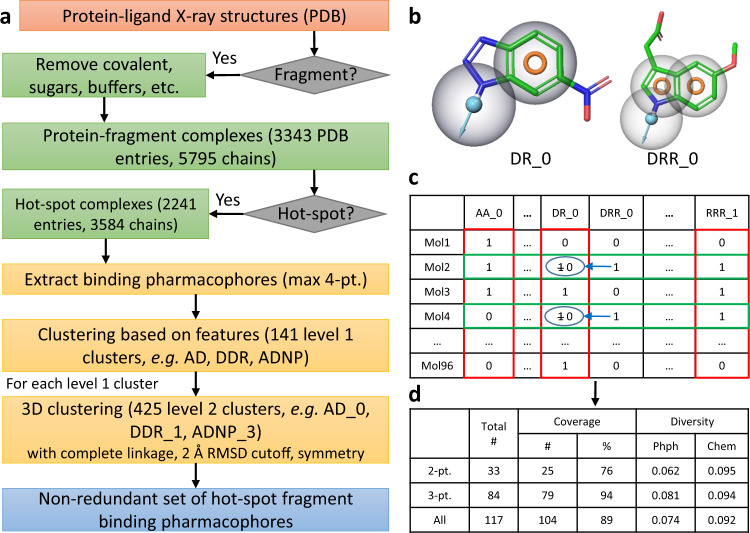
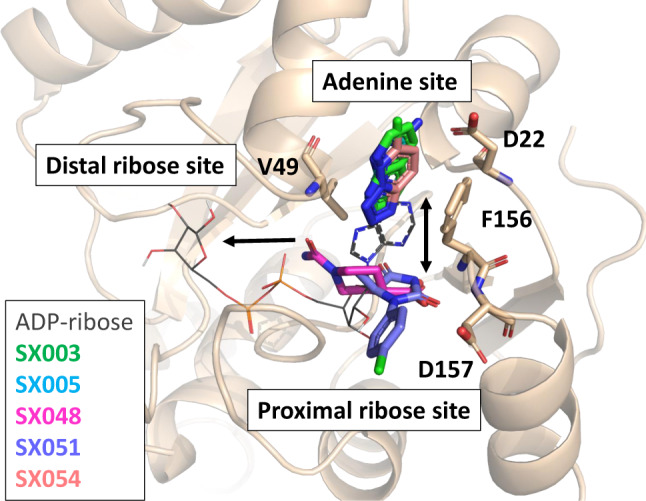
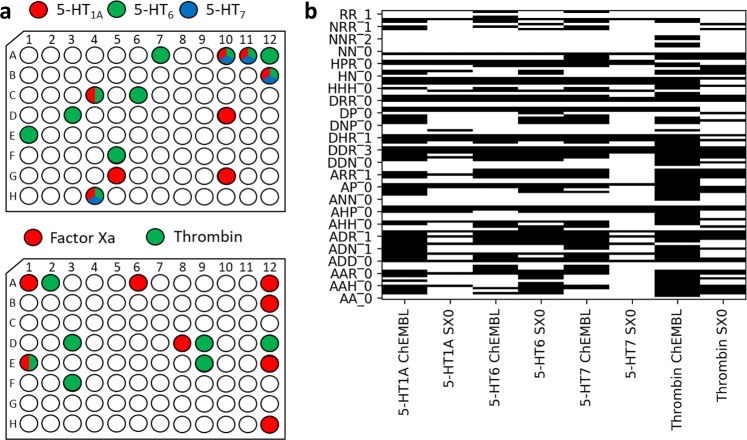
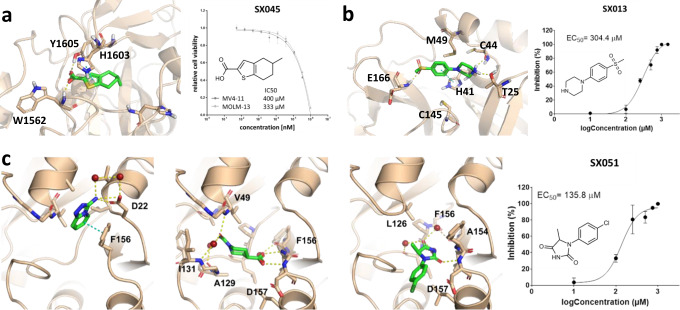
Fragment-based drug design has introduced a bottom-up process for drug development, with improved sampling of chemical space and increased effectiveness in early drug discovery. Here, we combine the use of pharmacophores, the most general concept of representing drug-target interactions with the theory of protein hotspots, to develop a design protocol for fragment libraries. The SpotXplorer approach compiles small fragment libraries that maximize the coverage of experimentally confirmed binding pharmacophores at the most preferred hotspots. The efficiency of this approach is demonstrated with a pilot library of 96 fragment-sized compounds (SpotXplorer0) that is validated on popular target classes and emerging drug targets. Biochemical screening against a set of GPCRs and proteases retrieves compounds containing an average of 70% of known pharmacophores for these targets. More importantly, SpotXplorer0 screening identifies confirmed hits against recently established challenging targets such as the histone methyltransferase SETD2, the main protease (3CLPro) and the NSP3 macrodomain of SARS-CoV-2.
基于片段的药物设计为药物开发引入了一种自下而上的过程,提高了化学空间的采样效率,并在早期药物发现中提高了效果。在这里,我们将药效团(表示药物-靶标相互作用的最通用概念)与蛋白质热点理论结合使用,开发了一种片段库的设计方案。SpotXplorer 方法编译了小型片段库,这些片段库最大限度地覆盖了实验证实的结合药效团在最优选热点的位置。该方法的效率通过一个 96 个片段大小化合物的先导文库(SpotXplorer0)进行了验证,该文库针对流行的靶标类别和新兴的药物靶标进行了验证。针对一组 GPCR 和蛋白酶的生化筛选可获得针对这些靶标的已知药效团平均含有 70%的化合物。更重要的是,SpotXplorer0 筛选针对最近建立的挑战性靶标(如组蛋白甲基转移酶 SETD2、主要蛋白酶 (3CLPro) 和 SARS-CoV-2 的 NSP3 大结构域)识别出已确认的命中化合物。