Pennock D G, Thatcher T, Gorovsky M A
Department of Biology, University of Rochester, New York 14627.
Mol Cell Biol. 1988 Jul;8(7):2681-9. doi: 10.1128/mcb.8.7.2681-2689.1988.
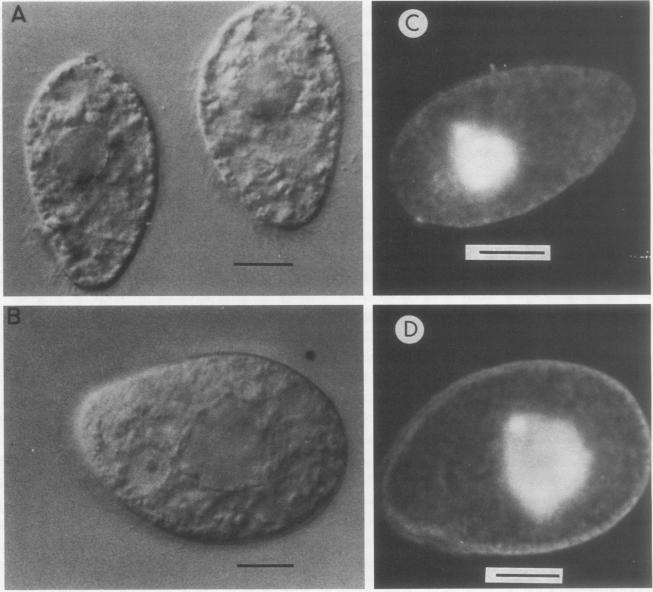
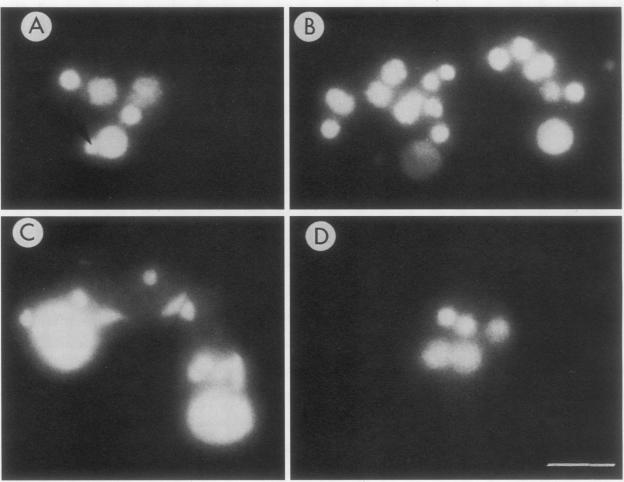
A temperature-sensitive mutation was isolated that blocks cilia regeneration and arrests growth in Tetrahymena thermophila. Protein and RNA synthesis and ATP production appeared to be largely unaffected at the restrictive temperature, suggesting that the mutation is specific for cilia regeneration and growth. At the restrictive temperature, mutant cells arrested at a specific point in the cell cycle, after macronuclear S phase and shortly before micronuclear mitosis. Arrested cells did not undergo nuclear divisions, DNA replication, or cytokinesis, so the mutation appears to cause true cell cycle arrest. Surprisingly, the mutation does not appear to affect micronuclear mitosis directly but rather some event(s) prior to micronuclear mitosis that must be completed before cells can complete the cell cycle. The cell cycle arrest was transiently complemented by wild-type cytoplasm exchanged during conjugation with a wild-type cell. Each starved, wild-type cell apparently contained enough rescuing factor to support an average of six cell divisions. Thus, this mutation affects assembly and/or function of at least one but not all of the microtubule-based structures in T. thermophila.
分离出一种温度敏感突变体,它能阻断嗜热四膜虫的纤毛再生并使生长停滞。在限制温度下,蛋白质和RNA合成以及ATP产生似乎基本未受影响,这表明该突变对纤毛再生和生长具有特异性。在限制温度下,突变细胞在细胞周期的特定点停滞,发生在大核S期之后且微核有丝分裂前不久。停滞的细胞不进行核分裂、DNA复制或胞质分裂,因此该突变似乎导致了真正的细胞周期停滞。令人惊讶的是,该突变似乎并不直接影响微核有丝分裂,而是影响微核有丝分裂之前的某些事件,这些事件必须在细胞完成细胞周期之前完成。与野生型细胞接合时交换的野生型细胞质可短暂地弥补细胞周期停滞。每个饥饿的野生型细胞显然含有足够的拯救因子,平均可支持六次细胞分裂。因此,这种突变影响嗜热四膜虫中至少一种但不是所有基于微管的结构的组装和/或功能。