Department of Experimental Immunology, Amsterdam institute for Infection and Immunity, Amsterdam University Medical Centers, Amsterdam, Netherlands.
Neuroimmunology Research Group, Netherlands Institute for Neuroscience, Amsterdam, Netherlands.
Front Immunol. 2021 May 14;12:674189. doi: 10.3389/fimmu.2021.674189. eCollection 2021.
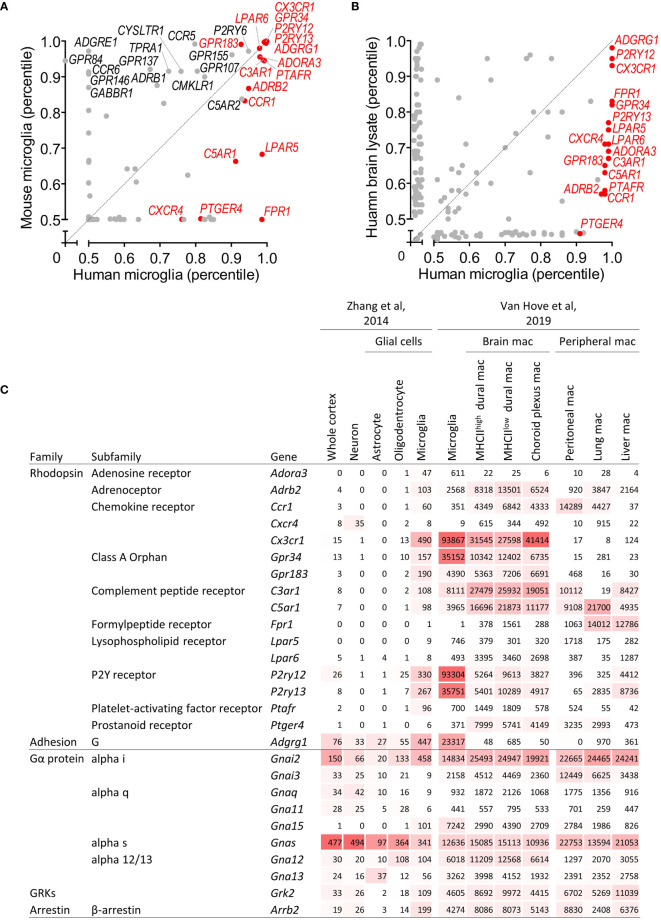
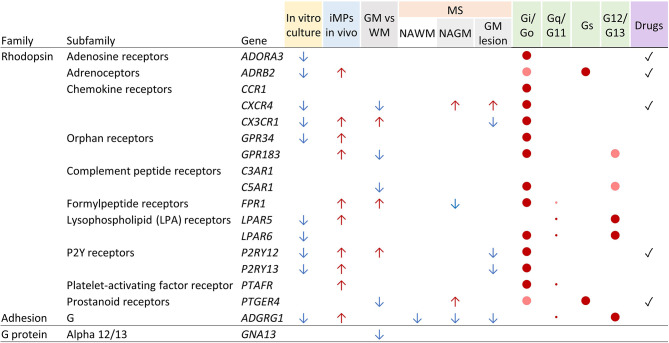
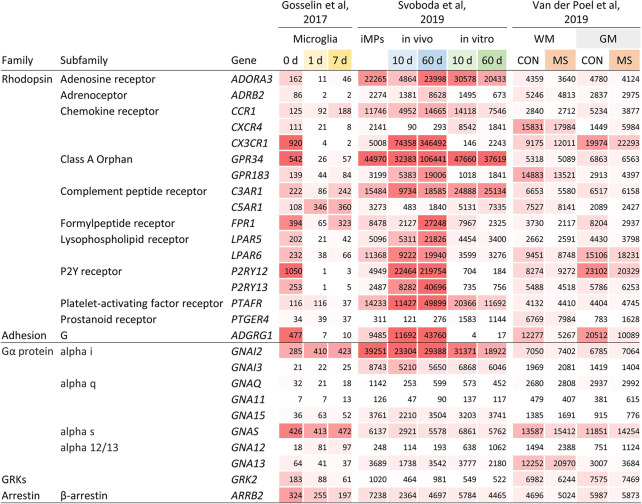
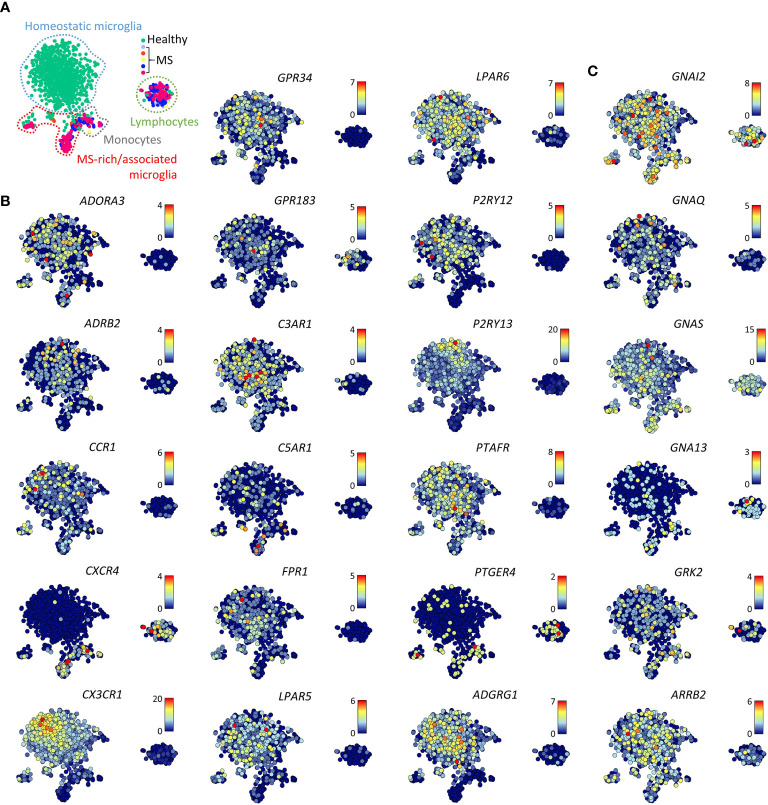
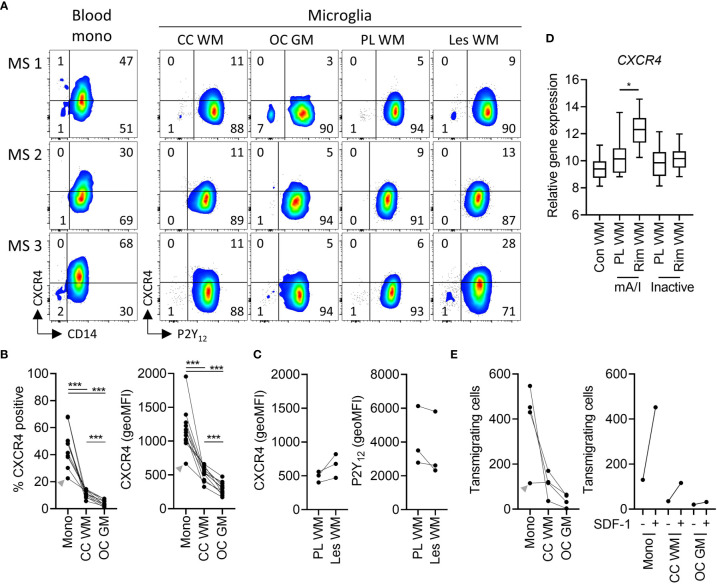
G-protein-coupled receptors (GPCRs) are critical sensors affecting the state of eukaryotic cells. To get systematic insight into the GPCRome of microglia, we analyzed publicly available RNA-sequencing data of bulk and single cells obtained from human and mouse brains. We identified 17 rhodopsin and adhesion family GPCRs robustly expressed in microglia from human brains, including the homeostasis-associated genes , , , , , and . Expression of these microglial core genes was lost upon culture of isolated cells but could be acquired by human induced pluripotent stem cell (iPSC)-derived microglial precursors transplanted into mouse brains. and were higher expressed in subcortical white matter compared to cortical grey matter microglia, and was downregulated in microglia obtained from normal-appearing white and grey matter tissue of multiple sclerosis (MS) brains. Single-cell RNA sequencing of microglia from active lesions, obtained early during MS, revealed downregulation of homeostasis-associated GPCR genes and upregulation of expression in a small subset of MS-associated lesional microglia. Functional presence of low levels of CXCR4 on human microglia was confirmed using flow cytometry and transwell migration towards SDF-1. Microglia abundantly expressed the GPCR down-stream signaling mediator genes (α), (α), and (α), the latter particularly in white matter. Drugs against several microglia GPCRs are available to target microglia in brain diseases. In conclusion, transcriptome profiling allowed us to identify expression of GPCRs that may contribute to brain (patho)physiology and have diagnostic and therapeutic potential in human microglia.
G 蛋白偶联受体(GPCRs)是影响真核细胞状态的关键传感器。为了系统地了解小胶质细胞的 GPCR 组,我们分析了从人脑和鼠脑获得的大量和单细胞公共 RNA 测序数据。我们鉴定了 17 个在人脑小胶质细胞中强烈表达的视紫红质和黏附家族 GPCR,包括与稳态相关的基因、、、、、和。从分离细胞培养中失去了这些小胶质细胞核心基因的表达,但可以通过移植到鼠脑中的人诱导多能干细胞(iPSC)衍生的小胶质前体细胞获得。与皮质灰质小胶质细胞相比,在皮质下白质中表达更高,而在多发性硬化症(MS)大脑中正常外观的白质和灰质组织中获得的小胶质细胞中下调。在 MS 早期获得的活跃病变中小胶质细胞的单细胞 RNA 测序显示,与稳态相关的 GPCR 基因下调,一小部分与 MS 相关的病变小胶质细胞中上调表达。使用流式细胞术和 Transwell 迁移实验证实了人类小胶质细胞中 CXCR4 低水平的功能存在。小胶质细胞大量表达 GPCR 下游信号转导介质基因(α)、(α)和(α),后者在白质中尤其丰富。针对几种小胶质细胞 GPCR 的药物可用于靶向大脑疾病中的小胶质细胞。总之,转录组谱分析使我们能够鉴定出可能有助于脑(病理)生理学的 GPCR 表达,并具有人类小胶质细胞的诊断和治疗潜力。