Department of Spine Surgery, Inner Mongolia People's Hospital, Hohhot, 010017 Inner Mongolia, China.
Trauma Orthopedic Department, Guizhou Provincial Orthopedics Hospital, No. 123 Shangchong South Road, Nanming District, Guiyang City, Guizhou Province, China.
Comput Math Methods Med. 2021 May 12;2021:5548918. doi: 10.1155/2021/5548918. eCollection 2021.
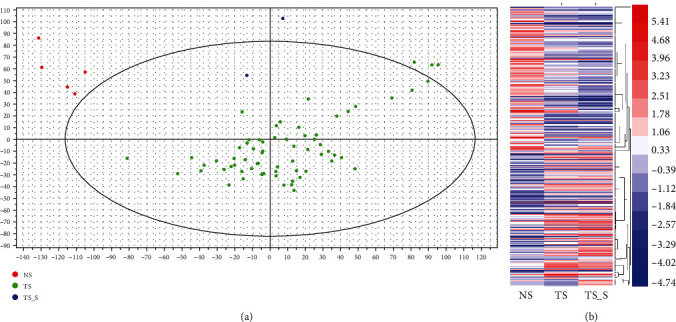
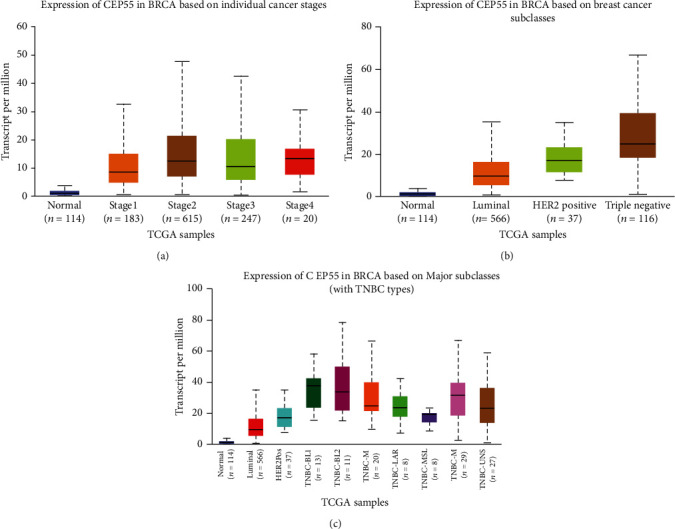
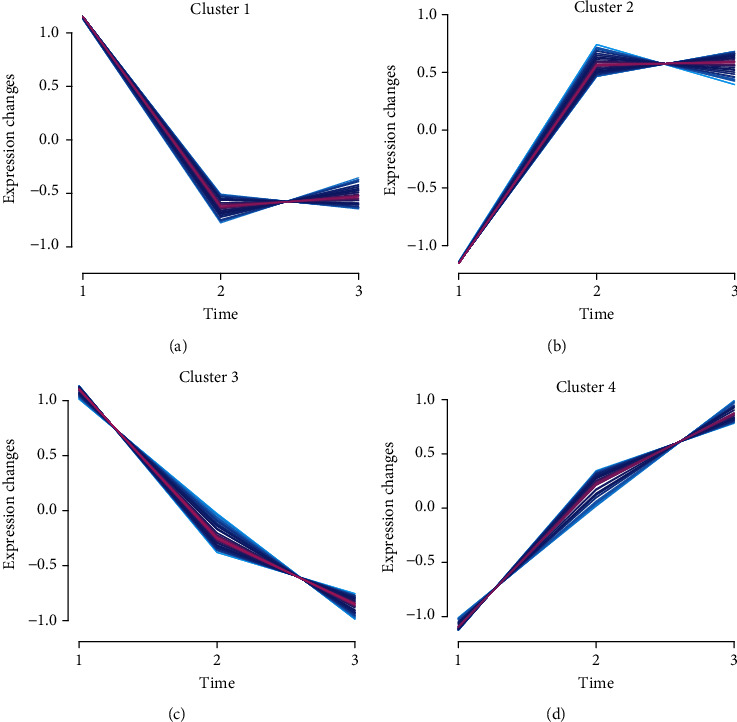
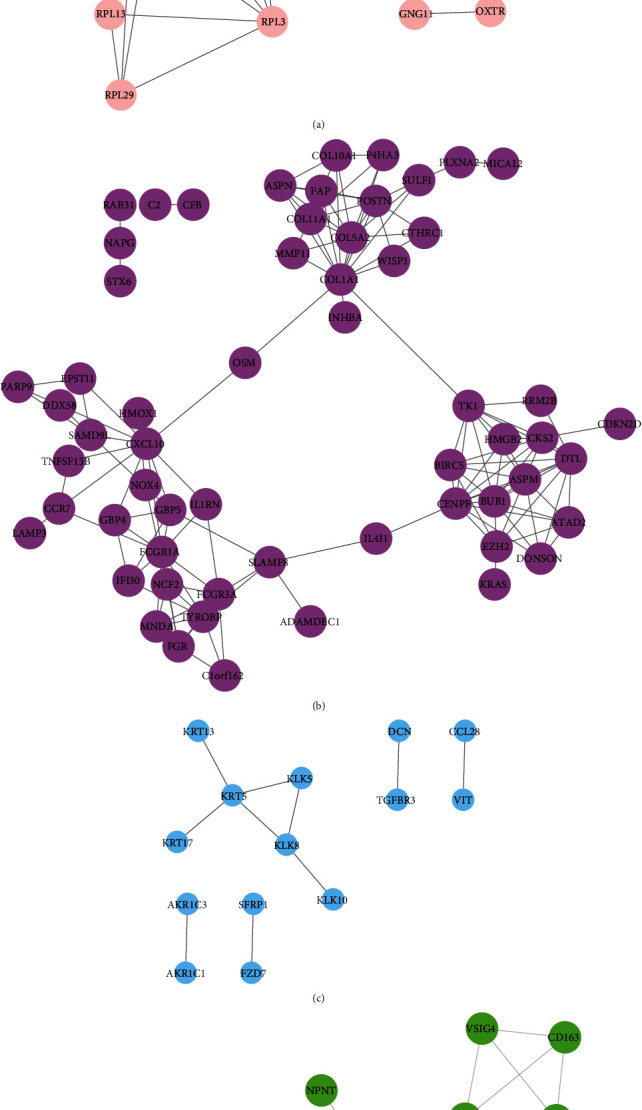
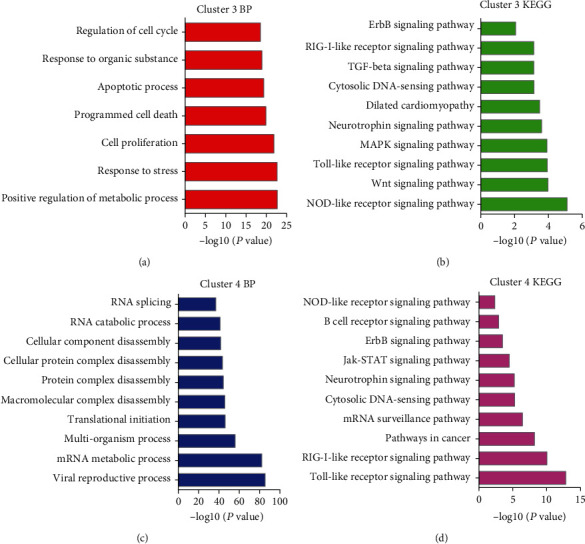
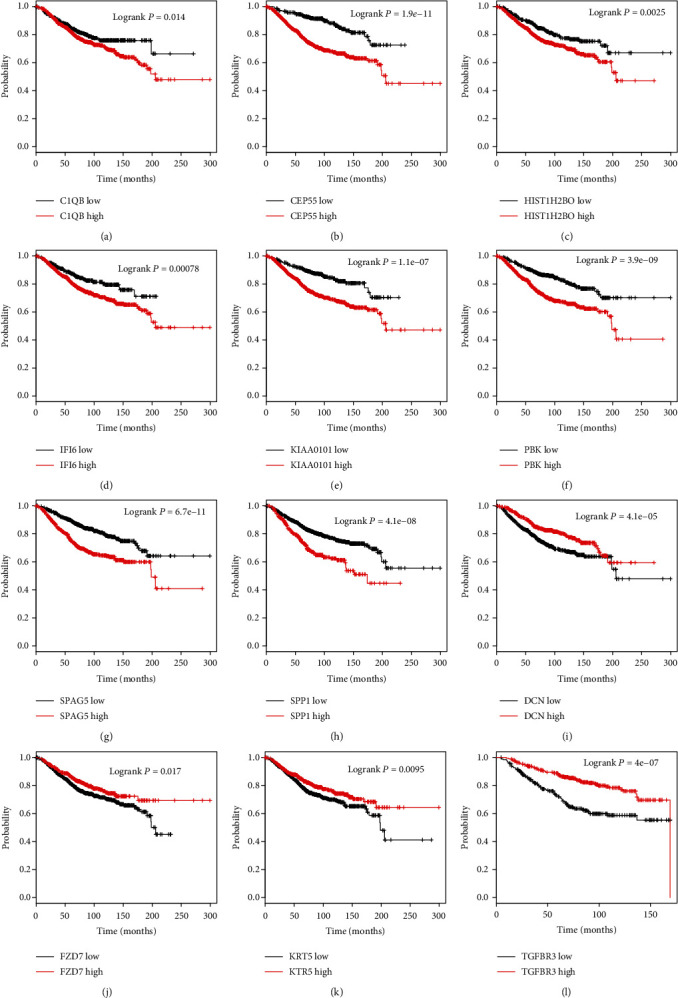
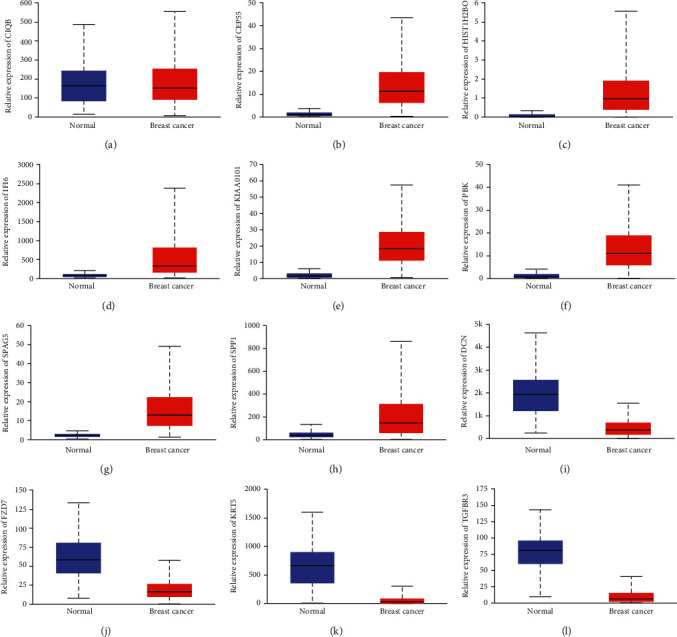
Breast cancer (BC) had been one of the deadliest types of cancers in women worldwide. More than 65% of advanced-stage BC patients were identified to have bone metastasis. However, the molecular mechanisms involved in the BC spinal metastases remained largely unclear. This study screened dysregulated genes in the progression of BC spinal metastases by analyzing GSE22358. Moreover, we constructed PPI networks to identify key regulators in this progression. Bioinformatics analysis showed that these key regulators were involved in regulating the metabolic process, cell proliferation, Toll-like receptor and RIG-I-like receptor signaling, and mRNA surveillance. Furthermore, our analysis revealed that key regulators, including C1QB, CEP55, HIST1H2BO, IFI6, KIAA0101, PBK, SPAG5, SPP1, DCN, FZD7, KRT5, and TGFBR3, were correlated to the OS time in BC patients. In addition, we analyzed TCGA database to further confirm the expression levels of these hub genes in breast cancer. Our results showed that these regulators were significantly differentially expressed in breast cancer, which were consistent with GSE22358 dataset analysis. Furthermore, our analysis demonstrated that CEP55 was remarkably upregulated in the advanced stage of breast cancer compared to the stage I breast cancer sample and was significantly upregulated in triple-negative breast cancers (TNBC) compared to other types of breast cancers, including luminal and HER2-positive cancers, demonstrating CEP55 may have a regulatory role in TNBC. Finally, our results showed that CEP55 was the most highly expressed in Basal-like 1 TNBC and Basal-like 2 TNBC samples but the most lowly expressed in mesenchymal stem-like TNBC samples. Although more studies are still needed to understand the functions of key regulators in BC, this study provides useful information to understand the mechanisms underlying BC spinal metastases.
乳腺癌(BC)是全球女性中最致命的癌症类型之一。超过 65%的晚期 BC 患者被发现有骨转移。然而,BC 脊柱转移涉及的分子机制在很大程度上仍不清楚。本研究通过分析 GSE22358 筛选了 BC 脊柱转移进展过程中失调的基因。此外,我们构建了 PPI 网络来识别这一进展中的关键调节剂。生物信息学分析表明,这些关键调节剂参与调节代谢过程、细胞增殖、Toll 样受体和 RIG-I 样受体信号转导以及 mRNA 监测。此外,我们的分析表明,包括 C1QB、CEP55、HIST1H2BO、IFI6、KIAA0101、PBK、SPAG5、SPP1、DCN、FZD7、KRT5 和 TGFBR3 在内的关键调节剂与 BC 患者的 OS 时间相关。此外,我们分析了 TCGA 数据库以进一步确认这些枢纽基因在乳腺癌中的表达水平。我们的结果表明,这些调节剂在乳腺癌中表达水平显著差异,与 GSE22358 数据集分析结果一致。此外,我们的分析表明,CEP55 在乳腺癌的晚期阶段明显上调,与 I 期乳腺癌样本相比上调显著,在三阴性乳腺癌(TNBC)中与其他类型的乳腺癌相比上调显著,包括 luminal 和 HER2 阳性癌症,表明 CEP55 可能在 TNBC 中具有调节作用。最后,我们的结果表明,CEP55 在基底样 1 TNBC 和基底样 2 TNBC 样本中表达最高,但在间质干细胞样 TNBC 样本中表达最低。尽管还需要更多的研究来了解 BC 中关键调节剂的功能,但本研究为理解 BC 脊柱转移的机制提供了有用的信息。