Netchine Irène, van der Steen Manouk, López-Bermejo Abel, Koledova Ekaterina, Maghnie Mohamad
Sorbonne Université, INSERM, UMR_S938 Centre de Recherche Saint Antoine, APHP, Hôpital Armand Trousseau, Explorations Fonctionnelles Endocriniennes, Paris, France.
Department of Paediatrics, Subdivision of Endocrinology, Erasmus University Medical Centre, Rotterdam, Netherlands.
Front Pediatr. 2021 May 13;9:655931. doi: 10.3389/fped.2021.655931. eCollection 2021.
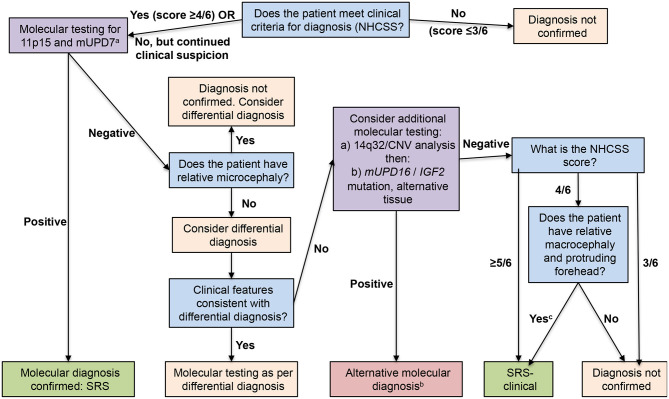
Children born small for gestational age (SGA) comprise a heterogeneous group due to the varied nature of the cause. Approximately 85-90% have catch-up growth within the first 4 postnatal years, while the remainder remain short. In later life, children born SGA have an increased risk to develop metabolic abnormalities, including visceral adiposity, insulin resistance, and cardiovascular problems, and may have impaired pubertal onset and growth. The third "360° European Meeting on Growth and Endocrine Disorders" in Rome, Italy, in February 2018, funded by Merck KGaA, Germany, included a session that examined aspects of short children born SGA, with three presentations followed by a discussion period, on which this report is based. Children born SGA who remain short are eligible for GH treatment, which is an approved indication. GH treatment increases linear growth and can also improve some metabolic abnormalities. After stopping GH at near-adult height, metabolic parameters normalize, but pharmacological effects on lean body mass and fat mass are lost; continued monitoring of body composition and metabolic changes may be necessary. Guidelines have been published on diagnosis and management of children with Silver-Russell syndrome, who comprise a specific group of those born SGA; these children rarely have catch-up growth and GH treatment initiation as early as possible is recommended. Early and moderate pubertal growth spurt can occur in children born SGA, including those with Silver-Russell syndrome, and reduce adult height. Treatments that delay puberty, specifically metformin and gonadotropin releasing hormone analogs in combination with GH, have been proposed, but are used off-label, currently lack replication of data, and require further studies of efficacy and safety.
小于胎龄儿(SGA)出生的儿童由于病因性质多样而构成一个异质性群体。约85 - 90%的患儿在出生后的头4年内实现追赶生长,而其余患儿则持续矮小。在成年后,SGA出生的儿童发生代谢异常的风险增加,包括内脏肥胖、胰岛素抵抗和心血管问题,并且青春期启动和生长可能受损。2018年2月在意大利罗马举行的第三届“360°欧洲生长与内分泌疾病会议”由德国默克集团资助,其中包括一个探讨SGA出生的矮小儿童相关问题的环节,有三场报告并随后进行了讨论,本报告即基于此。仍矮小的SGA出生儿童符合生长激素(GH)治疗的条件,这是一个已获批的适应症。GH治疗可增加线性生长,还能改善一些代谢异常。在接近成人身高时停用GH后,代谢参数会恢复正常,但对瘦体重和脂肪量的药理作用会消失;可能需要持续监测身体成分和代谢变化。关于Silver-Russell综合征患儿(SGA出生儿童中的一个特定群体)的诊断和管理已发布了指南;这些患儿很少有追赶生长,建议尽早开始GH治疗。SGA出生的儿童,包括患有Silver-Russell综合征的儿童,可能会出现早期和中度的青春期生长突增,并降低成年身高。已有人提出使用延迟青春期的治疗方法,特别是二甲双胍和促性腺激素释放激素类似物联合GH,但这些方法属于超适应症用药,目前缺乏数据重复验证,且需要进一步研究其疗效和安全性。