Hao Zhong, Jian Kailin, Peng Shoujian, Xu Jiang
Aerospace and Engineering College, Chongqing University, Chongqing 400044, China.
State Key Laboratory of Coal Mine Disaster Dynamics and Control, Chongqing University, Chongqing 400044, China.
ACS Omega. 2021 May 11;6(20):13260-13274. doi: 10.1021/acsomega.1c01168. eCollection 2021 May 25.
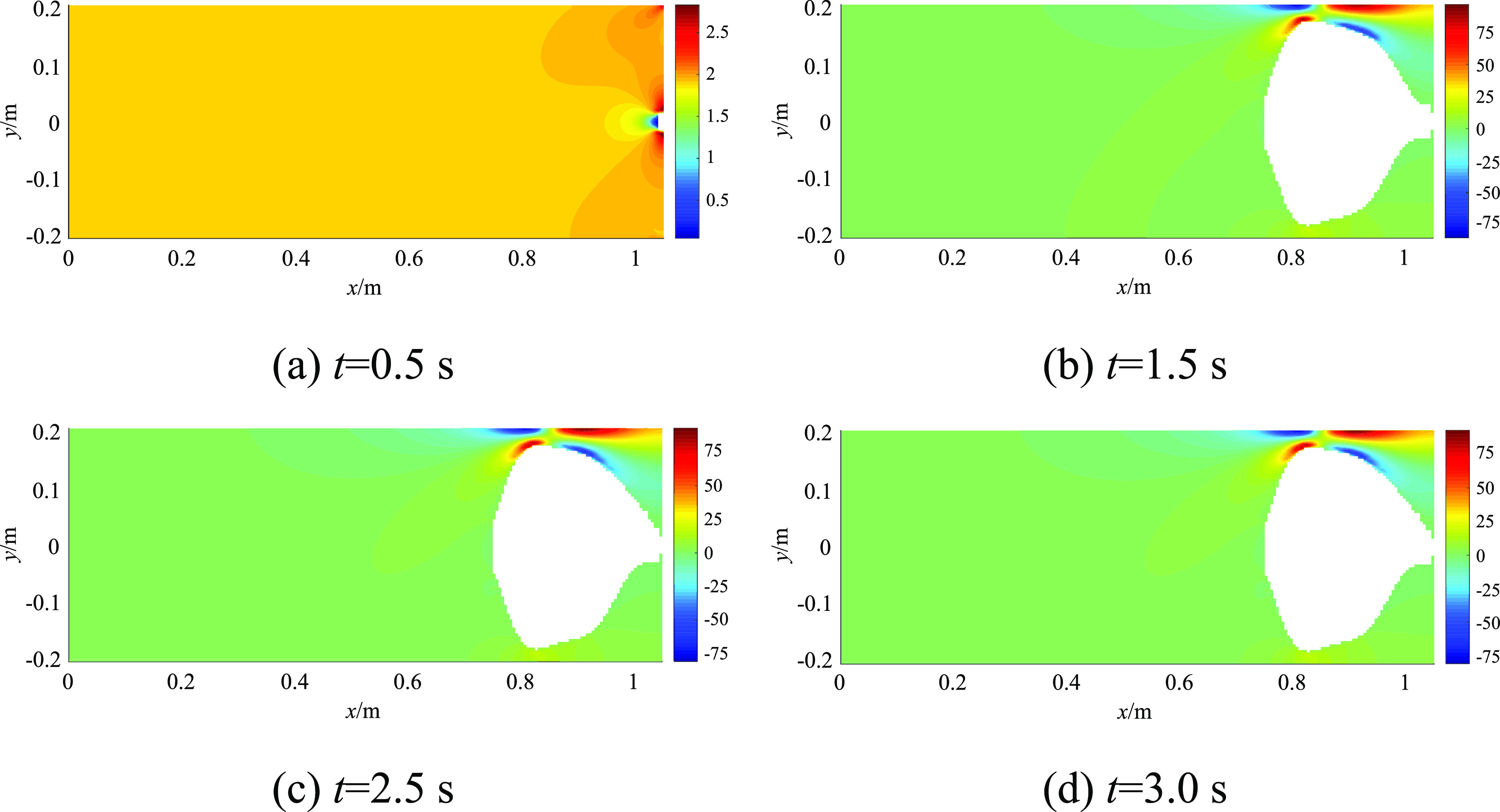
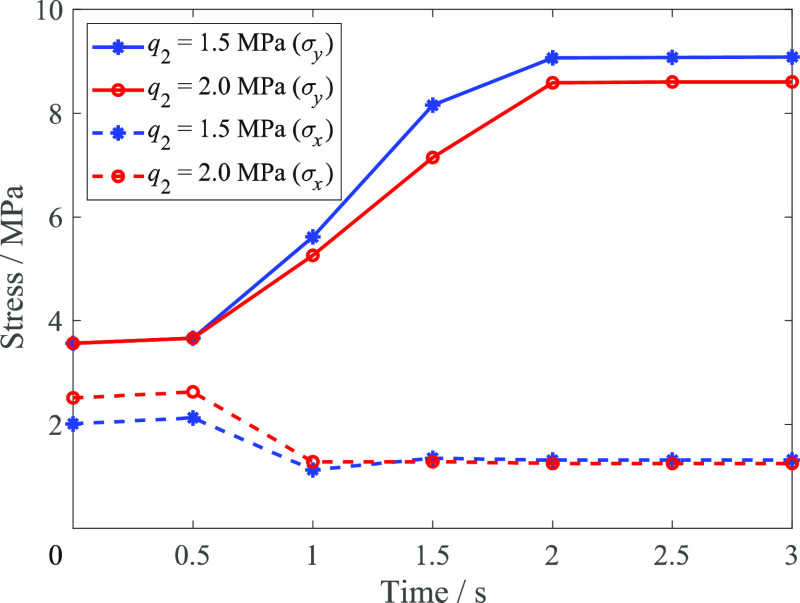
The coal and gas outbursts are recognized as a worldwide difficulty, and there is still ample research space in this field, especially on the mechanical mechanism of outbursts. The main purpose of this paper is to attempt to reveal the outburst mechanism as fully as possible from the point of view of mechanics. In this paper, a mechanical model on coal and gas outbursts including the governing equations of gas desorption-seepage, the stress state in the coal sample, and the criteria of coal sample failure and outburst evolution is put forward according to the porous media seepage theory and elastic theory. Based on the proposed model, the variation and distribution of the gas state and stress state in the coal sample in the outburst are analyzed quantitatively and a series of detailed discussions are conducted in terms of the in-situ stress, gas pressure, and the physical characteristics of coal in outbursts. The results of theoretical analysis and numerical simulation show that the stress concentration in the front of the outburst cavity is the main reason for the failure of the coal sample in this area, and then, the drag force caused by gas flow provides energy for the movement of the crushed coal sample, which leads to the outburst cavity expansion and the increase of stress concentration factor. The end of the outburst is because the gas velocity is less than the threshold friction velocity of the crushed coal sample. Additionally, the outburst strength increases with the increase of the vertical in-situ stress and initial gas pressure and decreases with the increase of the internal friction angle and cohesion of coal.
煤与瓦斯突出被公认为是一个世界性难题,该领域仍有很大的研究空间,尤其是在突出的力学机制方面。本文的主要目的是试图从力学角度尽可能全面地揭示突出机制。本文根据多孔介质渗流理论和弹性理论,提出了一个煤与瓦斯突出的力学模型,该模型包括瓦斯解吸 - 渗流控制方程、煤样中的应力状态以及煤样破坏和突出演化准则。基于所提出的模型,定量分析了突出过程中煤样内瓦斯状态和应力状态的变化及分布,并就地应力、瓦斯压力以及突出中煤的物理特性进行了一系列详细讨论。理论分析和数值模拟结果表明,突出空洞前方的应力集中是该区域煤样破坏的主要原因,随后,气流产生的拖曳力为破碎煤样的移动提供能量,导致突出空洞扩展和应力集中系数增大。突出结束是因为气体流速小于破碎煤样的临界摩擦速度。此外,突出强度随地应力垂直分量和初始瓦斯压力的增加而增大,随煤的内摩擦角和黏聚力的增加而减小。