Department of Internal Medicine, Osakidetza Basque Health Service, Araba University Hospital, Vitoria-Gasteiz, Spain.
Department of Medical Oncology, Osakidetza Basque Health Service, Araba University Hospital, Vitoria-Gasteiz, Spain.
Ann Med. 2021 Dec;53(1):762-769. doi: 10.1080/07853890.2021.1931956.
The aim of this study was to assess the diagnostic performance of an autoantibody battery in patients receiving immune checkpoint inhibitors who experienced immune-related adverse events (irAEs).
We retrospectively analyzed several variables potentially related to irAEs, namely, demographic, clinical, and laboratory characteristics, including an autoantibody battery (antinuclear, anti-neutrophil cytoplasmic, anti-thyroid antibodies and rheumatoid factor).
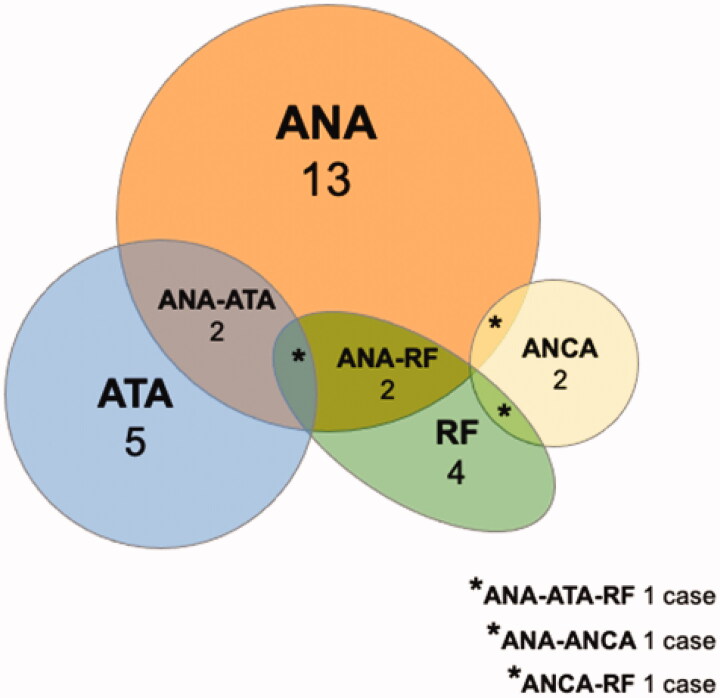
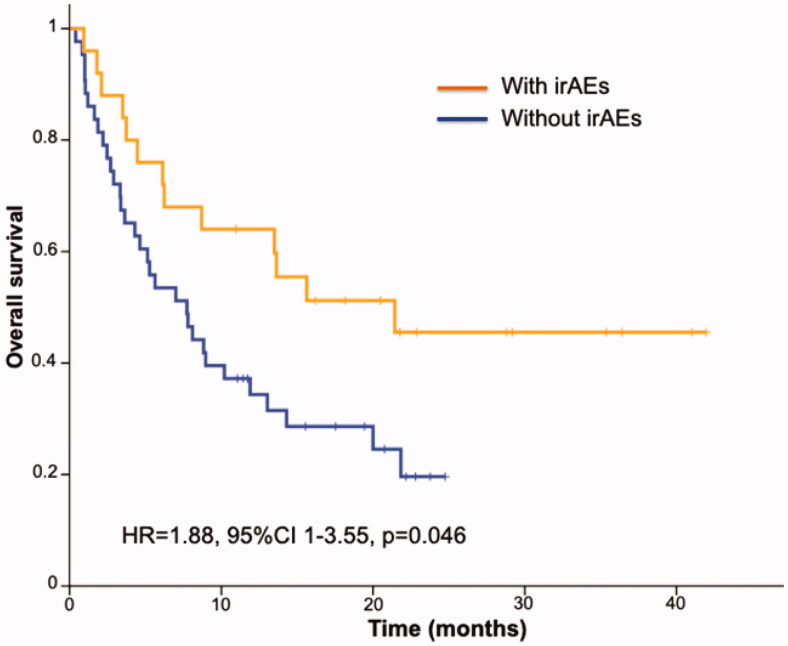
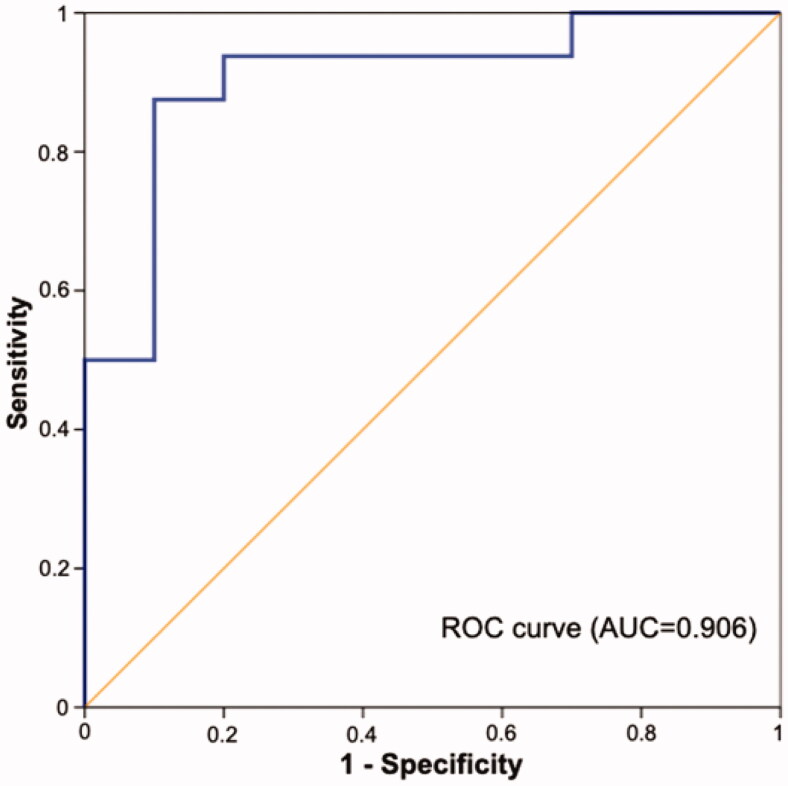
Sixty-nine patients (48 men; 61.8 ± 10.9 years at baseline) diagnosed with stage-4 solid-organ cancer and treated with nivolumab were followed up for 12 ± 10.3 months. Thirty-two irAEs were detected in 26 patients (37.5%). Adverse events occurred more commonly in women (62% vs. 27%, = .006), and younger patients (irAEs: 58.1 ± 9.8, no irAEs: 64.1 ± 10.9 years, = .024). Autoantibody battery results were available for 26 patients and were more frequently positive in patients with irAEs (87% vs. 30%, = .009). The positive predictive value, negative predictive value, and diagnostic accuracy of the battery were 82.3%, 77.8%, and 80.8%, respectively. Among the 64 patients with an evaluable response, 23 (38.5%) experienced tumour progression, this being less frequent in patients with irAEs (19% vs. 48.5%, = .03). Overall survival was higher in patients developing irAEs (HR = 1.88, = .05).
Positivity in a readily available autoantibody battery may be associated with the occurrence of irAEs.KEY MESSAGESPositivity in an accessible and inexpensive autoantibody battery including antinuclear, anti-neutrophil cytoplasmic, anti-thyroid antibodies and rheumatoid factor may be associated with the occurrence of immune-related adverse events.Patients with cancer on immune checkpoint inhibitors experiencing immune-related adverse events showed a lower risk of progression and better overall survival than patients not experiencing this type of adverse effect.
本研究旨在评估在发生免疫相关不良事件(irAE)的接受免疫检查点抑制剂治疗的患者中,自身抗体检测的诊断性能。
我们回顾性分析了一些可能与 irAE 相关的变量,包括人口统计学、临床和实验室特征,包括自身抗体检测(抗核、抗中性粒细胞胞浆、抗甲状腺抗体和类风湿因子)。
共 69 名(48 名男性;基线时 61.8±10.9 岁)患有 4 期实体器官癌的患者接受了纳武单抗治疗,随访时间为 12±10.3 个月。在 26 名患者(37.5%)中发现了 32 例 irAE。女性更常发生不良事件(62%比 27%, = .006),年轻患者(irAE:58.1±9.8,无 irAE:64.1±10.9 岁, = .024)。有 26 名患者进行了自身抗体检测,发生 irAE 的患者的检测结果更常呈阳性(87%比 30%, = .009)。该检测的阳性预测值、阴性预测值和诊断准确率分别为 82.3%、77.8%和 80.8%。在可评估反应的 64 名患者中,有 23 名(38.5%)发生肿瘤进展,irAE 患者的肿瘤进展发生率较低(19%比 48.5%, = .03)。发生 irAE 的患者的总生存率更高(HR=1.88, = .05)。
易于获得的自身抗体检测呈阳性可能与 irAE 的发生有关。
包括抗核、抗中性粒细胞胞浆、抗甲状腺抗体和类风湿因子在内的易于获得且价格低廉的自身抗体检测呈阳性,可能与免疫相关不良事件的发生有关。
接受免疫检查点抑制剂治疗并发生免疫相关不良事件的癌症患者,其进展风险低于未发生此类不良事件的患者,且总生存率更高。