Paciulli Maria, Difonzo Graziana, Conte Paola, Flamminii Federica, Piscopo Amalia, Chiavaro Emma
Department of Food and Drug, University of Parma, Parco Area delle Scienze 27/A, 43124 Parma, Italy.
Department of Soil Plant and Food Sciences, University of Bari "Aldo Moro", Via Amendola 165/A, 70126 Bari, Italy.
Foods. 2021 May 4;10(5):1004. doi: 10.3390/foods10051004.
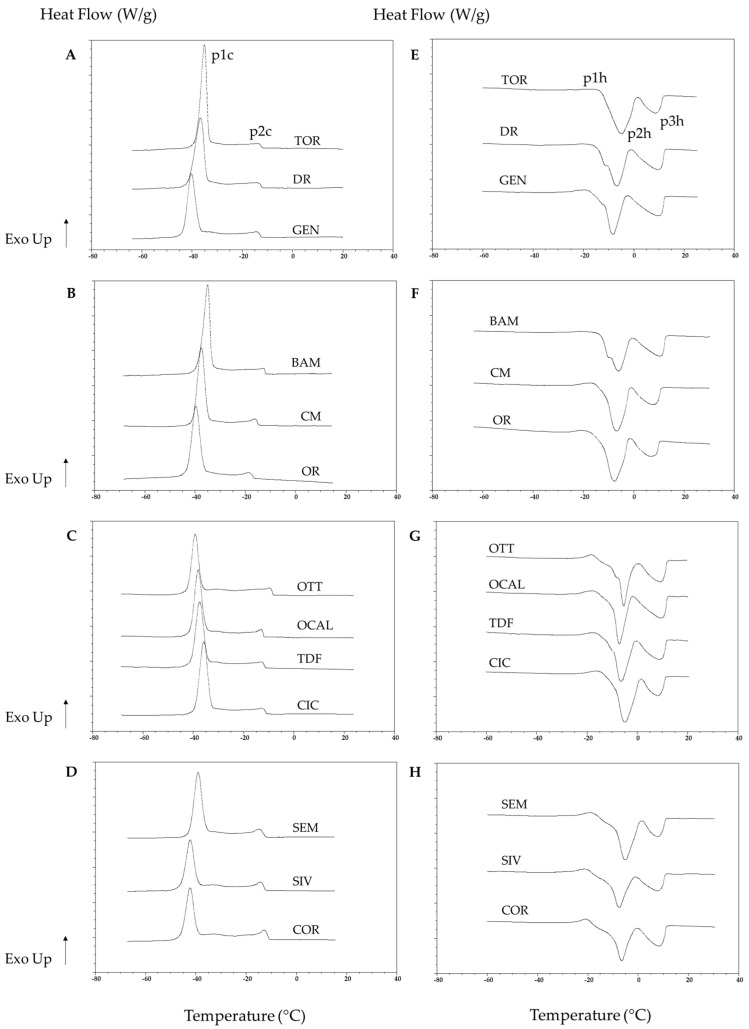
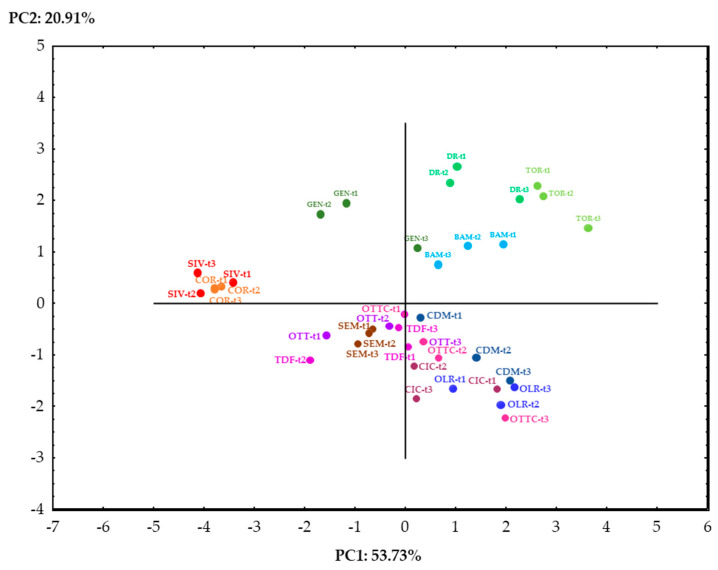
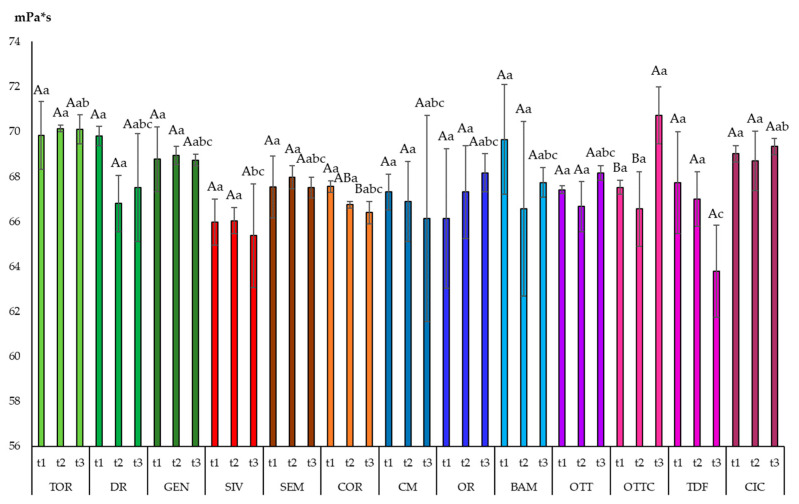
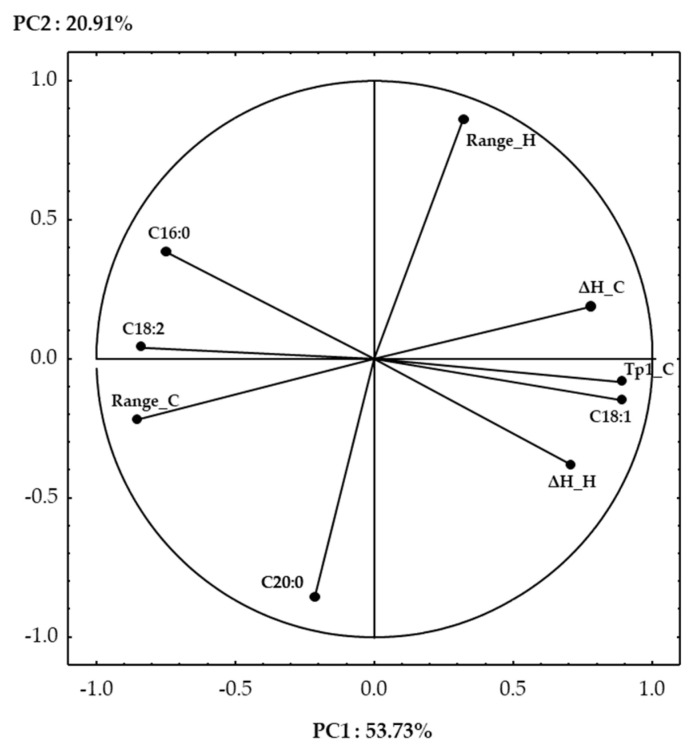
Authentication of extra virgin olive oils is a key strategy for their valorization and a way to preserve olive biodiversity. Physical and thermal analysis have been proposed in this study as fast and green techniques to reach this goal. Thirteen extra virgin olive oils (EVOOs) obtained from minor olive cultivars, harvested at three different ripening stages, in four Italian regions (Abruzzo, Apulia, Sardinia, and Calabria) have been studied. Thermal properties, viscosity and color, as influenced by fatty acid composition and chlorophyll content, have been investigated. The thermal curves of EVOOs, obtained by differential scanning calorimetry, were mostly influenced by the oleic acid content: a direct correlation with the cooling and heating enthalpy and an indirect correlation with the cooling transition range were observed. The minor fatty acids, and particularly arachidic acid, showed an influence, mostly on the heating thermograms. Viscosity and color showed respectively a correlation with fatty acids composition and chlorophyll content, however they didn't result able to discriminate between the samples. Thanks to the principal component analysis, the most influencing thermal parameters and fatty acids were used to cluster the samples, based on their botanical and geographical origin, resulting instead the harvesting time a less influential variable.
特级初榨橄榄油的鉴定是提升其价值的关键策略,也是保护橄榄生物多样性的一种方式。本研究提出将物理和热分析作为实现这一目标的快速且环保的技术。对从意大利四个地区(阿布鲁佐、普利亚、撒丁岛和卡拉布里亚)的小众橄榄品种中获得的13种特级初榨橄榄油(EVOOs)进行了研究,这些橄榄在三个不同的成熟阶段收获。研究了受脂肪酸组成和叶绿素含量影响的热性质、粘度和颜色。通过差示扫描量热法获得的EVOOs的热曲线主要受油酸含量的影响:观察到与冷却和加热焓呈直接相关,与冷却转变范围呈间接相关。次要脂肪酸,特别是花生酸,主要对加热热谱图有影响。粘度和颜色分别与脂肪酸组成和叶绿素含量相关,然而它们无法区分样品。通过主成分分析,基于植物和地理来源,使用最具影响力的热参数和脂肪酸对样品进行聚类,结果发现收获时间是一个影响力较小的变量。