Reungoat Emma, Grigorov Boyan, Zoulim Fabien, Pécheur Eve-Isabelle
Université Lyon, University Claude Bernard, CNRS 5286, Inserm U1052, Centre de Recherche en Cancérologie de Lyon (CRCL), 69008 Lyon, France.
Cancers (Basel). 2021 May 9;13(9):2270. doi: 10.3390/cancers13092270.
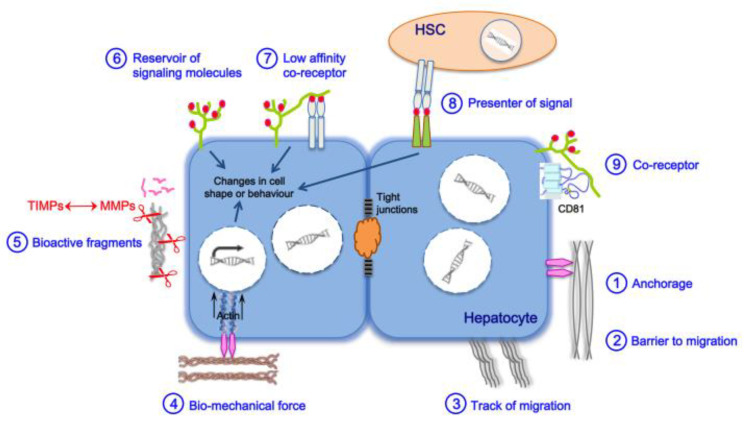
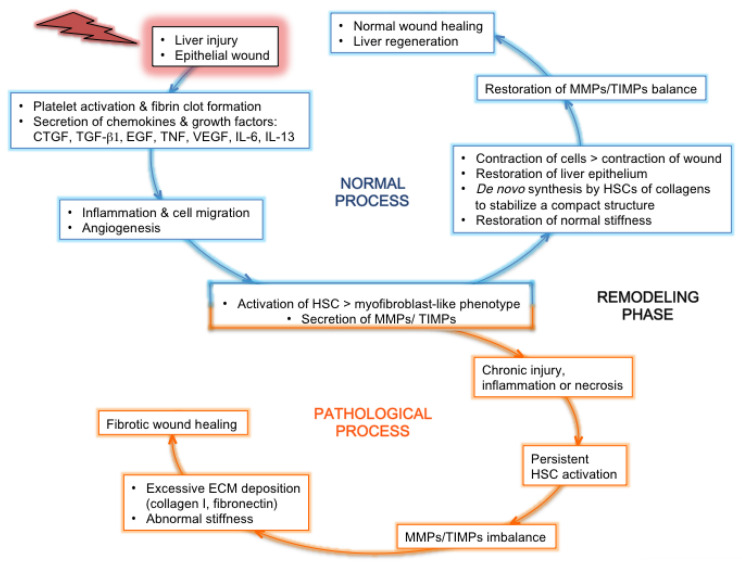
Chronic infection by the hepatitis C virus (HCV) is a major cause of liver diseases, predisposing to fibrosis and hepatocellular carcinoma. Liver fibrosis is characterized by an overly abundant accumulation of components of the hepatic extracellular matrix, such as collagen and elastin, with consequences on the properties of this microenvironment and cancer initiation and growth. This review will provide an update on mechanistic concepts of HCV-related liver fibrosis/cirrhosis and early stages of carcinogenesis, with a dissection of the molecular details of the crosstalk during disease progression between hepatocytes, the extracellular matrix, and hepatic stellate cells.
丙型肝炎病毒(HCV)慢性感染是肝脏疾病的主要病因,易引发肝纤维化和肝细胞癌。肝纤维化的特征是肝细胞外基质成分(如胶原蛋白和弹性蛋白)过度大量积累,这会影响该微环境的特性以及癌症的起始和生长。本综述将更新关于HCV相关肝纤维化/肝硬化及癌变早期阶段的机制概念,并剖析疾病进展过程中肝细胞、细胞外基质和肝星状细胞之间相互作用的分子细节。