Coimbra Susana, Reis Flávio, Valente Maria João, Rocha Susana, Catarino Cristina, Rocha-Pereira Petronila, Sameiro-Faria Maria, Bronze-da-Rocha Elsa, Belo Luís, Santos-Silva Alice
UCIBIO\REQUIMTE, Laboratory of Biochemistry, Department of Biological Sciences, Faculty of Pharmacy, University of Porto, 4050-313 Porto, Portugal.
CESPU, Institute of Research and Advanced Training in Health Sciences and Technologies (IINFACTS), 4585-116 Gandra-Paredes, Portugal.
Biomedicines. 2021 May 16;9(5):554. doi: 10.3390/biomedicines9050554.
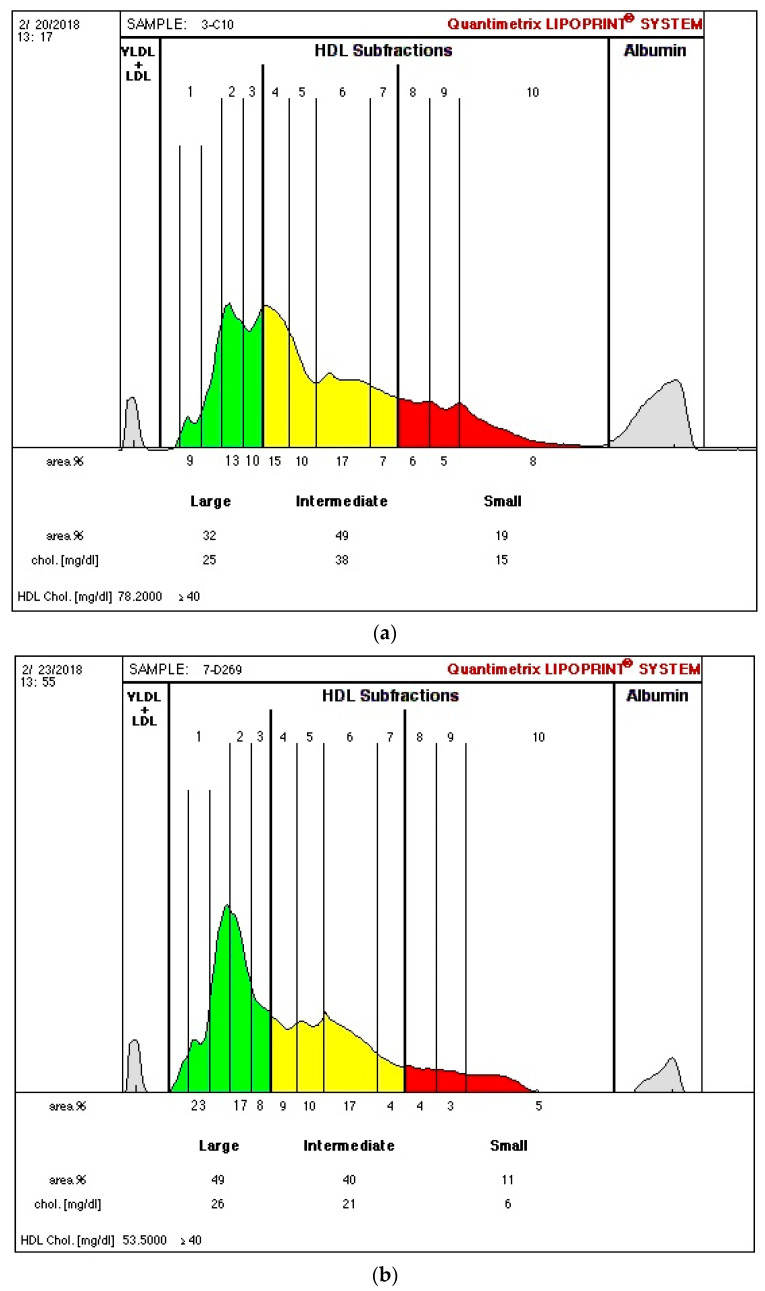
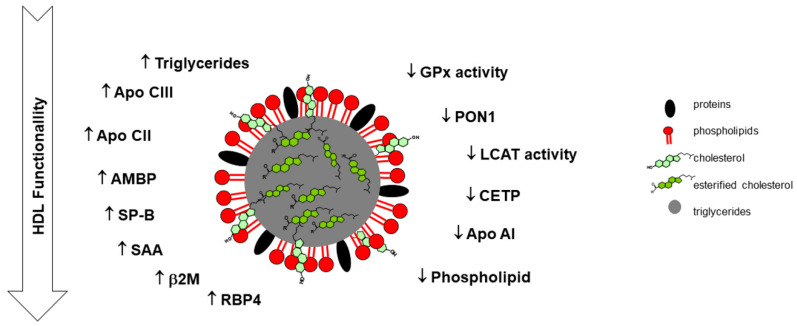
Dyslipidemia is a major traditional risk factor for cardiovascular disease (CVD) in chronic kidney disease (CKD) patients, although the altered lipid profile does not explain the number and severity of CVD events. High-density lipoprotein (HDL) is a heterogeneous (size, composition, and functionality) population of particles with different atherogenic or atheroprotective properties. HDL-cholesterol concentrations per se may not entirely reflect a beneficial or a risk profile for CVD. Large HDL in CKD patients may have a unique proteome and lipid composition, impairing their cholesterol efflux capacity. This lack of HDL functionality may contribute to the paradoxical coexistence of increased large HDL and enhanced risk for CVD events. Moreover, CKD is associated with inflammation, oxidative stress, diabetes, and/or hypertension that are able to interfere with the anti-inflammatory, antioxidative, and antithrombotic properties of HDL subpopulations. How these changes interfere with HDL functions in CKD is still poorly understood. Further studies are warranted to fully clarify if different HDL subpopulations present different functionalities and/or atheroprotective effects. To achieve this goal, the standardization of techniques would be valuable.
血脂异常是慢性肾脏病(CKD)患者心血管疾病(CVD)的主要传统危险因素,尽管血脂谱改变并不能解释CVD事件的数量和严重程度。高密度脂蛋白(HDL)是一群具有不同致动脉粥样硬化或抗动脉粥样硬化特性的异质性(大小、组成和功能)颗粒。HDL胆固醇浓度本身可能并不完全反映CVD的有益或风险状况。CKD患者中的大HDL可能具有独特的蛋白质组和脂质组成,损害其胆固醇流出能力。HDL功能的这种缺乏可能导致大HDL增加与CVD事件风险增加这一矛盾的共存现象。此外,CKD与炎症、氧化应激、糖尿病和/或高血压相关,这些因素能够干扰HDL亚群的抗炎、抗氧化和抗血栓特性。这些变化如何干扰CKD中的HDL功能仍知之甚少。有必要进行进一步研究以充分阐明不同的HDL亚群是否具有不同的功能和/或抗动脉粥样硬化作用。为实现这一目标,技术的标准化将很有价值。