• 文献检索
  • 文档翻译
  • 深度研究
  • 学术资讯
  • Suppr Zotero 插件Zotero 插件
  • 邀请有礼
  • 套餐&价格
  • 历史记录
应用&插件
Suppr Zotero 插件Zotero 插件浏览器插件Mac 客户端Windows 客户端微信小程序
定价
高级版会员购买积分包购买API积分包
服务
文献检索文档翻译深度研究API 文档MCP 服务
关于我们
关于 Suppr公司介绍联系我们用户协议隐私条款
关注我们

Suppr 超能文献

核心技术专利:CN118964589B侵权必究
粤ICP备2023148730 号-1Suppr @ 2026

文献检索

告别复杂PubMed语法,用中文像聊天一样搜索,搜遍4000万医学文献。AI智能推荐,让科研检索更轻松。

立即免费搜索

文件翻译

保留排版,准确专业,支持PDF/Word/PPT等文件格式,支持 12+语言互译。

免费翻译文档

深度研究

AI帮你快速写综述,25分钟生成高质量综述,智能提取关键信息,辅助科研写作。

立即免费体验

阿托伐他汀基于生理的药代动力学模型用于决策的当前证据、挑战与机遇

Current Evidence, Challenges, and Opportunities of Physiologically Based Pharmacokinetic Models of Atorvastatin for Decision Making.

作者信息

Reig-López Javier, García-Arieta Alfredo, Mangas-Sanjuán Víctor, Merino-Sanjuán Matilde

机构信息

Department of Pharmacy and Pharmaceutical Technology and Parasitology, University of Valencia, 46010 Valencia, Spain.

División de Farmacología y Evaluación Clínica, Departamento de Medicamentos de Uso Humano, Agencia Española de Medicamentos y Productos Sanitarios, Calle Campezo 1, Edificio 8, 28022 Madrid, Spain.

出版信息

Pharmaceutics. 2021 May 13;13(5):709. doi: 10.3390/pharmaceutics13050709.

DOI:10.3390/pharmaceutics13050709
PMID:34068030
原文链接:https://pmc.ncbi.nlm.nih.gov/articles/PMC8152487/
Abstract

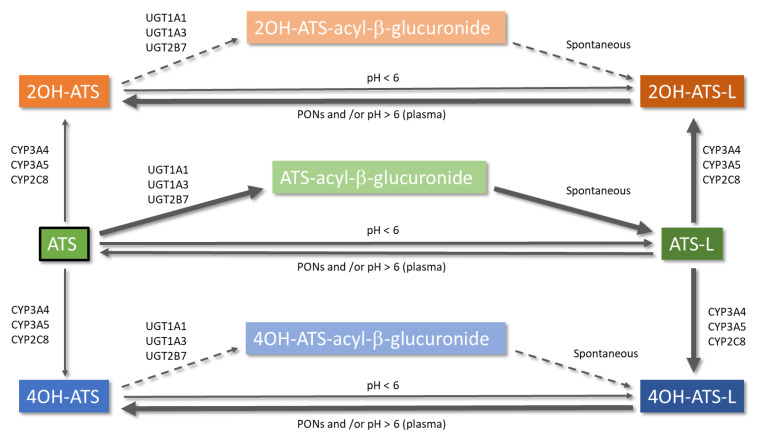
Atorvastatin (ATS) is the gold-standard treatment worldwide for the management of hypercholesterolemia and prevention of cardiovascular diseases associated with dyslipidemia. Physiologically based pharmacokinetic (PBPK) models have been positioned as a valuable tool for the characterization of complex pharmacokinetic (PK) processes and its extrapolation in special sub-groups of the population, leading to regulatory recognition. Several PBPK models of ATS have been published in the recent years, addressing different aspects of the PK properties of ATS. Therefore, the aims of this review are (i) to summarize the physicochemical and pharmacokinetic characteristics involved in the time-course of ATS, and (ii) to evaluate the major highlights and limitations of the PBPK models of ATS published so far. The PBPK models incorporate common elements related to the physicochemical aspects of ATS. However, there are important differences in relation to the analyte evaluated, the type and effect of transporters and metabolic enzymes, and the permeability value used. Additionally, this review identifies major processes (lactonization, P-gp contribution, ATS-Ca solubility, simultaneous management of multiple analytes, and experimental evidence in the target population), which would enhance the PBPK model prediction to serve as a valid tool for ATS dose optimization.

摘要

阿托伐他汀(ATS)是全球治疗高胆固醇血症以及预防与血脂异常相关心血管疾病的金标准疗法。基于生理的药代动力学(PBPK)模型已被定位为表征复杂药代动力学(PK)过程及其在特定人群亚组中外推的宝贵工具,并得到了监管认可。近年来已发表了多个阿托伐他汀的PBPK模型,涉及阿托伐他汀PK特性的不同方面。因此,本综述的目的是:(i)总结阿托伐他汀时间进程中涉及的物理化学和药代动力学特征;(ii)评估迄今已发表的阿托伐他汀PBPK模型的主要亮点和局限性。这些PBPK模型包含与阿托伐他汀物理化学方面相关的共同要素。然而,在所评估的分析物、转运体和代谢酶的类型及作用以及所使用的渗透率值方面存在重要差异。此外,本综述确定了主要过程(内酯化、P-糖蛋白的作用、阿托伐他汀钙的溶解度、多种分析物的同时处理以及目标人群中的实验证据),这些过程将增强PBPK模型预测,使其成为阿托伐他汀剂量优化的有效工具。
https://cdn.ncbi.nlm.nih.gov/pmc/blobs/f067/8152487/3921a5957c80/pharmaceutics-13-00709-g001.jpg

相似文献

1
Current Evidence, Challenges, and Opportunities of Physiologically Based Pharmacokinetic Models of Atorvastatin for Decision Making.阿托伐他汀基于生理的药代动力学模型用于决策的当前证据、挑战与机遇
Pharmaceutics. 2021 May 13;13(5):709. doi: 10.3390/pharmaceutics13050709.
2
Physiologically Based Pharmacokinetic (PBPK) Modeling of Pitavastatin and Atorvastatin to Predict Drug-Drug Interactions (DDIs).匹伐他汀和阿托伐他汀的基于生理的药代动力学(PBPK)建模以预测药物-药物相互作用(DDIs)。
Eur J Drug Metab Pharmacokinet. 2017 Aug;42(4):689-705. doi: 10.1007/s13318-016-0383-9.
3
Prediction of Atorvastatin Pharmacokinetics in High-Fat Diet and Low-Dose Streptozotocin-Induced Diabetic Rats Using a Semiphysiologically Based Pharmacokinetic Model Involving Both Enzymes and Transporters.应用包含酶和转运体的半生理药代动力学模型预测高脂肪饮食和小剂量链脲佐菌素诱导的糖尿病大鼠阿托伐他汀的药代动力学。
Drug Metab Dispos. 2019 Oct;47(10):1066-1079. doi: 10.1124/dmd.118.085902. Epub 2019 Aug 9.
4
PBPK models for the prediction of in vivo performance of oral dosage forms.用于预测口服剂型体内性能的生理药代动力学(PBPK)模型。
Eur J Pharm Sci. 2014 Jun 16;57:300-21. doi: 10.1016/j.ejps.2013.09.008. Epub 2013 Sep 21.
5
Physiologically based pharmacokinetic modeling of disposition and drug-drug interactions for atorvastatin and its metabolites.阿托伐他汀及其代谢产物的处置和药物相互作用的基于生理的药代动力学建模。
Eur J Pharm Sci. 2015 Sep 18;77:216-29. doi: 10.1016/j.ejps.2015.06.019. Epub 2015 Jun 24.
6
Structural and functional pharmacokinetic analogs for physiologically based pharmacokinetic (PBPK) model evaluation.用于生理药代动力学(PBPK)模型评估的结构和功能药代动力学类似物。
Regul Toxicol Pharmacol. 2018 Nov;99:61-77. doi: 10.1016/j.yrtph.2018.09.008. Epub 2018 Sep 8.
7
Physiologically-Based Pharmacokinetic Modeling of Atorvastatin Incorporating Delayed Gastric Emptying and Acid-to-Lactone Conversion.基于生理学的阿托伐他汀药代动力学模型构建:考虑胃排空延迟和酸-内酯转换。
CPT Pharmacometrics Syst Pharmacol. 2019 Sep;8(9):664-675. doi: 10.1002/psp4.12447. Epub 2019 Aug 1.
8
Prediction of Cyclosporin-Mediated Drug Interaction Using Physiologically Based Pharmacokinetic Model Characterizing Interplay of Drug Transporters and Enzymes.基于药代动力学模型预测环孢素介导的药物相互作用,该模型可描述药物转运体和酶的相互作用。
Int J Mol Sci. 2020 Sep 24;21(19):7023. doi: 10.3390/ijms21197023.
9
Use of in vitro data in developing a physiologically based pharmacokinetic model: Carbaryl as a case study.利用体外数据构建基于生理学的药代动力学模型:以西维因为例进行研究。
Toxicology. 2015 Jun 5;332:52-66. doi: 10.1016/j.tox.2014.05.006. Epub 2014 May 24.
10
Predicting human exposure of active drug after oral prodrug administration, using a joined in vitro/in silico-in vivo extrapolation and physiologically-based pharmacokinetic modeling approach.采用体外/计算机辅助体内外推法与基于生理的药代动力学建模方法相结合,预测口服前药后活性药物在人体中的暴露情况。
J Pharmacol Toxicol Methods. 2013 May-Jun;67(3):203-13. doi: 10.1016/j.vascn.2012.12.002. Epub 2012 Dec 29.

引用本文的文献

1
Integrated Approach towards Potential Therapeutic Agent for Inflammation-Mediated CVD Utilizing Computational and Experimental Studies.利用计算和实验研究寻找炎症介导的心血管疾病潜在治疗药物的综合方法。
Cell Biochem Biophys. 2025 Jun 28. doi: 10.1007/s12013-025-01807-1.
2
Determination of the latent geometry of atorvastatin pharmacokinetics by transfer entropy to identify bottlenecks.通过转移熵确定阿托伐他汀药代动力学的潜在几何结构以识别瓶颈
BMC Pharmacol Toxicol. 2025 Jun 25;26(Suppl 1):123. doi: 10.1186/s40360-025-00948-6.
3
From hazard to risk prioritization: a case study to predict drug-induced cholestasis using physiologically based kinetic modeling.

本文引用的文献

1
Improved solubility, dissolution, and oral bioavailability for atorvastatin-Pluronic® solid dispersions.阿托伐他汀-聚氧乙烯蓖麻油固体分散体的溶解度、溶出度和口服生物利用度提高。
Int J Pharm. 2020 Jan 25;574:118891. doi: 10.1016/j.ijpharm.2019.118891. Epub 2019 Nov 28.
2
Investigating the clinical factors and comedications associated with circulating levels of atorvastatin and its major metabolites in secondary prevention.在二级预防中研究与阿托伐他汀及其主要代谢产物循环水平相关的临床因素和合并用药。
Br J Clin Pharmacol. 2020 Jan;86(1):62-74. doi: 10.1111/bcp.14133. Epub 2020 Jan 4.
3
Prediction of pharmacokinetic drug-drug interactions causing atorvastatin-induced rhabdomyolysis using physiologically based pharmacokinetic modelling.
从危害到风险优先级排序:使用基于生理的动力学建模预测药物性胆汁淤积的案例研究。
Arch Toxicol. 2024 Sep;98(9):3077-3095. doi: 10.1007/s00204-024-03775-6. Epub 2024 May 17.
4
Physiologically based pharmacokinetic modelling and simulation to predict the plasma concentration profile of schaftoside after oral administration of total flavonoids of .基于生理的药代动力学建模与模拟,以预测口服……总黄酮后schaftoside的血浆浓度曲线 。 你提供的原文似乎不完整,“of”后面缺少具体内容。
Front Pharmacol. 2022 Dec 14;13:1073535. doi: 10.3389/fphar.2022.1073535. eCollection 2022.
5
Platelet thromboxane inhibition by low-dose aspirin in polycythemia vera: Ex vivo and in vivo measurements and in silico simulation.低剂量阿司匹林对真性红细胞增多症血小板血栓素抑制作用的体外和体内测量及计算机模拟。
Clin Transl Sci. 2022 Dec;15(12):2958-2970. doi: 10.1111/cts.13415. Epub 2022 Oct 5.
6
Atorvastatin population pharmacokinetics in a real-life setting: Influence of genetic polymorphisms and association with clinical response.阿托伐他汀在真实环境中的群体药代动力学:遗传多态性的影响及其与临床反应的关系。
Clin Transl Sci. 2022 Mar;15(3):667-679. doi: 10.1111/cts.13185. Epub 2021 Nov 23.
基于生理的药代动力学模型预测阿托伐他汀引起横纹肌溶解的药物-药物相互作用的药代动力学。
Biomed Pharmacother. 2019 Nov;119:109416. doi: 10.1016/j.biopha.2019.109416. Epub 2019 Sep 10.
4
Physiologically-Based Pharmacokinetic Modeling of Atorvastatin Incorporating Delayed Gastric Emptying and Acid-to-Lactone Conversion.基于生理学的阿托伐他汀药代动力学模型构建:考虑胃排空延迟和酸-内酯转换。
CPT Pharmacometrics Syst Pharmacol. 2019 Sep;8(9):664-675. doi: 10.1002/psp4.12447. Epub 2019 Aug 1.
5
Atorvastatin calcium inclusion complexation with polysaccharide arabinogalactan and saponin disodium glycyrrhizate for increasing of solubility and bioavailability.阿伐他汀钙与多糖阿拉伯半乳聚糖和甘草酸二钠形成包合物以提高溶解度和生物利用度。
Drug Deliv Transl Res. 2018 Oct;8(5):1200-1213. doi: 10.1007/s13346-018-0565-x.
6
Simultaneous quantitation of atorvastatin and its two active metabolites in human plasma by liquid chromatography/(-) electrospray tandem mass spectrometry.采用液相色谱/(-)电喷雾串联质谱法同时定量测定人血浆中阿托伐他汀及其两种活性代谢物。
J Pharm Anal. 2014 Feb;4(1):26-36. doi: 10.1016/j.jpha.2013.09.007. Epub 2013 Sep 25.
7
Physiologically Based Pharmacokinetic Model Qualification and Reporting Procedures for Regulatory Submissions: A Consortium Perspective.基于生理学的药代动力学模型在监管提交中的资格认证和报告程序:联合观点。
Clin Pharmacol Ther. 2018 Jul;104(1):88-110. doi: 10.1002/cpt.1013. Epub 2018 Feb 2.
8
Transporter genes ABCG2 rs2231142 and ABCB1 rs1128503 polymorphisms and atorvastatin response in Chilean subjects.转运蛋白基因ABCG2 rs2231142和ABCB1 rs1128503多态性与智利人群中阿托伐他汀的反应
J Clin Pharm Ther. 2018 Feb;43(1):87-91. doi: 10.1111/jcpt.12607. Epub 2017 Aug 19.
9
No Dose Adjustment is Recommended for Digoxin, Warfarin, Atorvastatin or a Combination Oral Contraceptive When Coadministered with Dulaglutide.地高辛、华法林、阿托伐他汀或复方口服避孕药与度拉糖肽同时使用时,无需调整剂量。
Clin Pharmacokinet. 2017 Nov;56(11):1415-1427. doi: 10.1007/s40262-017-0531-7.
10
Myotoxicity of statins: Mechanism of action.他汀类药物的肌毒性:作用机制。
Pharmacol Ther. 2017 Jul;175:1-16. doi: 10.1016/j.pharmthera.2017.02.029. Epub 2017 Feb 14.