Chang Hung-Ming, Lin Hsing-Chun, Cheng Hsin-Lin, Liao Chih-Kai, Tseng To-Jung, Renn Ting-Yi, Lan Chyn-Tair, Chen Li-You
Department of Anatomy and Cell Biology, School of Medicine, College of Medicine, Taipei Medical University, Taipei 11031, Taiwan.
Department of Nutrition, Chung Shan Medical University, Taichung 40201, Taiwan.
Antioxidants (Basel). 2021 May 13;10(5):774. doi: 10.3390/antiox10050774.
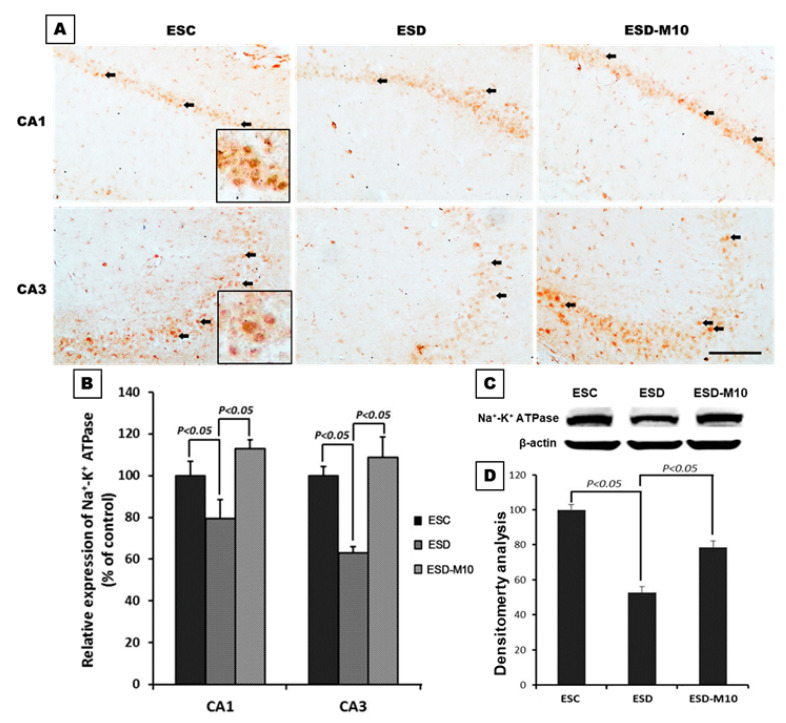
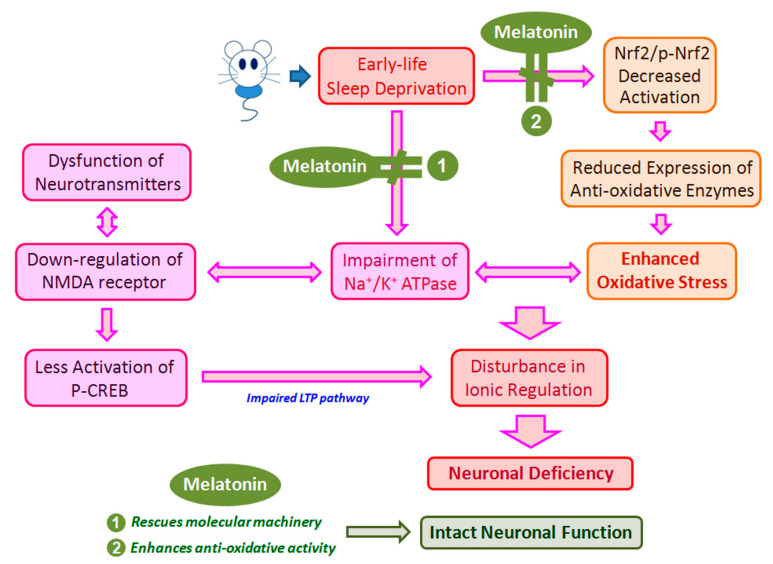
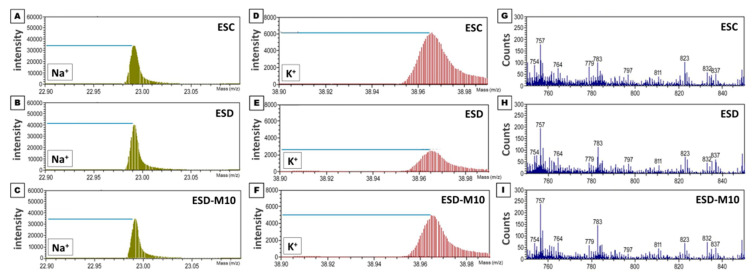
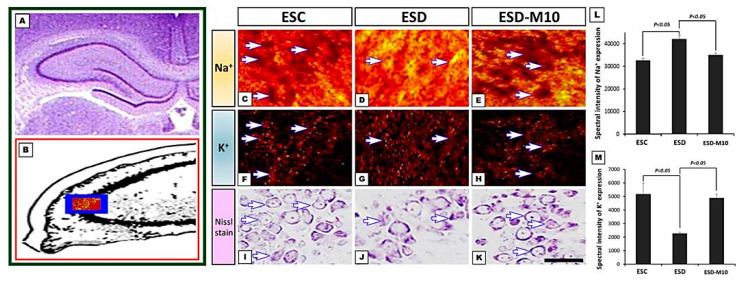
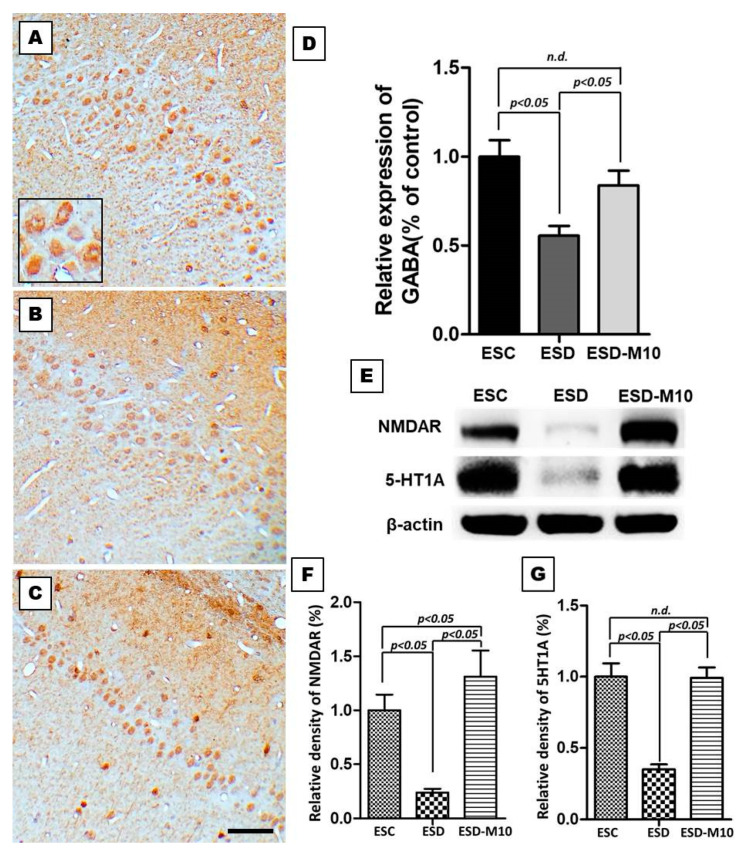
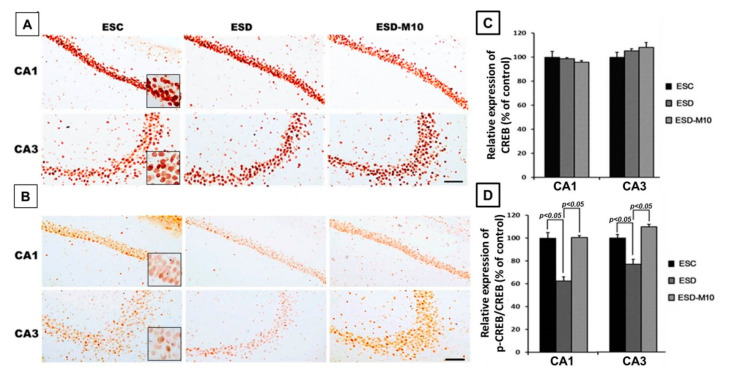
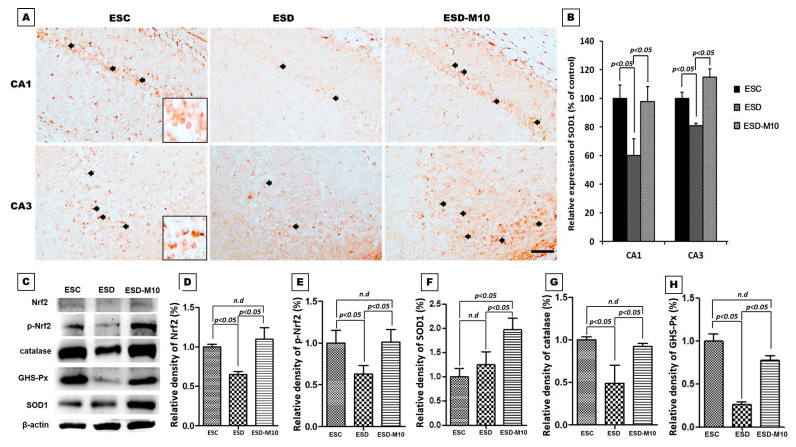
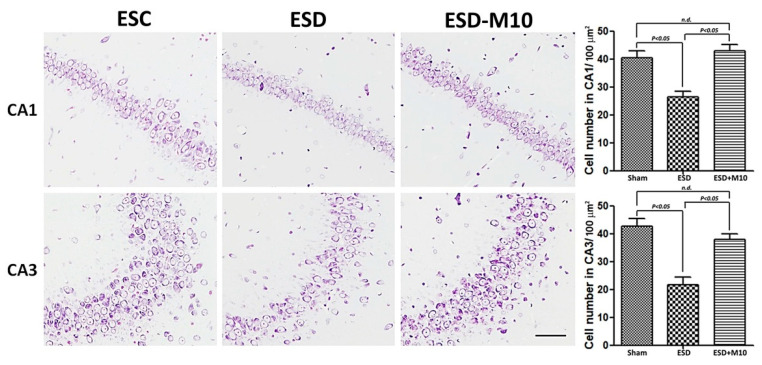
Early-life sleep deprivation (ESD) is a serious condition with severe cognitive sequelae. Considering hippocampus plays an essential role in cognitive regulation, the present study aims to determine whether melatonin, a neuroendocrine beard with significant anti-oxidative activity, would greatly depress the hippocampal oxidative stress, improves the molecular machinery, and consequently exerts the neuro-protective effects following ESD. Male weanling Wistar rats (postnatal day 21) were subjected to ESD for three weeks. During this period, the animals were administered normal saline or melatonin (10 mg/kg) via intraperitoneal injection between 09:00 and 09:30 daily. After three cycles of ESD, the animals were kept under normal sleep/wake cycle until they reached adulthood and were sacrificed. The results indicated that ESD causes long-term effects, such as impairment of ionic distribution, interruption of the expressions of neurotransmitters and receptors, decreases in the levels of several antioxidant enzymes, and impairment of several signaling pathways, which contribute to neuronal death in hippocampal regions. Melatonin administration during ESD prevented these effects. Quantitative evaluation of cells also revealed a higher number of neurons in the melatonin-treated animals when compared with the saline-treated animals. As the hippocampus is critical to cognitive activity, preserving or even improving the hippocampal molecular machinery by melatonin during ESD not only helps us to better understand the underlying mechanisms of ESD-induced neuronal dysfunction, but also the therapeutic use of melatonin to counteract ESD-induced neuronal deficiency.
早年睡眠剥夺(ESD)是一种伴有严重认知后遗症的严重病症。鉴于海马体在认知调节中起着至关重要的作用,本研究旨在确定褪黑素(一种具有显著抗氧化活性的神经内分泌物质)是否会极大地减轻海马体氧化应激,改善分子机制,从而在早年睡眠剥夺后发挥神经保护作用。雄性断乳Wistar大鼠(出生后第21天)接受为期三周的早年睡眠剥夺。在此期间,每天09:00至09:30通过腹腔注射给予动物生理盐水或褪黑素(10毫克/千克)。经过三个周期的早年睡眠剥夺后,将动物置于正常睡眠/觉醒周期下直至成年并进行处死。结果表明,早年睡眠剥夺会导致长期影响,如离子分布受损、神经递质和受体表达中断、几种抗氧化酶水平降低以及几种信号通路受损,这些都会导致海马区神经元死亡。早年睡眠剥夺期间给予褪黑素可预防这些影响。细胞定量评估还显示,与生理盐水处理的动物相比,褪黑素处理的动物中神经元数量更多。由于海马体对认知活动至关重要,早年睡眠剥夺期间褪黑素对海马体分子机制的保存甚至改善,不仅有助于我们更好地理解早年睡眠剥夺诱导神经元功能障碍的潜在机制,也有助于理解褪黑素对抗早年睡眠剥夺诱导神经元缺陷的治疗用途。