Zheng Yue, Yang Xian-Wen, Schols Dominique, Mori Mattia, Botta Bruno, Chevigné Andy, Mulinge Martin, Steinmetz André, Schmit Jean-Claude, Seguin-Devaux Carole
Laboratory of Cellular and Molecular Oncology, Luxembourg Institute of Health, L-1445 Luxembourg, Luxembourg.
Laboratory of Virology and Chemotherapy, Department of Microbiology, Immunology and Transplantation, Rega Institute for Medical Research, KU Leuven, 3000 Leuven, Belgium.
Int J Mol Sci. 2021 May 10;22(9):5052. doi: 10.3390/ijms22095052.
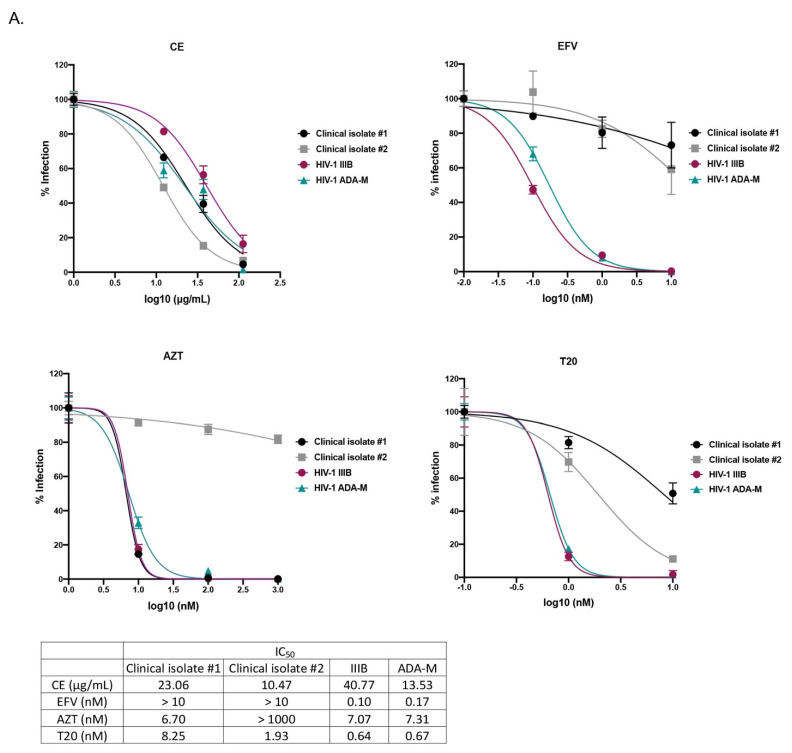
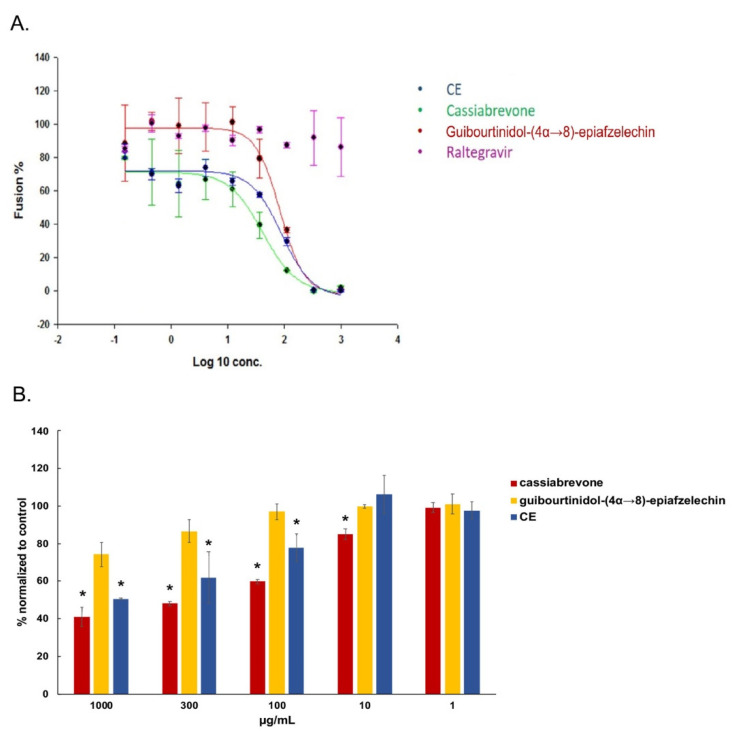
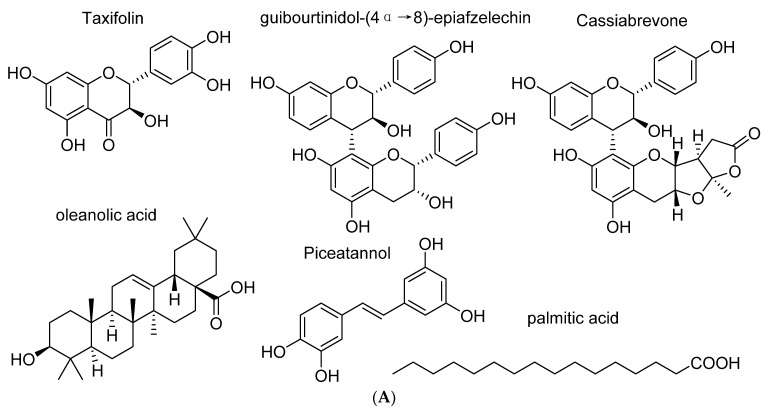
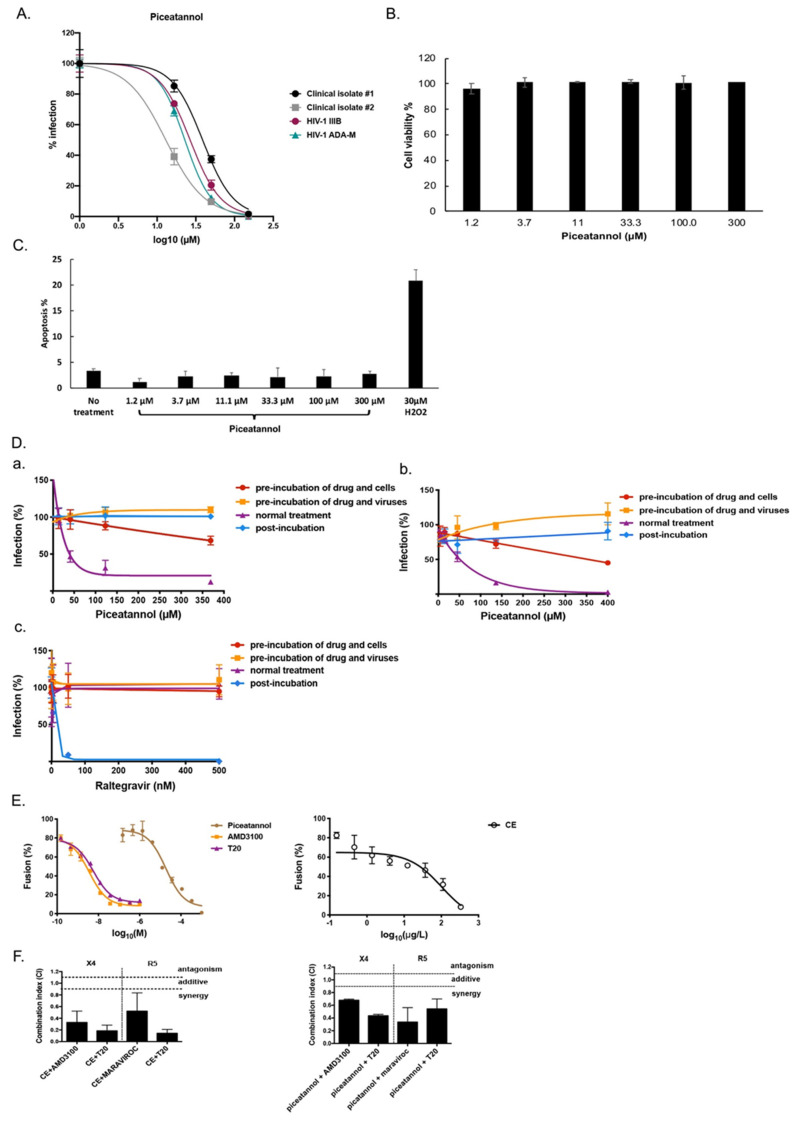
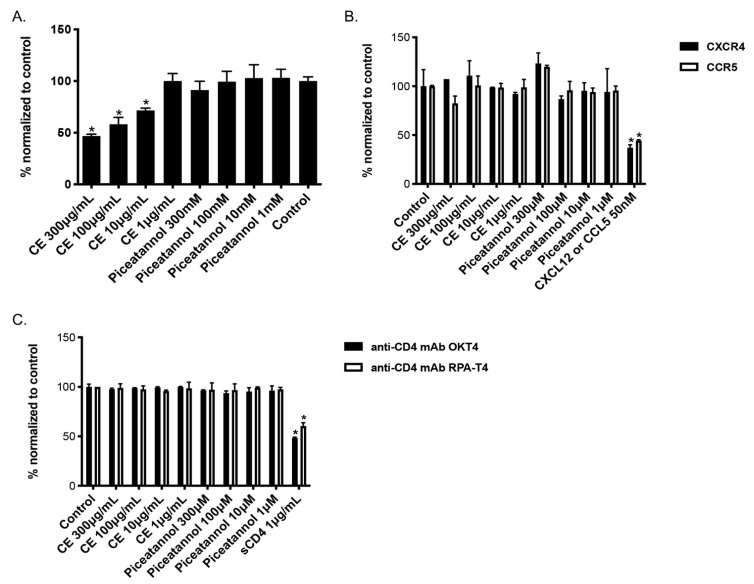
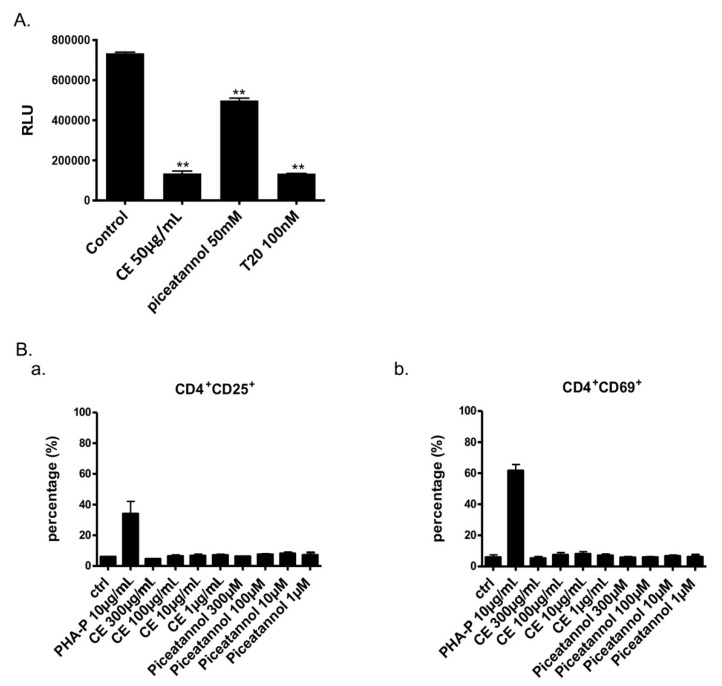
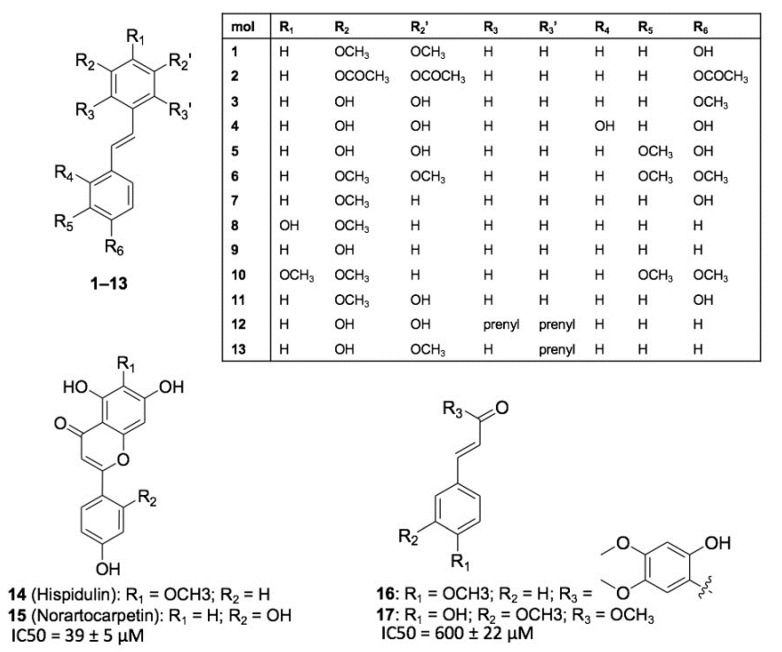
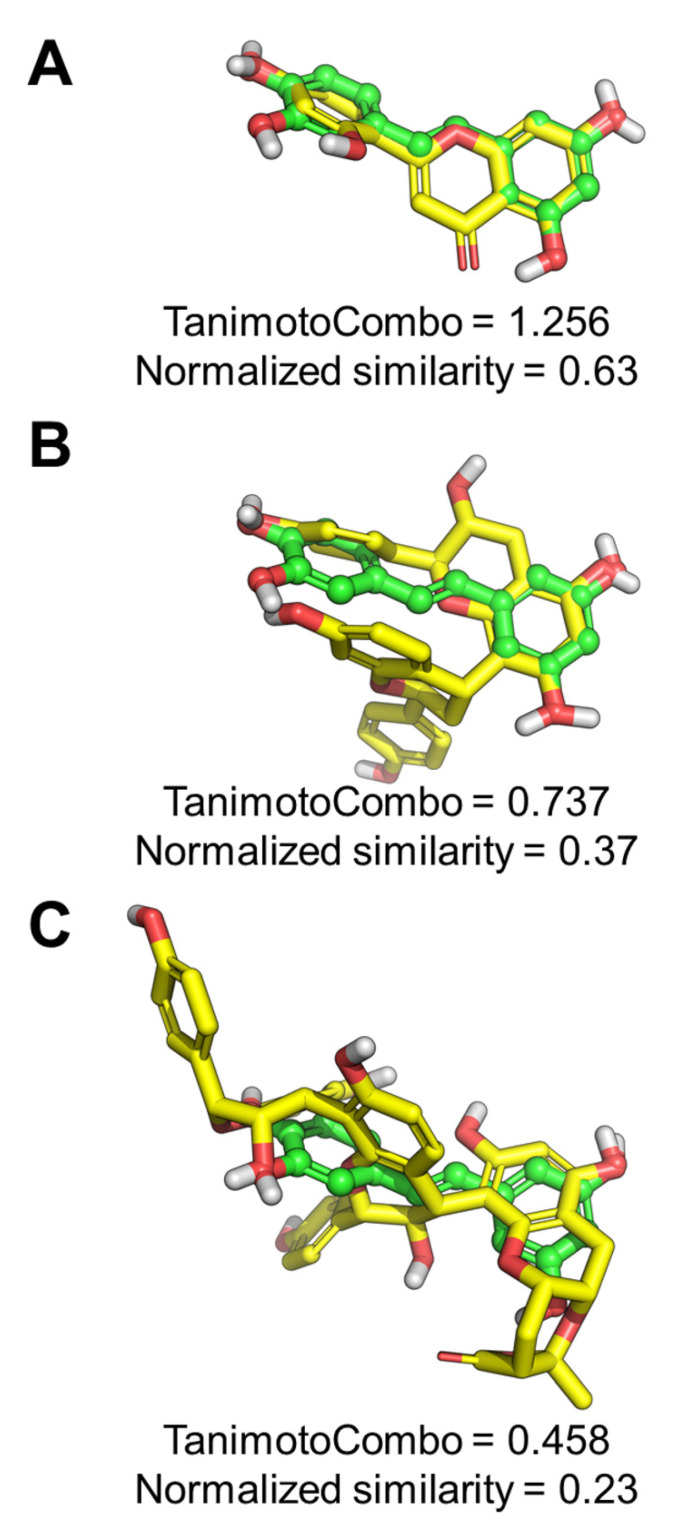
is widely used in Sub-Saharan Africa for treating many diseases, including HIV-1 infection. We have recently described the chemical structures of 28 compounds isolated from an alcoholic crude extract of barks and roots of , and showed that six bioactive compounds inhibit HIV-1 infection. In the present study, we demonstrate that the six compounds block HIV-1 entry into cells: oleanolic acid, palmitic acid, taxifolin, piceatannol, guibourtinidol-(4α→8)-epiafzelechin, and a novel compound named as cassiabrevone. We report, for the first time, that guibourtinidol-(4α→8)-epiafzelechin and cassiabrevone inhibit HIV-1 entry (IC of 42.47 µM and 30.96 µM, respectively), as well as that piceatannol interacts with cellular membranes. Piceatannol inhibits HIV-1 infection in a dual-chamber assay mimicking the female genital tract, as well as HSV infection, emphasizing its potential as a microbicide. Structure-activity relationships (SAR) showed that pharmacophoric groups of piceatannol are strictly required to inhibit HIV-1 entry. By a ligand-based in silico study, we speculated that piceatannol and norartocarpetin may have a very similar mechanism of action and efficacy because of the highly comparable pharmacophoric and 3D space, while guibourtinidol-(4α→8)-epiafzelechin and cassiabrevone may display a different mechanism. We finally show that cassiabrevone plays a major role of the crude extract of by blocking the binding activity of HIV-1 gp120 and CD4.
在撒哈拉以南非洲广泛用于治疗多种疾病,包括HIV-1感染。我们最近描述了从[植物名称]树皮和根的乙醇粗提物中分离出的28种化合物的化学结构,并表明六种生物活性化合物可抑制HIV-1感染。在本研究中,我们证明这六种化合物可阻断HIV-1进入细胞:齐墩果酸、棕榈酸、紫杉叶素、白皮杉醇、吉贝醇-(4α→8)-表阿夫儿茶精,以及一种名为决明缩酮的新化合物。我们首次报道,吉贝醇-(4α→8)-表阿夫儿茶精和决明缩酮可抑制HIV-1进入(IC分别为42.47 µM和30.96 µM),以及白皮杉醇与细胞膜相互作用。白皮杉醇在模拟女性生殖道的双室试验中可抑制HIV-1感染以及HSV感染,强调了其作为杀微生物剂的潜力。构效关系(SAR)表明,白皮杉醇的药效基团是抑制HIV-1进入所必需的。通过基于配体的计算机模拟研究,我们推测白皮杉醇和去甲波罗蜜黄素可能具有非常相似的作用机制和功效,因为它们的药效基团和三维空间高度可比,而吉贝醇-(4α→8)-表阿夫儿茶精和决明缩酮可能表现出不同的机制。我们最终表明,决明缩酮通过阻断HIV-1 gp120与CD4的结合活性,在[植物名称]粗提物中起主要作用。