Department of Science and Environment, Roskilde University, Universitetsvej 1, 4000 Roskilde, Denmark.
Institute of Microbiology and Infection, College of Medical and Dental Sciences, University of Birmingham, Edgbaston, Birmingham B15 2TT, UK.
Int J Mol Sci. 2021 May 14;22(10):5200. doi: 10.3390/ijms22105200.
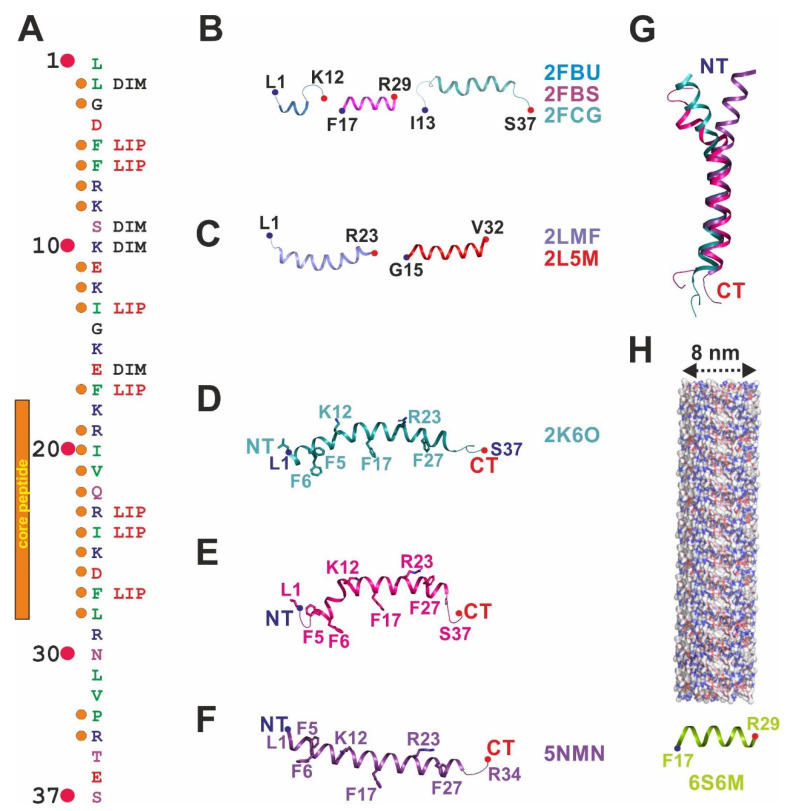
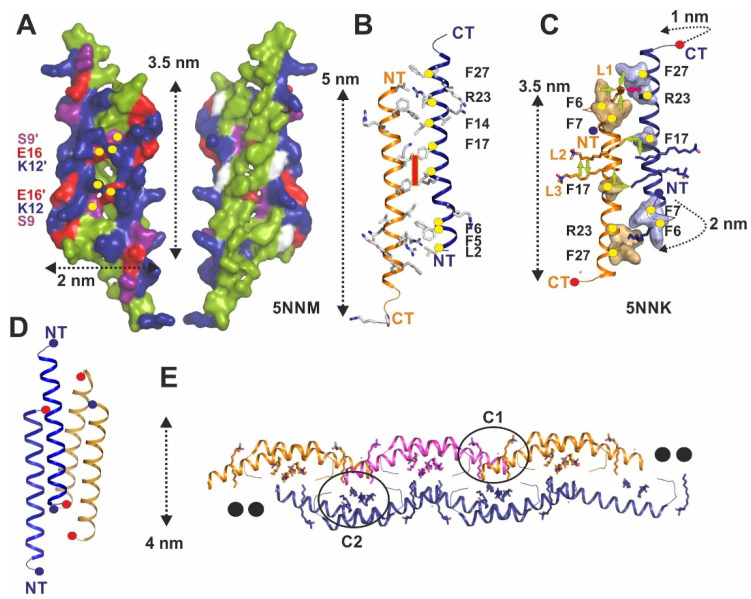
The human cathelicidin LL-37 is a multifunctional peptide of the human innate immune system. Among the various functions of LL-37, its antimicrobial activity is important in controlling the microorganisms of the human body. The target molecules of LL-37 in bacteria include membrane lipids, lipopolysaccharides (LPS), lipoteichoic acid (LTA), proteins, DNA and RNA. In this mini-review, we summarize the entity of LL-37 structural data determined over the last 15 years and specifically discuss features implicated in the interactions with lipid-like molecules. For this purpose, we discuss partial and full-length structures of LL-37 determined in the presence of membrane-mimicking detergents. This constantly growing structural database is now composed of monomers, dimers, tetramers, and fiber-like structures. The diversity of these structures underlines an unexpected plasticity and highlights the conformational and oligomeric adaptability of LL-37 necessary to target different molecular scaffolds. The recent co-crystal structures of LL-37 in complex with detergents are particularly useful to understand how these molecules mimic lipids and LPS to induce oligomerization and fibrillation. Defined detergent binding sites provide deep insights into a new class of peptide scaffolds, widening our view on the fascinating world of the LL-37 structural factotum. Together, the new structures in their evolutionary context allow for the assignment of functionally conserved residues in oligomerization and target interactions. Conserved phenylalanine and arginine residues primarily mediate those interactions with lipids and LPS. The interactions with macromolecules such as proteins or DNA remain largely unexplored and open a field for future studies aimed at structures of LL-37 complexes. These complexes will then allow for the structure-based rational design of LL-37-derived peptides with improved antibiotic properties.
人源杀菌肽 LL-37 是人体先天免疫系统的一种多功能肽。在 LL-37 的各种功能中,其抗菌活性在控制人体微生物方面起着重要作用。LL-37 在细菌中的靶分子包括膜脂质、脂多糖(LPS)、脂磷壁酸(LTA)、蛋白质、DNA 和 RNA。在这篇迷你综述中,我们总结了过去 15 年来确定的 LL-37 结构数据的实体,并特别讨论了与类脂分子相互作用所涉及的特征。为此,我们讨论了在存在模拟膜的去污剂存在下确定的 LL-37 的部分和全长结构。这个不断增长的结构数据库现在由单体、二聚体、四聚体和纤维样结构组成。这些结构的多样性突出了 LL-37 的意外可塑性,并强调了其针对不同分子支架的构象和寡聚体适应性。LL-37 与去污剂形成复合物的最近共晶结构对于理解这些分子如何模拟脂质和 LPS 以诱导寡聚体形成和纤维形成特别有用。定义的去污剂结合位点深入了解了一类新的肽支架,拓宽了我们对 LL-37 结构万能因子迷人世界的认识。新结构及其进化背景一起允许在寡聚体形成和靶相互作用中分配功能保守残基。保守的苯丙氨酸和精氨酸残基主要介导与脂质和 LPS 的相互作用。与蛋白质或 DNA 等大分子的相互作用在很大程度上仍未得到探索,为未来旨在研究 LL-37 复合物结构的研究开辟了一个领域。这些复合物将允许基于结构的合理设计具有改进抗生素特性的 LL-37 衍生肽。