Khurshed Mohammed, Molenaar Remco J, van Linde Myra E, Mathôt Ron A, Struys Eduard A, van Wezel Tom, van Noorden Cornelis J F, Klümpen Heinz-Josef, Bovée Judith V M G, Wilmink Johanna W
Department of Medical Oncology, Cancer Center Amsterdam, Amsterdam UMC location AMC, University of Amsterdam, 1105 AZ Amsterdam, The Netherlands.
Department of Medical Biology, Cancer Center Amsterdam, Amsterdam UMC location AMC, University of Amsterdam, 1105 AZ Amsterdam, The Netherlands.
Cancers (Basel). 2021 May 19;13(10):2474. doi: 10.3390/cancers13102474.
Mutations in isocitrate dehydrogenase 1 () occur in 60% of chondrosarcoma, 80% of WHO grade II-IV glioma and 20% of intrahepatic cholangiocarcinoma. These solid -mutated tumors produce the oncometabolite -2-hydroxyglutarate (-2HG) and are more vulnerable to disruption of their metabolism.
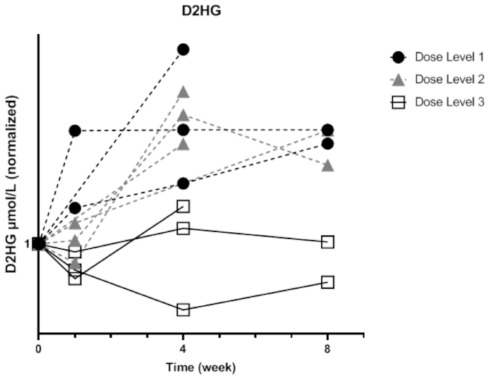
Patients with -mutated chondrosarcoma, glioma and intrahepatic cholangiocarcinoma received oral combinational treatment with the antidiabetic drug metformin and the antimalarial drug chloroquine. The primary objective was to determine the occurrence of dose-limiting toxicities (DLTs) and the maximum tolerated dose (MTD). Radiological and biochemical tumor responses to metformin and chloroquine were investigated using CT/MRI scans and magnetic resonance spectroscopy (MRS) measurements of -2HG levels in serum.
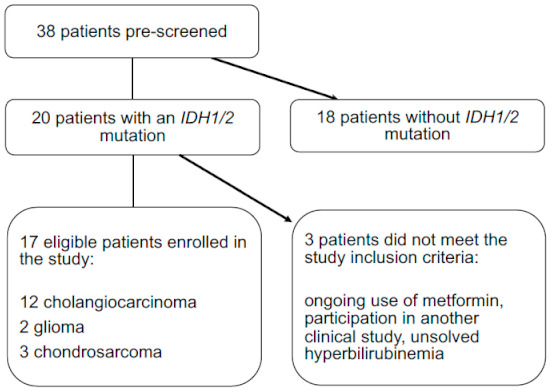
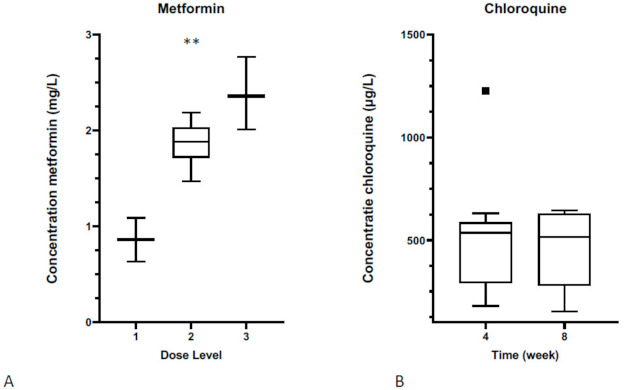
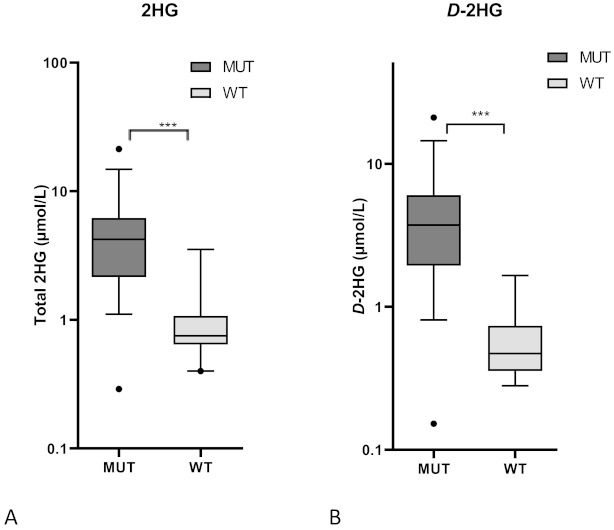
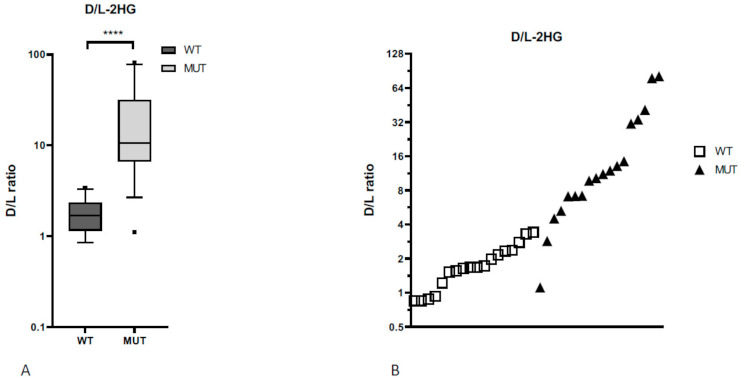
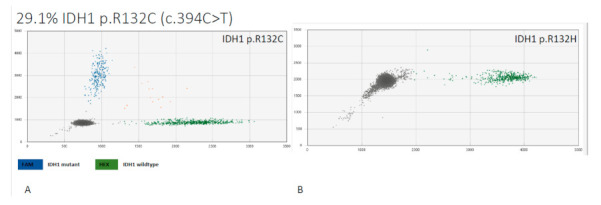
Seventeen patients received study treatment for a median duration of 43 days (range: 7-74 days). Of twelve evaluable patients, 10 patients discontinued study medication because of progressive disease and two patients due to toxicity. None of the patients experienced a DLT. The MTD was determined to be 1500 mg of metformin two times a day and 200 mg of chloroquine once a day. A serum -2HG ratio of ≥4.5 predicted the presence of an mutation with a sensitivity of 90% and a specificity of 100%. By utilization of digital droplet PCR on plasma samples, we were able to detect tumor-specific hotspot mutations in circulating tumor DNA (ctDNA) in investigated patients.
Treatment of advanced -mutated solid tumors with metformin and chloroquine was well tolerated but did not induce a clinical response in this phase Ib clinical trial.
异柠檬酸脱氢酶1(IDH1)突变存在于60%的软骨肉瘤、80%的世界卫生组织II - IV级胶质瘤以及20%的肝内胆管癌中。这些携带IDH1突变的实体瘤会产生致癌代谢物2 - 羟基戊二酸(2 - HG),并且其代谢更容易受到干扰。
患有IDH1突变的软骨肉瘤、胶质瘤和肝内胆管癌患者接受了抗糖尿病药物二甲双胍和抗疟疾药物氯喹的联合口服治疗。主要目的是确定剂量限制毒性(DLT)的发生情况以及最大耐受剂量(MTD)。使用CT/MRI扫描以及血清中2 - HG水平的磁共振波谱(MRS)测量来研究二甲双胍和氯喹对肿瘤的放射学和生化反应。
17名患者接受了研究治疗,中位持续时间为43天(范围:7 - 74天)。在12名可评估的患者中,10名患者因疾病进展而停止研究用药,2名患者因毒性反应而停药。没有患者出现剂量限制毒性。确定最大耐受剂量为二甲双胍1500毫克,每日两次,氯喹200毫克,每日一次。血清2 - HG比值≥4.5预测存在IDH1突变,敏感性为90%,特异性为100%。通过对血浆样本进行数字液滴PCR,我们能够在研究患者的循环肿瘤DNA(ctDNA)中检测到肿瘤特异性的IDH1热点突变。
在这项Ib期临床试验中,用二甲双胍和氯喹治疗晚期IDH1突变实体瘤耐受性良好,但未诱导出临床反应。