Betancourt Jose A, Granados Paula Stigler, Pacheco Gerardo J, Reagan Julie, Shanmugam Ramalingam, Topinka Joseph B, Beauvais Bradley M, Ramamonjiarivelo Zo H, Fulton Lawrence V
School of Health Administration, Texas State University, San Marcos, TX 78666-4684, USA.
Healthcare (Basel). 2021 May 18;9(5):604. doi: 10.3390/healthcare9050604.
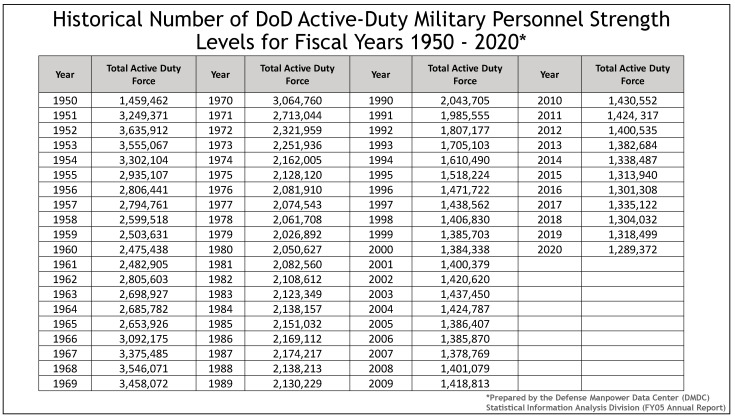
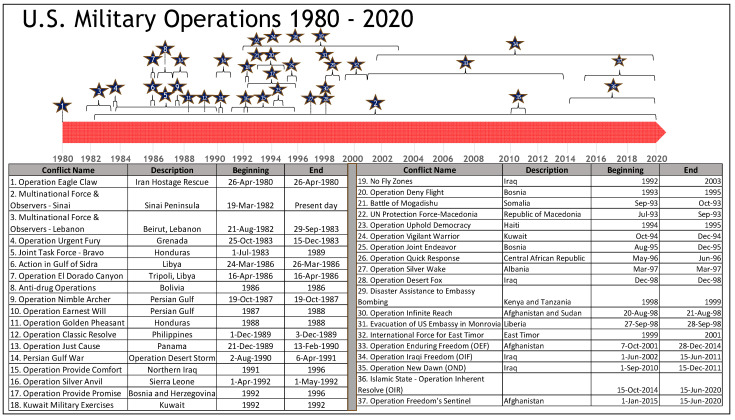
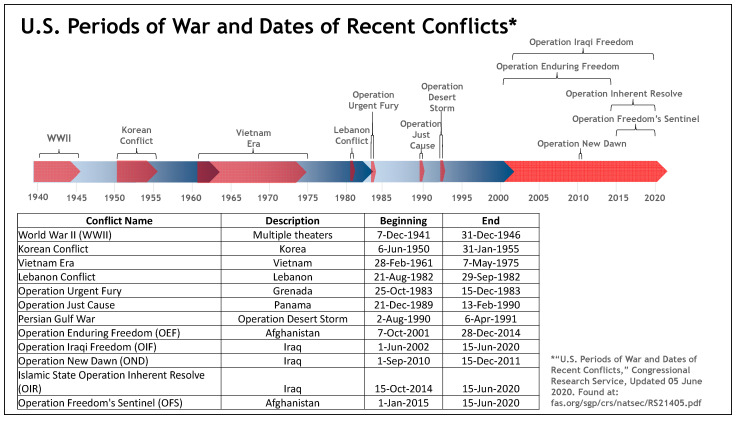
The physical demands on U.S. service members have increased significantly over the past several decades as the number of military operations requiring overseas deployment have expanded in frequency, duration, and intensity. These elevated demands from military operations placed upon a small subset of the population may be resulting in a group of individuals more at-risk for a variety of debilitating health conditions. To better understand how the U.S Veterans health outcomes compared to non-Veterans, this study utilized the U.S. Centers for Disease Control and Prevention (CDC) Behavioral Risk Factor Surveillance System (BRFSS) dataset to examine 10 different self-reported morbidities. Yearly age-adjusted, population estimates from 2003 to 2019 were used for Veteran vs. non-Veteran. Complex weights were used to evaluate the panel series for each morbidity overweight/obesity, heart disease, stroke, skin cancer, cancer, COPD, arthritis, mental health, kidney disease, and diabetes. General linear models (GLM's) were created using 2019 data only to investigate any possible explanatory variables associated with these morbidities. The time series analysis showed that Veterans have disproportionately higher self-reported rates of each morbidity with the exception of mental health issues and heart disease. The GLM showed that when taking into account all the variables, Veterans disproportionately self-reported a higher amount of every morbidity with the exception of mental health. These data present an overall poor state of the health of the average U.S. Veteran. Our study findings suggest that when taken as a whole, these morbidities among Veterans could prompt the U.S. Department of Veteran Affairs (VA) to help develop more effective health interventions aimed at improving the overall health of the Veterans.
在过去几十年里,随着需要海外部署的军事行动在频率、持续时间和强度上不断增加,美国现役军人面临的身体需求显著提高。这些军事行动对一小部分人群提出的更高要求,可能导致这部分人更容易患上各种使人衰弱的健康问题。为了更好地了解美国退伍军人与非退伍军人的健康状况对比情况,本研究利用美国疾病控制与预防中心(CDC)的行为风险因素监测系统(BRFSS)数据集,对10种不同的自我报告疾病进行了研究。使用了2003年至2019年按年龄调整的年度人口估计数据来对比退伍军人和非退伍军人。采用复杂权重来评估每种疾病(超重/肥胖、心脏病、中风、皮肤癌、癌症、慢性阻塞性肺疾病、关节炎、心理健康、肾脏疾病和糖尿病)的面板系列。仅使用2019年的数据创建了一般线性模型(GLM),以调查与这些疾病相关的任何可能的解释变量。时间序列分析表明,除了心理健康问题和心脏病外,退伍军人自我报告的每种疾病发生率都高得不成比例。GLM显示,在考虑所有变量时,除心理健康外,退伍军人自我报告的每种疾病数量都高得不成比例。这些数据表明美国退伍军人的整体健康状况不佳。我们的研究结果表明,总体而言,退伍军人中的这些疾病可能促使美国退伍军人事务部(VA)帮助制定更有效的健康干预措施,以改善退伍军人的整体健康状况。