Pest Management Research Unit, Agricultural Research Service, US Department of Agriculture, Sidney, MT 59270, USA.
Jornada Experimental Range Unit, Agricultural Research Service, US Department of Agriculture, Las Cruces, NM 88003, USA.
Viruses. 2021 May 18;13(5):934. doi: 10.3390/v13050934.
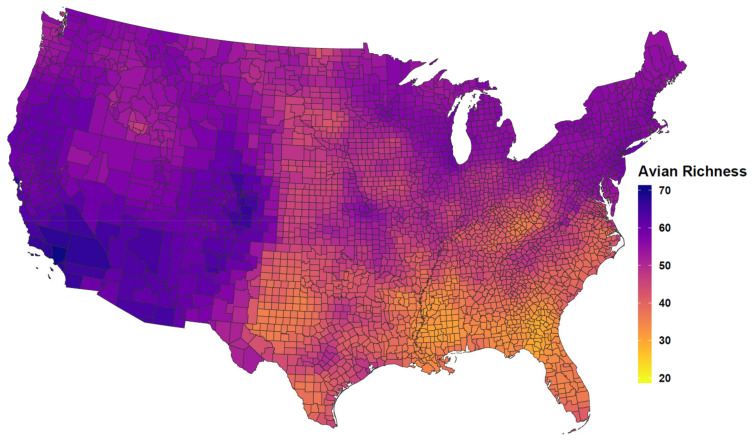
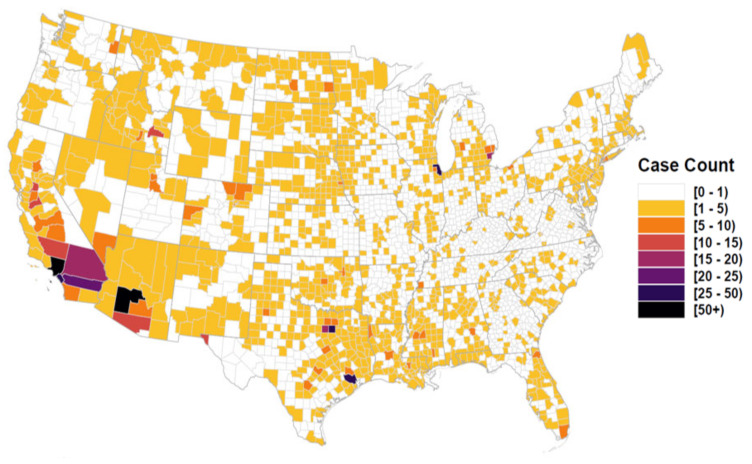
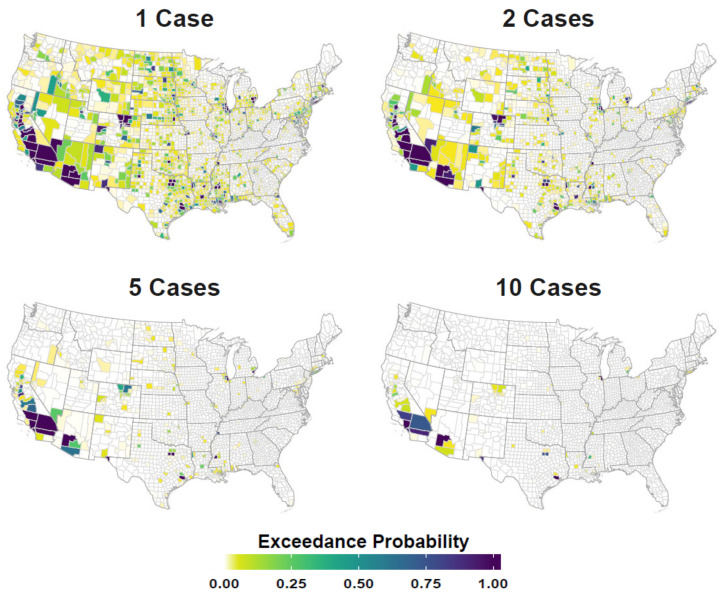
West Nile virus (WNV) is the most common arthropod-borne virus (arbovirus) in the United States (US) and is the leading cause of viral encephalitis in the country. The virus has affected tens of thousands of US persons total since its 1999 North America introduction, with thousands of new infections reported annually. Approximately 1% of humans infected with WNV acquire neuroinvasive West Nile Disease (WND) with severe encephalitis and risk of death. Research describing WNV ecology is needed to improve public health surveillance, monitoring, and risk assessment. We applied Bayesian joint-spatiotemporal modeling to assess the association of vector surveillance data, host species richness, and a variety of other environmental and socioeconomic disease risk factors with neuroinvasive WND throughout the conterminous US. Our research revealed that an aging human population was the strongest disease indicator, but climatic and vector-host biotic interactions were also significant in determining risk of neuroinvasive WND. Our analysis also identified a geographic region of disproportionately high neuroinvasive WND disease risk that parallels the Continental Divide, and extends southward from the US-Canada border in the states of Montana, North Dakota, and Wisconsin to the US-Mexico border in western Texas. Our results aid in unraveling complex WNV ecology and can be applied to prioritize disease surveillance locations and risk assessment.
西尼罗河病毒(WNV)是美国(US)最常见的虫媒病毒(arbovirus),也是该国病毒性脑炎的主要病因。自 1999 年在北美首次发现以来,该病毒已总共影响了数万名美国民众,每年报告的新感染人数达数千例。大约有 1%的感染 WNV 的人类会患上具有严重脑炎和死亡风险的神经侵袭性西尼罗河病(WND)。需要对 WNV 生态学进行研究,以改善公共卫生监测、监测和风险评估。我们应用贝叶斯联合时空模型,评估了在美国大陆各地,媒介监测数据、宿主物种丰富度以及各种其他环境和社会经济疾病风险因素与神经侵袭性 WND 之间的关联。我们的研究表明,人口老龄化是最强的疾病指标,但气候和媒介-宿主生物相互作用在确定神经侵袭性 WND 风险方面也很重要。我们的分析还确定了一个神经侵袭性 WND 疾病风险极高的地理区域,该区域与大陆分水岭平行,并从美国-加拿大边境的蒙大拿州、北达科他州和威斯康星州向南延伸到德克萨斯州的美国-墨西哥边境。我们的研究结果有助于揭示复杂的 WNV 生态学,并可用于确定疾病监测地点和风险评估的优先级。