Domnina Alisa, Alekseenko Larisa, Kozhukharova Irina, Lyublinskaya Olga, Shorokhova Mariia, Zenin Valeriy, Fridlyanskaya Irina, Nikolsky Nikolay
Department of Intracellular Signaling and Transport, Institute of Cytology, Russian Academy of Sciences, Tikhoretsky pr. 4, 194064 St. Petersburg, Russia.
J Pers Med. 2021 May 25;11(6):466. doi: 10.3390/jpm11060466.
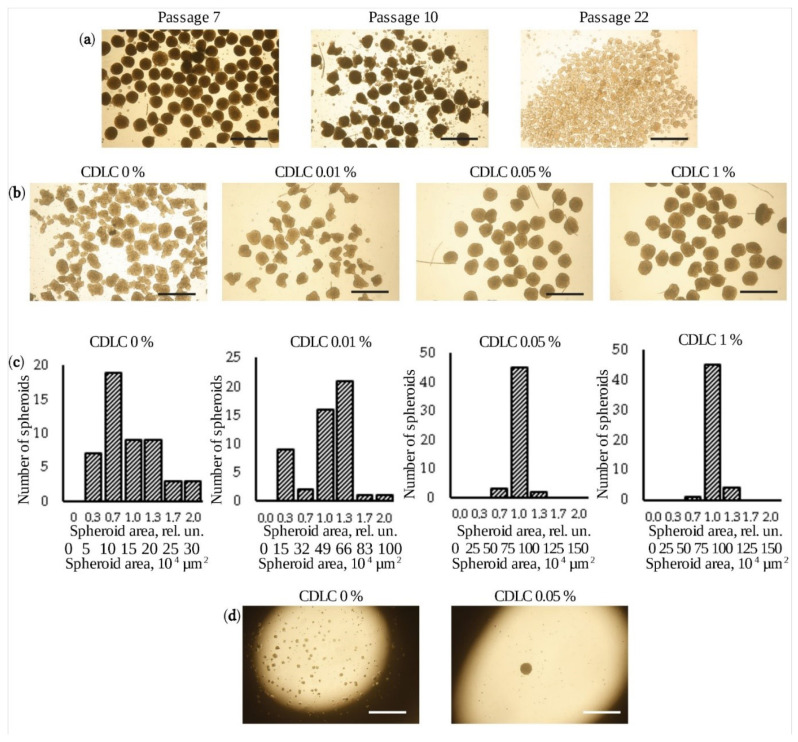
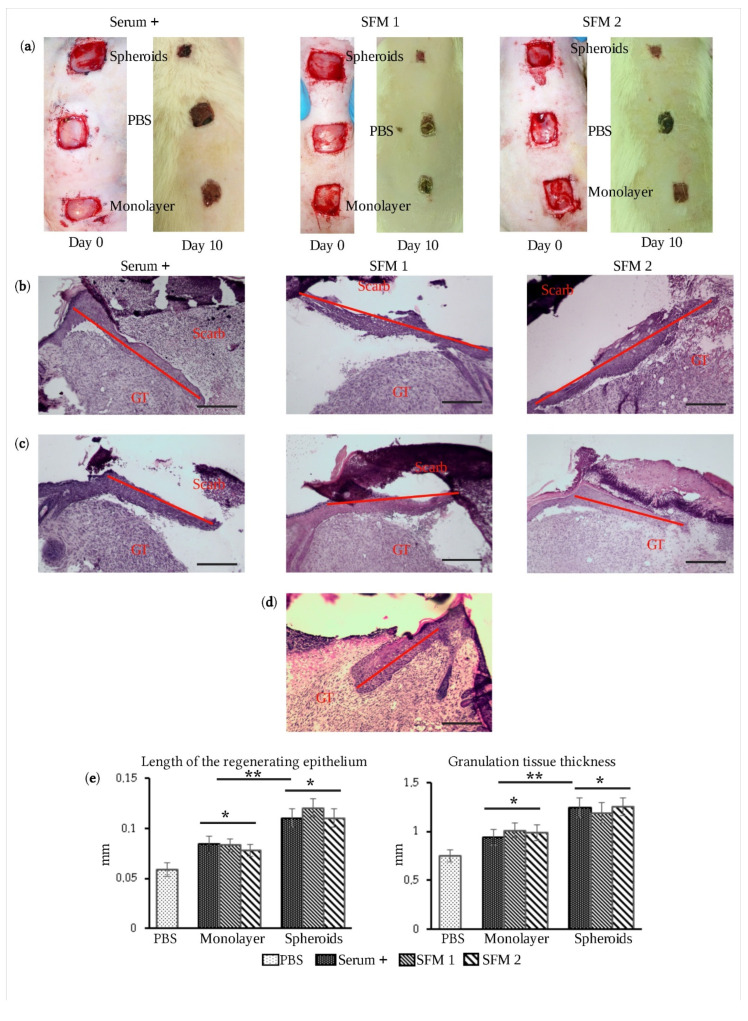
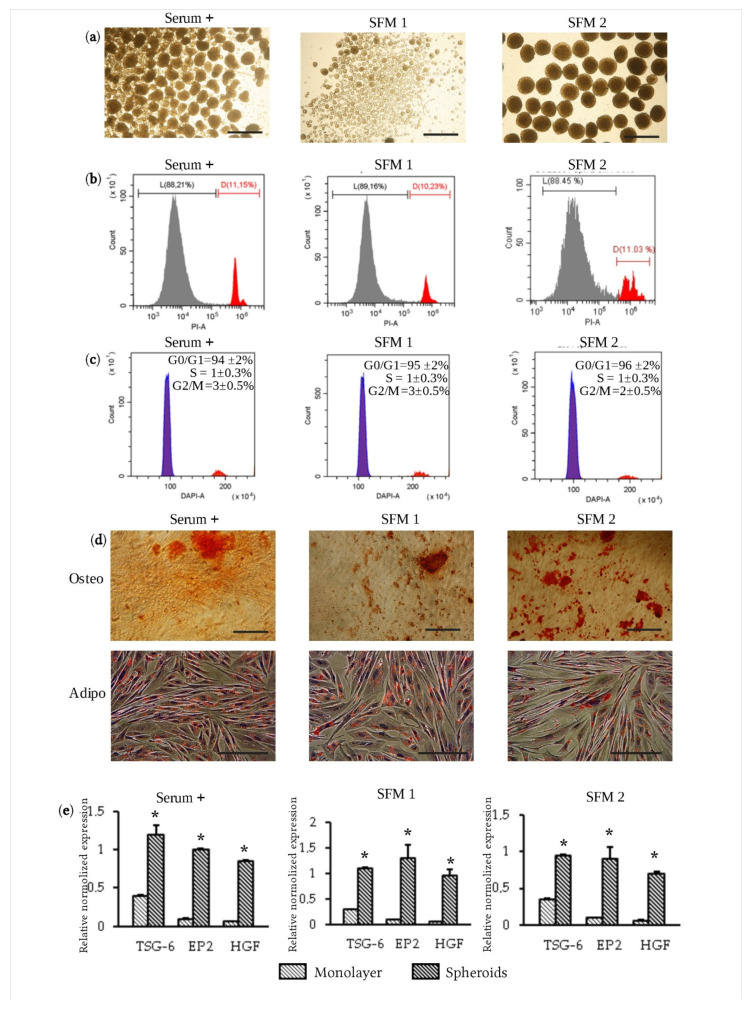
Endometrial mesenchymal stem/stromal cells (eMSCs) hold great promise in bioengineering and regenerative medicine due to their high expansion potential, unique immunosuppressive properties and multilineage differentiation capacity. Usually, eMSCs are maintained and applied as a monolayer culture. Recently, using animal models with endometrial and skin defects, we showed that formation of multicellular aggregates known as spheroids from eMSCs enhances their tissue repair capabilities. In this work, we refined a method of spheroid formation, which makes it possible to obtain well-formed aggregates with a narrow size distribution both at early eMSC passages and after prolonged cultivation. The use of serum-free media allows this method to be used for the production of spheroids for clinical purposes. Wound healing experiments on animals confirmed the high therapeutic potency of the produced eMSC spheroids in comparison to the monolayer eMSC culture.
子宫内膜间充质干/基质细胞(eMSCs)因其高扩增潜力、独特的免疫抑制特性和多谱系分化能力,在生物工程和再生医学领域极具应用前景。通常,eMSCs以单层培养的方式进行维持和应用。最近,我们利用子宫内膜和皮肤缺损的动物模型表明,由eMSCs形成的称为球体的多细胞聚集体可增强其组织修复能力。在这项工作中,我们改进了一种球体形成方法,该方法能够在eMSC传代早期和长期培养后获得尺寸分布狭窄的形态良好的聚集体。无血清培养基的使用使得该方法可用于临床目的的球体生产。动物伤口愈合实验证实,与单层eMSC培养相比,所制备的eMSC球体具有更高的治疗效力。