Department of Neurosurgery, Kawasaki Municipal Hospital, Shinkawadori, Kanagawa, Kawasaki-ku 210-0013, Japan.
Int J Mol Sci. 2021 May 29;22(11):5850. doi: 10.3390/ijms22115850.
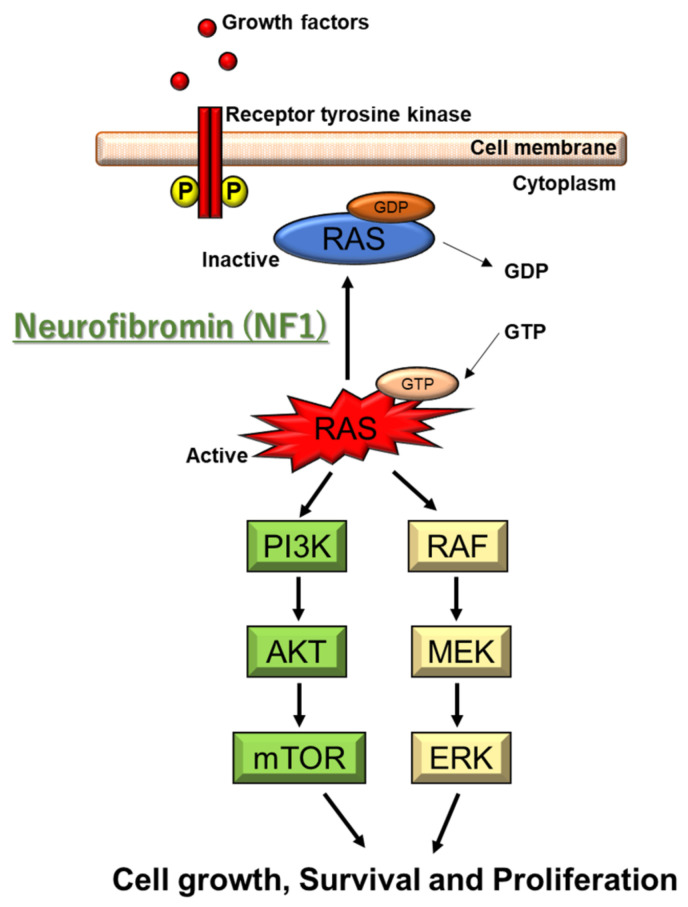
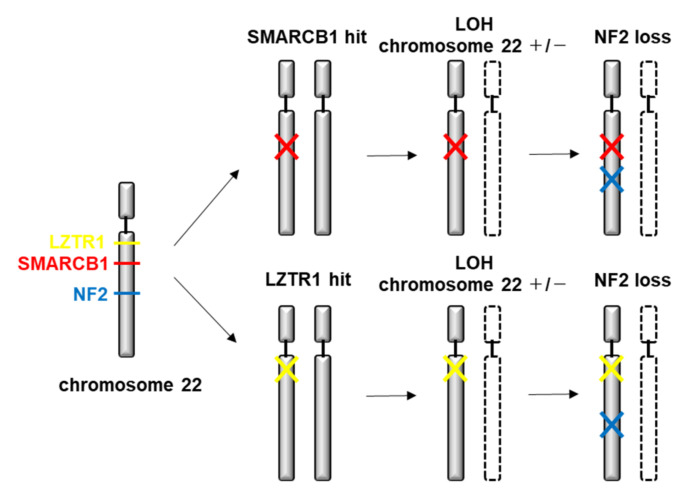
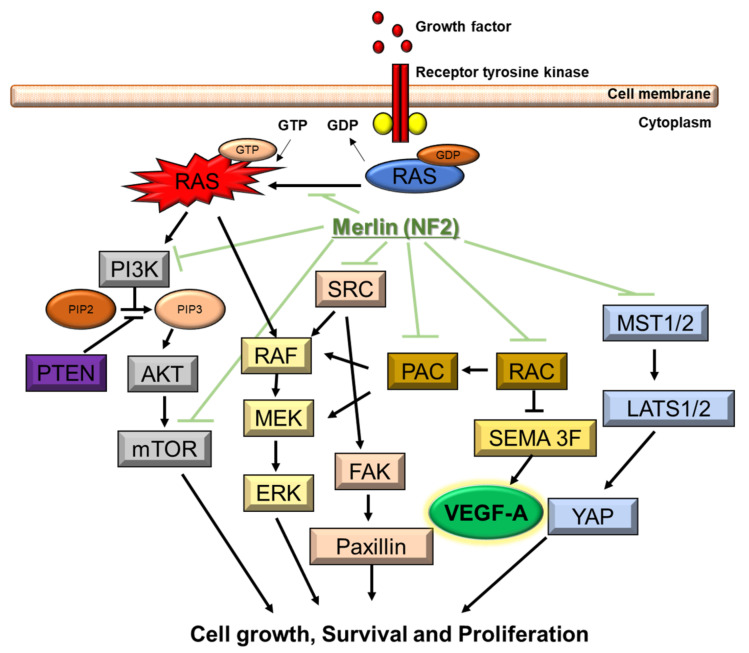
Neurofibromatosis (NF) is a neurocutaneous syndrome characterized by the development of tumors of the central or peripheral nervous system including the brain, spinal cord, organs, skin, and bones. There are three types of NF: NF1 accounting for 96% of all cases, NF2 in 3%, and schwannomatosis (SWN) in <1%. The NF1 gene is located on chromosome 17q11.2, which encodes for a tumor suppressor protein, neurofibromin, that functions as a negative regulator of Ras/MAPK and PI3K/mTOR signaling pathways. The NF2 gene is identified on chromosome 22q12, which encodes for merlin, a tumor suppressor protein related to ezrin-radixin-moesin that modulates the activity of PI3K/AKT, Raf/MEK/ERK, and mTOR signaling pathways. In contrast, molecular insights on the different forms of SWN remain unclear. Inactivating mutations in the tumor suppressor genes SMARCB1 and LZTR1 are considered responsible for a majority of cases. Recently, treatment strategies to target specific genetic or molecular events involved in their tumorigenesis are developed. This study discusses molecular pathways and related targeted therapies for NF1, NF2, and SWN and reviews recent clinical trials which involve NF patients.
神经纤维瘤病(NF)是一种神经皮肤综合征,其特征是中枢或周围神经系统肿瘤的发展,包括脑、脊髓、器官、皮肤和骨骼。NF 有三种类型:NF1 占所有病例的 96%,NF2 占 3%,施万细胞瘤病(SWN)占<1%。NF1 基因位于染色体 17q11.2,编码肿瘤抑制蛋白神经纤维瘤蛋白,作为 Ras/MAPK 和 PI3K/mTOR 信号通路的负调节剂。NF2 基因位于染色体 22q12,编码 Merlin,一种与 ezrin-radixin-moesin 相关的肿瘤抑制蛋白,调节 PI3K/AKT、Raf/MEK/ERK 和 mTOR 信号通路的活性。相比之下,SWN 不同形式的分子机制仍不清楚。肿瘤抑制基因 SMARCB1 和 LZTR1 的失活突变被认为是大多数病例的原因。最近,针对其肿瘤发生中涉及的特定遗传或分子事件的治疗策略已被开发出来。本研究讨论了 NF1、NF2 和 SWN 的分子途径和相关的靶向治疗,并回顾了涉及 NF 患者的最近临床试验。