Thoraxklinik and National Center for Tumor Diseases (NCT) at Heidelberg University Hospital, 69126 Heidelberg, Germany.
Translational Lung Cancer Center Heidelberg, Member of the German Center for Lung Research (DZL), 69126 Heidelberg, Germany.
Int J Mol Sci. 2021 May 26;22(11):5632. doi: 10.3390/ijms22115632.
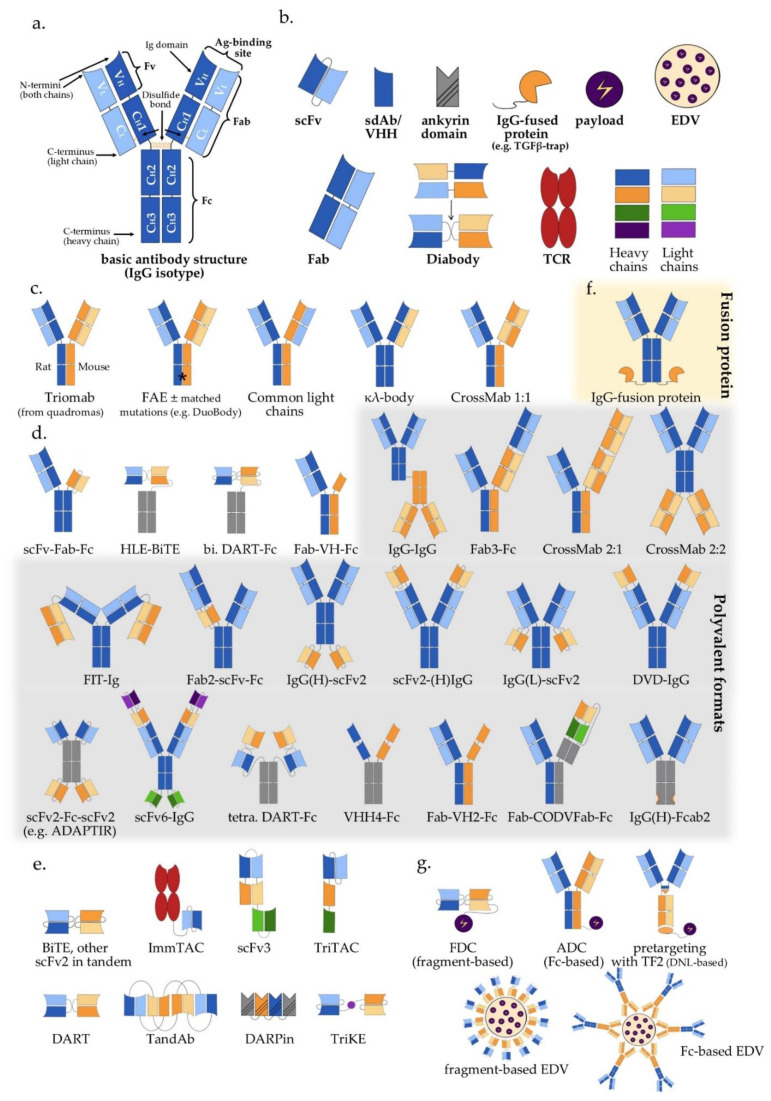
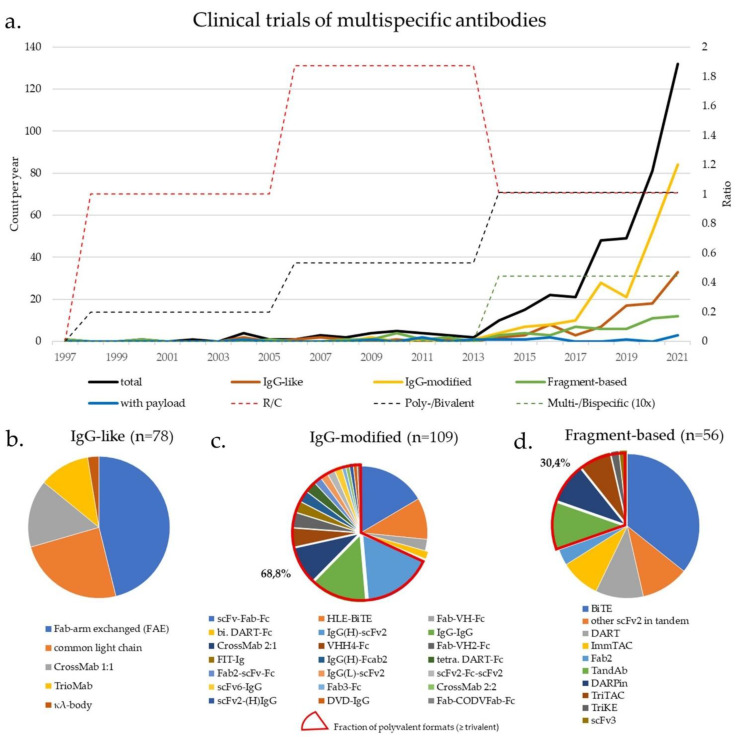
Building upon the resounding therapeutic success of monoclonal antibodies, and supported by accelerating progress in engineering methods, the field of multispecific therapeutic antibodies is growing rapidly. Over 140 different molecules are currently in clinical testing, with excellent results in recent phase 1-3 clinical trials for several of them. Multivalent bispecific IgG-modified formats predominate today, with a clear tendency for more target antigens and further increased valency in newer constructs. The strategies to augment anticancer efficacy are currently equally divided between disruption of multiple surface antigens, and additional redirection of cytotoxic T or NK lymphocytes against the tumor. Both effects complement other modern modalities, such as tyrosine kinase inhibitors and adoptive cell therapies, with which multispecifics are increasingly applied in combination or merged, for example, in the form of antibody producing CAR-T cells and oncolytics. While mainly focused on B-cell malignancies early on, the contemporary multispecific antibody sector accommodates twice as many trials against solid compared to hematologic cancers. An exciting emerging prospect is the targeting of intracellular neoantigens using T-cell receptor (TCR) fusion proteins or TCR-mimic antibody fragments. Considering the fact that introduction of PD-(L)1 inhibitors only a few years ago has already facilitated 5-year survival rates of 30-50% for per se highly lethal neoplasms, such as metastatic melanoma and non-small-cell lung carcinoma, the upcoming enforcement of current treatments with "next-generation" immunotherapeutics, offers a justified hope for the cure of some advanced cancers in the near future.
基于单克隆抗体令人瞩目的治疗成功,并得到工程方法加速进展的支持,多特异性治疗抗体领域正在迅速发展。目前有超过 140 种不同的分子正在进行临床测试,其中几种在最近的 1-3 期临床试验中取得了优异的结果。多价双特异性 IgG 修饰形式目前占主导地位,新结构中靶抗原的数量进一步增加,价态进一步提高。增强抗癌疗效的策略目前在同时针对多个表面抗原的破坏和对肿瘤的细胞毒性 T 或 NK 淋巴细胞的额外重定向之间平分秋色。这两种作用都与其他现代治疗方式互补,如酪氨酸激酶抑制剂和过继细胞疗法,多特异性药物越来越多地与这些治疗方式联合应用或合并应用,例如以产生 CAR-T 细胞的抗体和溶瘤病毒的形式。虽然早期主要集中在 B 细胞恶性肿瘤上,但当代多特异性抗体领域针对实体瘤的试验数量是血液恶性肿瘤的两倍。一个令人兴奋的新兴前景是使用 T 细胞受体(TCR)融合蛋白或 TCR 模拟抗体片段靶向细胞内新生抗原。考虑到 PD-(L)1 抑制剂仅在几年前被引入,已经使转移性黑色素瘤和非小细胞肺癌等本身高度致命的肿瘤的 5 年生存率达到 30-50%,因此当前治疗方法与“下一代”免疫疗法的结合有望在不久的将来治愈一些晚期癌症。