Lin Shih-Yi, Wang Ya-Yu, Chang Cheng-Yi, Wu Chih-Cheng, Chen Wen-Ying, Liao Su-Lan, Chen Chun-Jung
Center for Geriatrics and Gerontology, Taichung Veterans General Hospital, Taichung City 407, Taiwan.
Institute of Clinical Medicine, National Yang Ming Chiao Tung University, Taipei City 112, Taiwan.
Antioxidants (Basel). 2021 May 26;10(6):851. doi: 10.3390/antiox10060851.
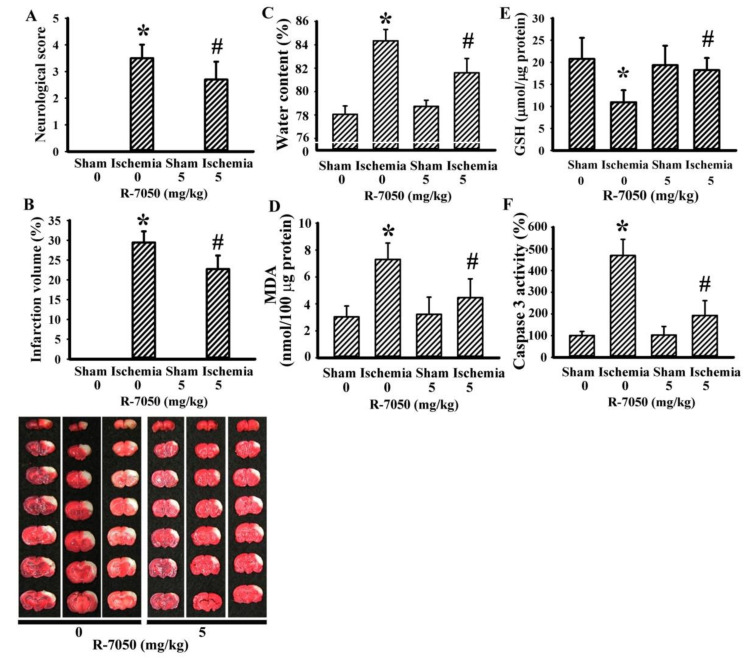
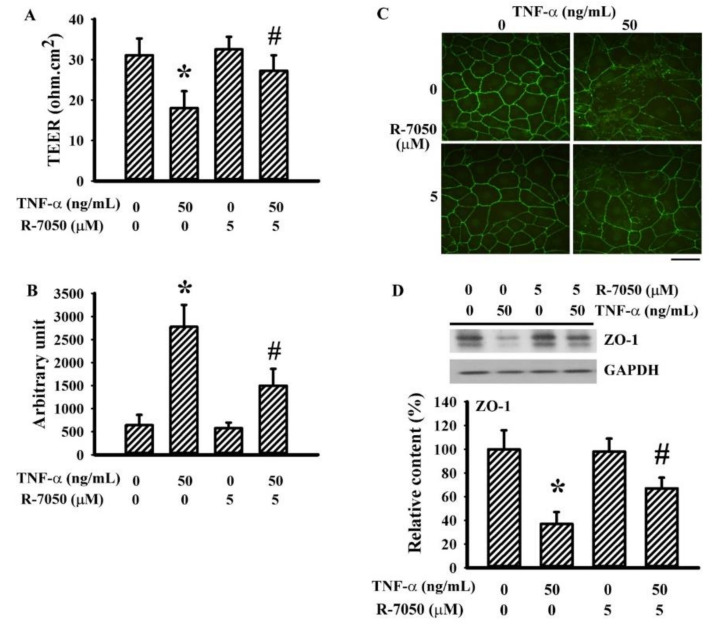
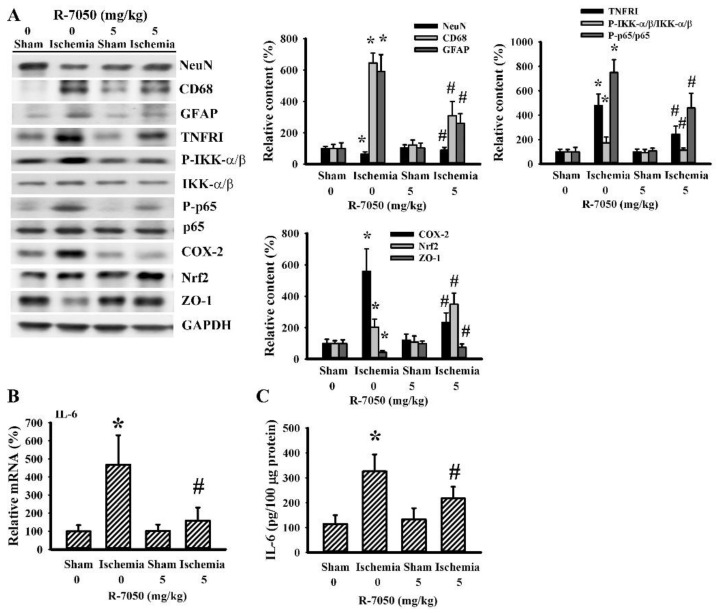
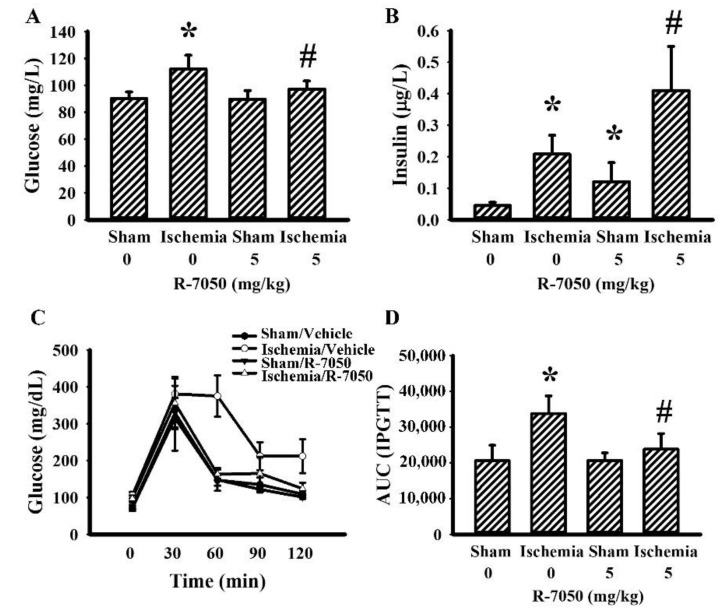
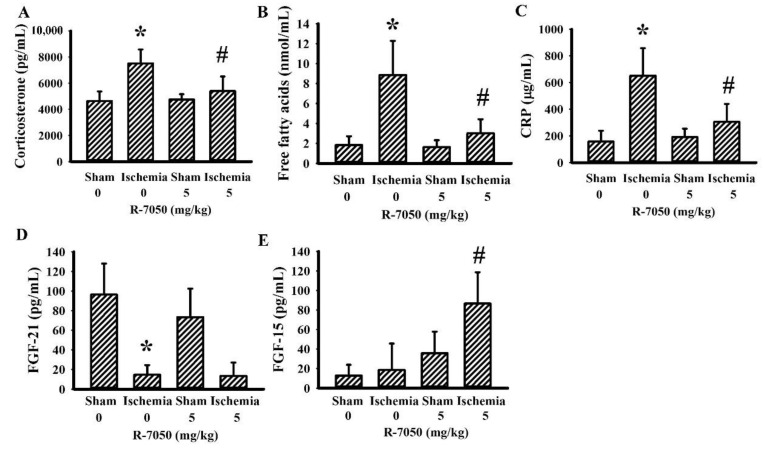
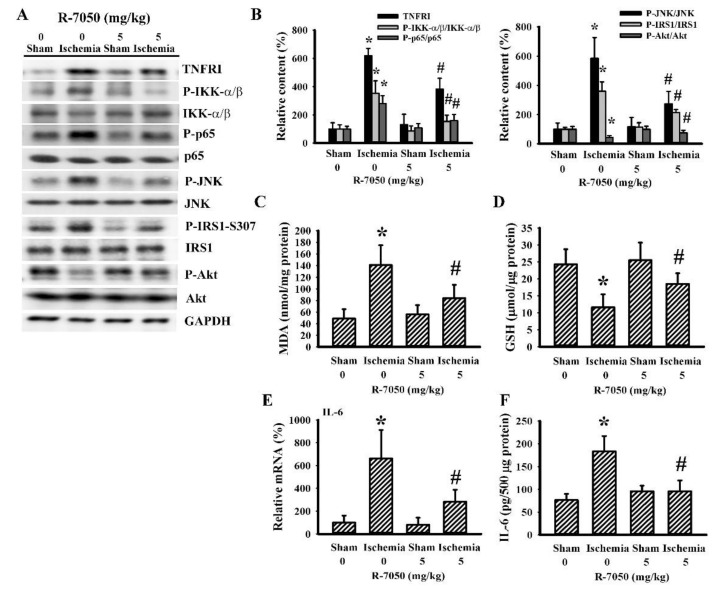
Hyperglycemia and inflammation, with their augmented interplay, are involved in cases of stroke with poor outcomes. Interrupting this vicious cycle thus has the potential to prevent stroke disease progression. Tumor necrosis factor-α (TNF-α) is an emerging molecule, which has inflammatory and metabolic roles. Studies have shown that TNF-α receptor inhibitor R-7050 possesses neuroprotective, antihyperglycemic, and anti-inflammatory effects. Using a rat model of permanent cerebral ischemia, pretreatment with R-7050 offered protection against poststroke neurological deficits, brain infarction, edema, oxidative stress, and caspase 3 activation. In the injured cortical tissues, R-7050 reversed the activation of TNF receptor-I (TNFRI), NF-κB, and interleukin-6 (IL-6), as well as the reduction of zonula occludens-1 (ZO-1). In the in vitro study on bEnd.3 endothelial cells, R-7050 reduced the decline of ZO-1 levels after TNF-α-exposure. R-7050 also reduced the metabolic alterations occurring after ischemic stroke, such as hyperglycemia and increased plasma corticosterone, free fatty acids, C reactive protein, and fibroblast growth factor-15 concentrations. In the gastrocnemius muscles of rats with stroke, R-7050 improved activated TNFRI/NF-κB, oxidative stress, and IL-6 pathways, as well as impaired insulin signaling. Overall, our findings highlight a feasible way to combat stroke disease based on an anti-TNF therapy that involves anti-inflammatory and metabolic mechanisms.
高血糖与炎症及其增强的相互作用与预后不良的中风病例有关。因此,中断这种恶性循环有可能预防中风疾病的进展。肿瘤坏死因子-α(TNF-α)是一种新兴分子,具有炎症和代谢作用。研究表明,TNF-α受体抑制剂R-7050具有神经保护、抗高血糖和抗炎作用。使用永久性脑缺血大鼠模型,R-7050预处理可预防中风后神经功能缺损、脑梗死、水肿、氧化应激和半胱天冬酶3激活。在受损的皮质组织中,R-7050可逆转TNF受体-I(TNFRI)、NF-κB和白细胞介素-6(IL-6)的激活,以及紧密连接蛋白-1(ZO-1)的减少。在对bEnd.3内皮细胞的体外研究中,R-7050可减少TNF-α暴露后ZO-1水平的下降。R-7050还可减少缺血性中风后发生的代谢改变,如高血糖以及血浆皮质酮、游离脂肪酸、C反应蛋白和成纤维细胞生长因子-15浓度的升高。在中风大鼠的腓肠肌中,R-7050可改善激活的TNFRI/NF-κB、氧化应激和IL-6信号通路,以及受损的胰岛素信号。总体而言,我们的研究结果突出了一种基于抗TNF治疗的可行方法来对抗中风疾病,该治疗涉及抗炎和代谢机制。