Mizobuchi Kei, Hayashi Takaaki, Oishi Noriko, Kubota Daiki, Kameya Shuhei, Higasa Koichiro, Futami Takuma, Kondo Hiroyuki, Hosono Katsuhiro, Kurata Kentaro, Hotta Yoshihiro, Yoshitake Kazutoshi, Iwata Takeshi, Matsuura Tomokazu, Nakano Tadashi
Department of Ophthalmology, The Jikei University School of Medicine, 3-19-18, Nishi-shimbashi, Minato-ku, Tokyo 105-8471, Japan.
Department of Ophthalmology, Katsushika Medical Center, The Jikei University School of Medicine, 6-41-2 Aoto, Katsushika-ku, Tokyo 125-8506, Japan.
J Clin Med. 2021 May 24;10(11):2265. doi: 10.3390/jcm10112265.
Little is known about genotype-phenotype correlations of -associated retinal dystrophies in the Japanese population. We aimed to investigate the genetic spectrum of variants and provide a detailed description of the clinical findings in Japanese patients.
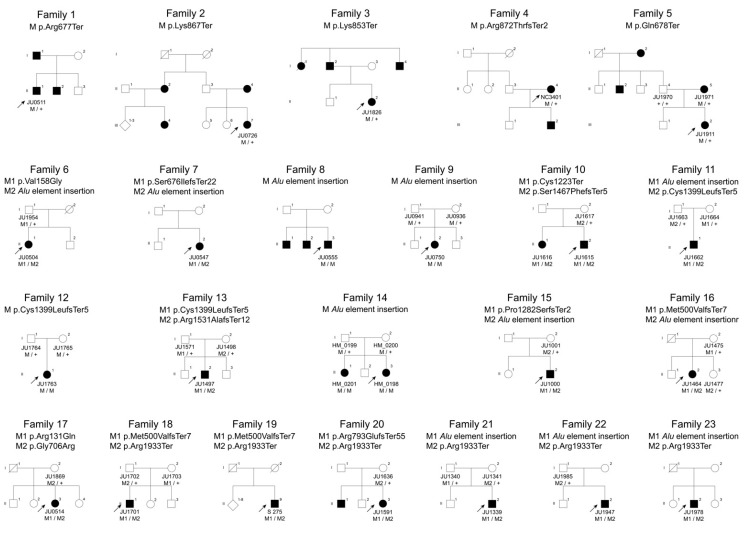
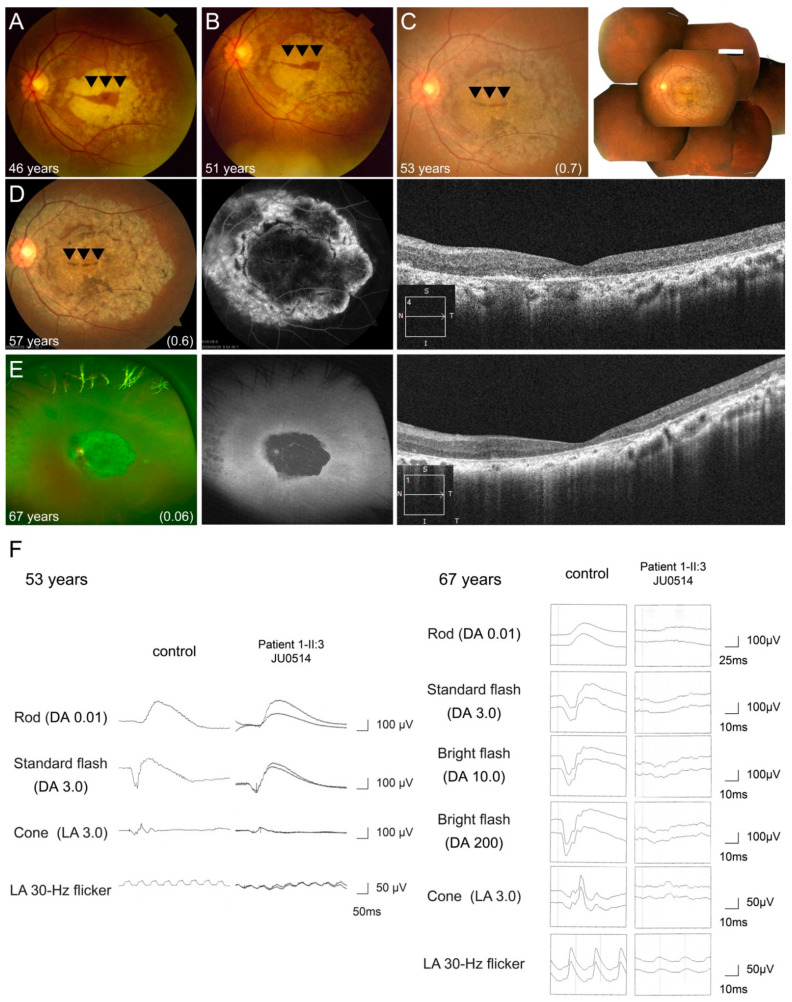
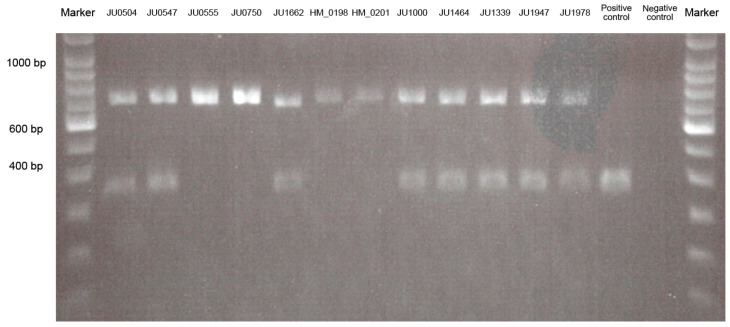
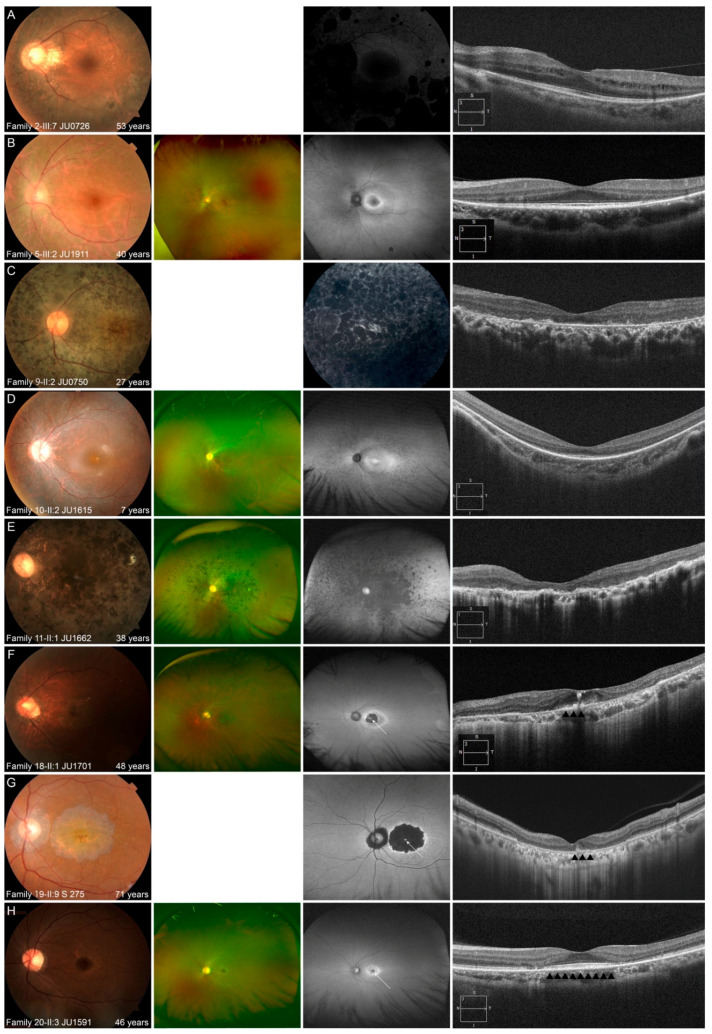
In total, 607 patients with inherited retinal diseases were examined using whole-exome/whole-genome sequencing (WES/WGS). PCR-based screening for an element insertion (c.4052_4053ins328/p.Tyr1352AlafsTer9) was performed in 18 patients with autosomal-recessive (AR)-retinitis pigmentosa (RP) or AR-cone dystrophy (COD)/cone-rod dystrophy (CORD), including seven patients with heterozygous variants identified by WES/WGS analysis, and 11 early onset AR-RP patients, in whom no pathogenic variant was identified. We clinically examined 25 patients (23 families) with pathogenic variants, including five patients (five families) with autosomal-dominant (AD)-RP, 13 patients (11 families) with AR-RP, and seven patients (seven families) with AR-COD/CORD.
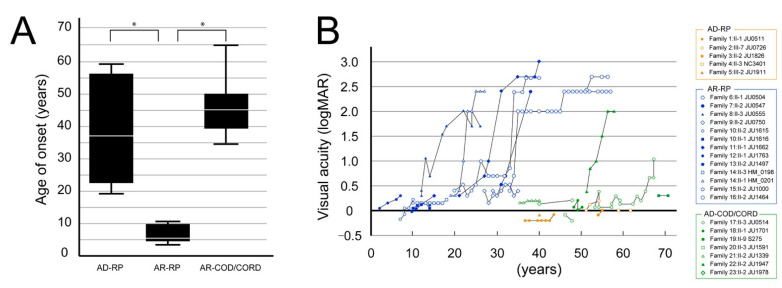
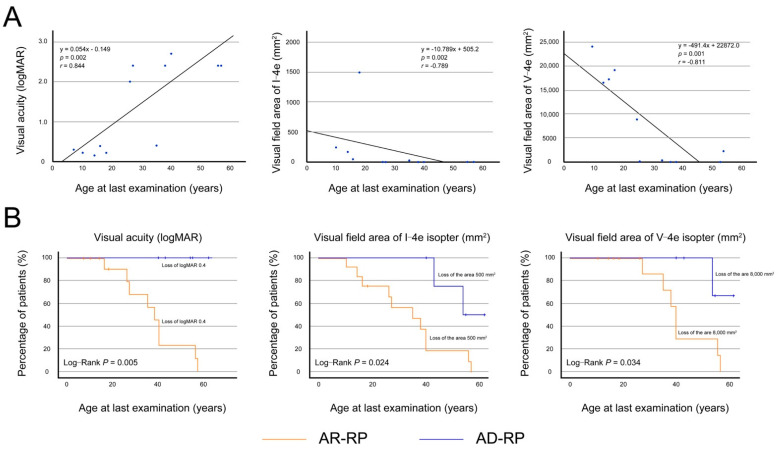
We identified 18 pathogenic variants, including seven novel variants. Interestingly, the element insertion was the most frequent variant (32.0%, 16/50 alleles). The clinical findings revealed that the age at onset and disease progression occurred significantly earlier and faster in AR-RP patients compared to AD-RP or AR-COD/CORD patients.
Our results suggest a genotype-phenotype correlation between variant types/locations and phenotypes (AD-RP, AR-RP, and AR-COD/CORD), and the element insertion was the most major variant in Japanese patients with -associated retinal dystrophies.
在日本人群中,与相关视网膜营养不良的基因型 - 表型相关性知之甚少。我们旨在研究变体的遗传谱,并详细描述日本患者的临床发现。
总共对607例遗传性视网膜疾病患者进行了全外显子组/全基因组测序(WES/WGS)检查。对18例常染色体隐性(AR)视网膜色素变性(RP)或AR - 视锥营养不良(COD)/视锥 - 视杆营养不良(CORD)患者进行了基于PCR的元件插入(c.4052_4053ins328/p.Tyr1352AlafsTer9)筛查,其中包括7例通过WES/WGS分析鉴定为杂合变体的患者,以及11例未鉴定出致病变体的早发性AR - RP患者。我们对25例(23个家系)有致病变体的患者进行了临床检查,其中包括5例常染色体显性(AD) - RP患者(5个家系)、13例AR - RP患者(11个家系)和7例AR - COD/CORD患者(7个家系)。
我们鉴定出18个致病变体,包括7个新变体。有趣的是,元件插入是最常见的变体(32.0%,16/50个等位基因)。临床发现显示,与AD - RP或AR - COD/CORD患者相比,AR - RP患者的发病年龄和疾病进展明显更早且更快。
我们的结果表明变体类型/位置与表型(AD - RP、AR - RP和AR - COD/CORD)之间存在基因型 - 表型相关性,并且元件插入是日本与相关视网膜营养不良患者中最主要的变体。