Department of Psychiatry, University of Nebraska Medical Center, Omaha, Nebraska, USA.
Department of Psychiatry and Department of Radiology, Kyoungbook National University Hospital, Daegu, Republic of Korea.
J Child Adolesc Psychopharmacol. 2021 Oct;31(8):562-571. doi: 10.1089/cap.2020.0174. Epub 2021 Jun 1.
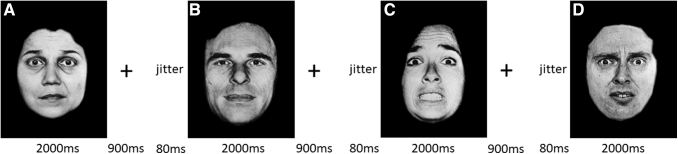
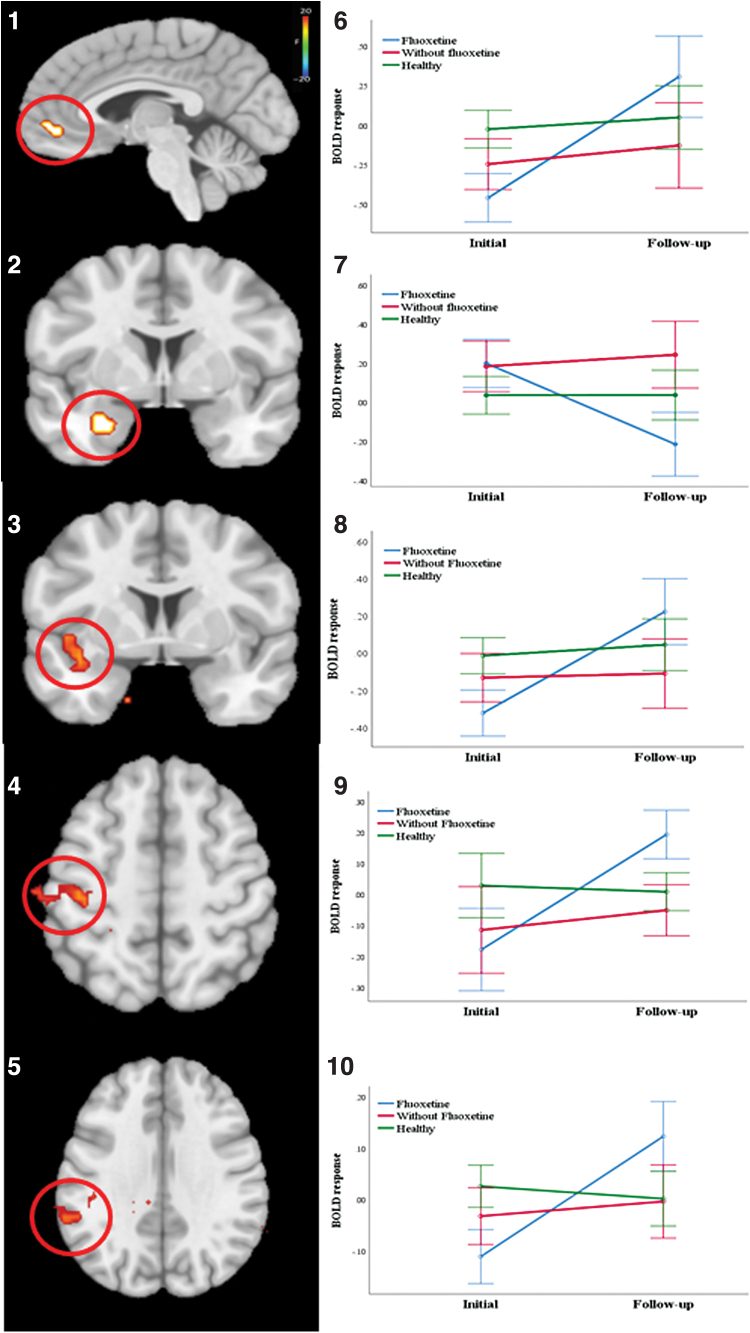
A preliminary investigation of the impact of a serotonergic agent (fluoxetine) on symptom profile and neural response in youths with disruptive behavior disorders (DBDs) and a history of trauma exposure. There were three participant groups: (i) Youths with DBDs and trauma exposure who received fluoxetine treatment for 8 weeks ( = 11); (ii) A matched group of youths with DBDs and trauma exposure who received routine regular follow-up in an outpatient clinic ( = 10); and (iii) Typically developing youths ( = 18). All participants conducted an expression processing functional magnetic resonance imaging task twice, 8 weeks apart: (pretreatment and post-treatment for youths with DBDs). Youths with DBDs and trauma exposure who received fluoxetine treatment compared to the other two groups showed: (i) significant improvement in externalizing, oppositional defiant disorder, irritability, anxiety-depression, and trauma-related symptoms; (ii) as a function of fearful expression intensity, significantly decreased amygdala response and increased recruitment of regions implicated in top-down attention control (insula cortex, inferior parietal lobule, and postcentral gyrus) and emotional regulation (ventromedial prefrontal cortex [vmPFC]); and (iii) correlation between DBD/irritability symptom improvement and increased activation of top-down attention control areas (inferior parietal lobule, insula cortex, and postcentral gyrus) and an emotion regulation area (vmPFC). This study provides preliminary evidence that a serotonergic agent (fluoxetine) can reduce disruptive behavior and mood symptoms in youths with DBDs and trauma exposure and that this may be mediated by enhanced activation of top-down attention control and emotion regulation areas (inferior parietal lobule, insula cortex, and vmPFC).
一项关于 5-羟色胺能药物(氟西汀)对有创伤暴露史的破坏性行为障碍(DBD)青少年症状谱和神经反应影响的初步研究。参与者分为三组:(i)接受氟西汀治疗 8 周的有 DBD 和创伤暴露史的青少年( = 11);(ii)在门诊接受常规定期随访的有 DBD 和创伤暴露史的青少年匹配组( = 10);(iii)典型发展的青少年( = 18)。所有参与者两次进行表情处理功能磁共振成像任务,间隔 8 周:(DBD 青少年的治疗前和治疗后)。与其他两组相比,接受氟西汀治疗的有 DBD 和创伤暴露史的青少年表现出:(i)外化、对立违抗性障碍、易怒、焦虑抑郁和创伤相关症状显著改善;(ii)随着恐惧表情强度的变化,杏仁核反应显著降低,与自上而下的注意力控制(岛叶皮层、下顶叶和后中央回)和情绪调节(腹内侧前额叶皮质 [vmPFC])相关的区域的招募增加;(iii)DBD/易怒症状改善与自上而下的注意力控制区域(下顶叶、岛叶皮层和后中央回)和情绪调节区域(vmPFC)的激活增加之间的相关性。这项研究提供了初步证据,表明 5-羟色胺能药物(氟西汀)可以减少有 DBD 和创伤暴露史的青少年的破坏性行为和情绪症状,这可能是通过增强自上而下的注意力控制和情绪调节区域(下顶叶、岛叶皮层和 vmPFC)的激活来介导的。