Essien Utibe R, Kornej Jelena, Johnson Amber E, Schulson Lucy B, Benjamin Emelia J, Magnani Jared W
Division of General Internal Medicine, University of Pittsburgh School of Medicine, Pittsburgh, PA, USA.
Sections of Cardiovascular Medicine, Boston Medical Center, Boston University School of Medicine, Boston, MA, USA.
Nat Rev Cardiol. 2021 Nov;18(11):763-773. doi: 10.1038/s41569-021-00561-0. Epub 2021 Jun 2.
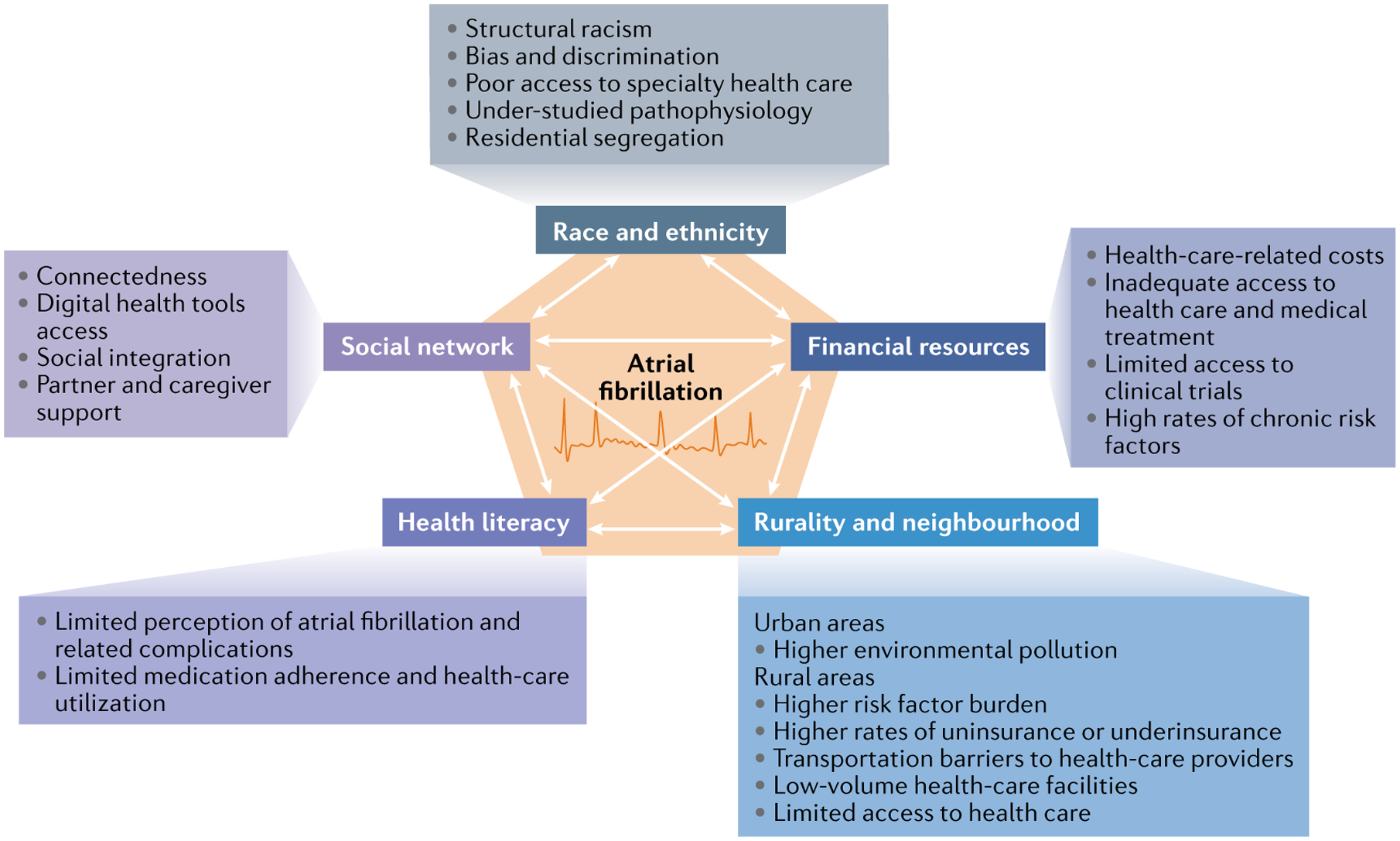
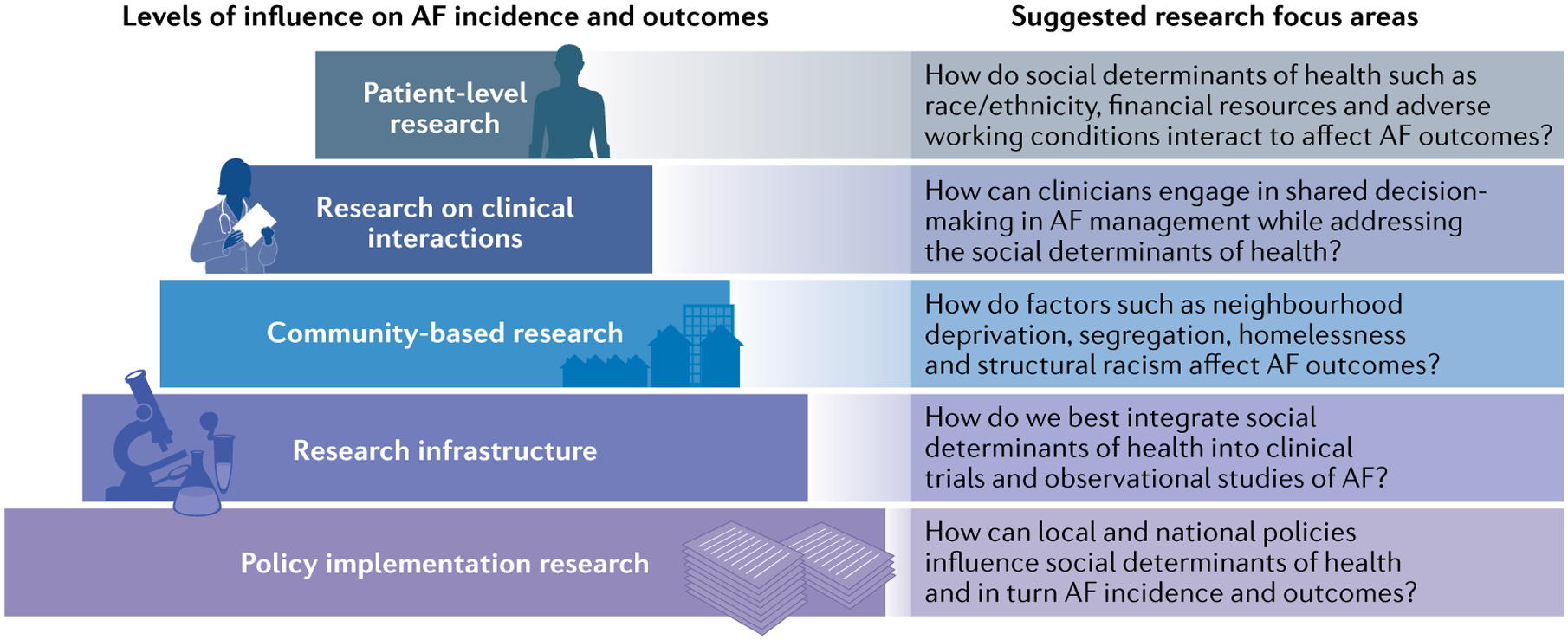
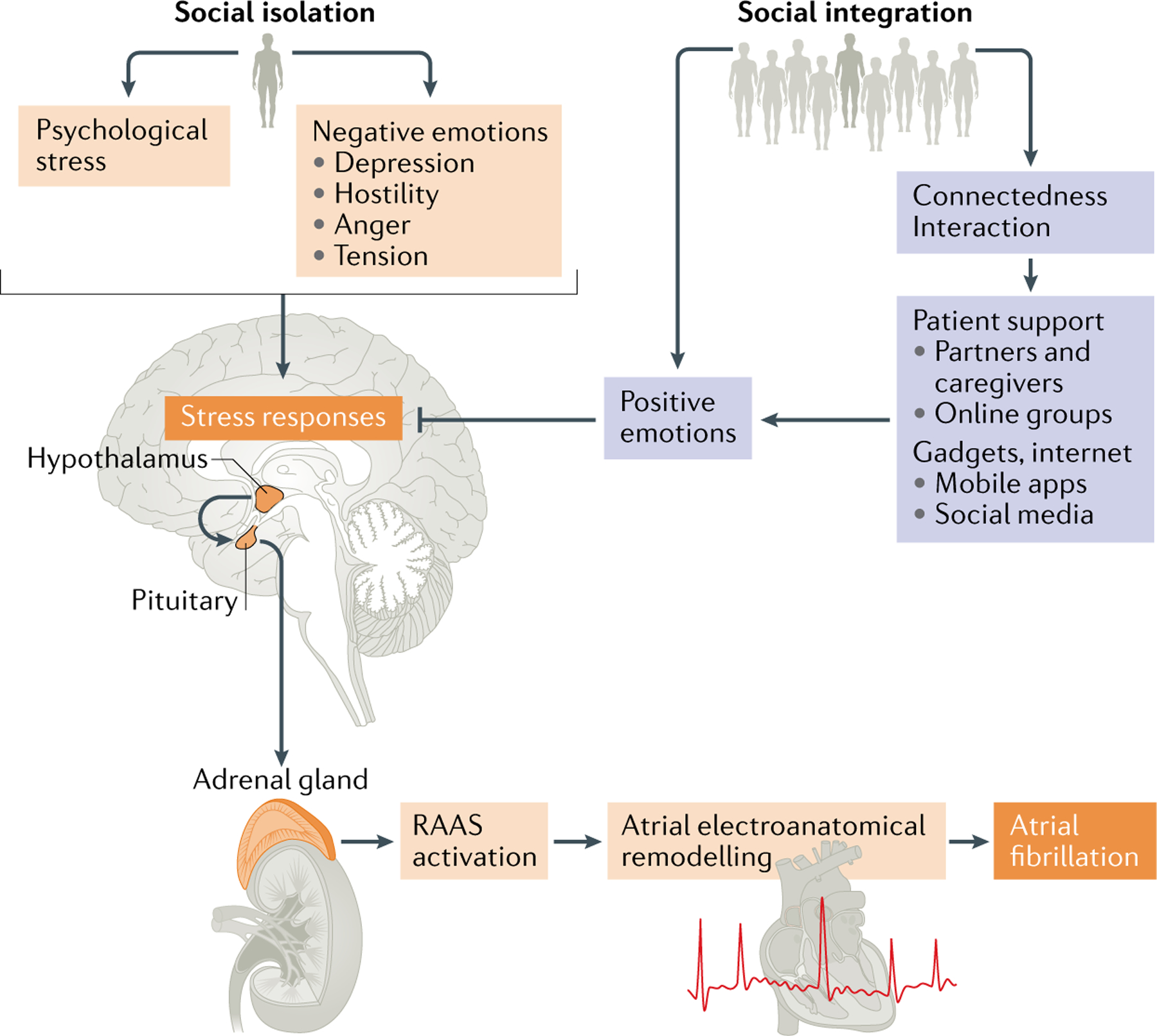
Atrial fibrillation affects almost 60 million adults worldwide. Atrial fibrillation is associated with a high risk of cardiovascular morbidity and death as well as with social, psychological and economic burdens on patients and their families. Social determinants - such as race and ethnicity, financial resources, social support, access to health care, rurality and residential environment, local language proficiency and health literacy - have prominent roles in the evaluation, treatment and management of atrial fibrillation. Addressing the social determinants of health provides a crucial opportunity to reduce the substantial clinical and non-clinical complications associated with atrial fibrillation. In this Review, we summarize the contributions of social determinants to the patient experience and outcomes associated with this common condition. We emphasize the relevance of social determinants and their important intersection with atrial fibrillation treatment and outcomes. In closing, we identify gaps in the literature and propose future directions for the investigation of social determinants and atrial fibrillation.
全球近6000万成年人受心房颤动影响。心房颤动与心血管疾病发病和死亡的高风险相关,同时也给患者及其家庭带来社会、心理和经济负担。社会决定因素,如种族和民族、经济资源、社会支持、获得医疗保健的机会、农村地区和居住环境、当地语言能力和健康素养,在心房颤动的评估、治疗和管理中发挥着重要作用。解决健康的社会决定因素为减少与心房颤动相关的大量临床和非临床并发症提供了关键机会。在本综述中,我们总结了社会决定因素对与这种常见疾病相关的患者体验和结局的影响。我们强调社会决定因素的相关性及其与心房颤动治疗和结局的重要交叉点。最后,我们指出文献中的空白,并提出未来研究社会决定因素与心房颤动的方向。