Zhou Yue, Nie Ai-Qing, Chen Shang, Wang Meng-Meng, Yin Rui, Tang Bo-Hao, Wu Yue-E, Yang Fan, Du Bin, Shi Hai-Yan, Yang Xin-Mei, Hao Guo-Xiang, Guo Xiu-Li, Han Qiu-Ju, Zheng Yi, Zhao Wei
Department of Clinical Pharmacy, Key Laboratory of Chemical Biology (Ministry of Education), School of Pharmaceutical Sciences, Cheeloo College of Medicine, Shandong University, Jinan, People's Republic of China.
Institute of Biochemical and Biotechnological Drug, Key Laboratory of Chemical Biology (Ministry of Education), School of Pharmaceutical Sciences, Cheeloo College of Medicine, Shandong University, Jinan, People's Republic of China.
J Inflamm Res. 2021 May 25;14:2239-2252. doi: 10.2147/JIR.S310687. eCollection 2021.
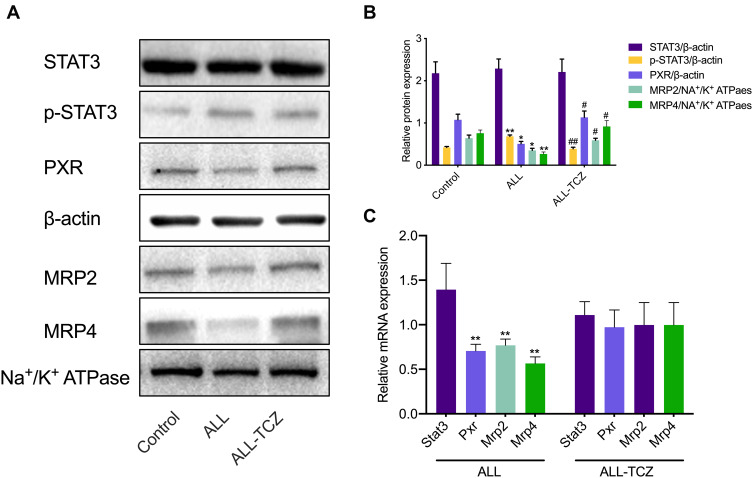
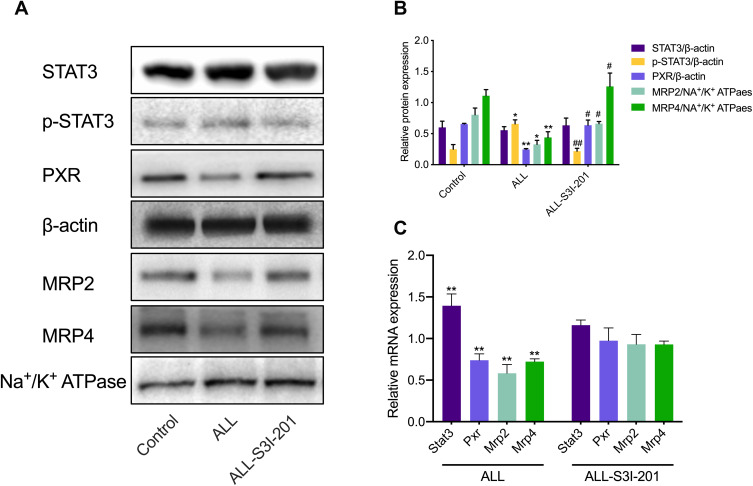
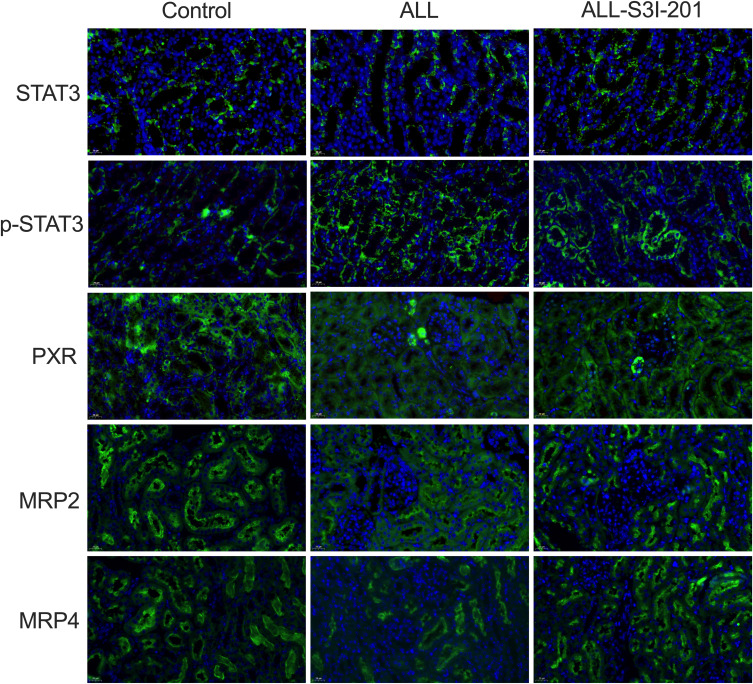
Considering prior investigations on reductions of renal multidrug resistance-associated protein (MRP) 2 and 4 transporters in mice with acute lymphoblastic leukemia (ALL), we sought to characterize the underlying mechanisms responsible for IL-6/STAT3/PXR-mediated changes in the expression of MRP2 and MRP4 in ALL.
ALL xenograft models were established and intravenously injected with methotrexate (MTX) of MRPs substrate in NOD/SCID mice. Protein expression of MRPs and associated mechanisms were detected by Western blotting and immunocytochemistry. Plasma concentrations of MTX were determined using high-performance liquid chromatography-tandem mass spectrometry (HPLC-MS/MS).
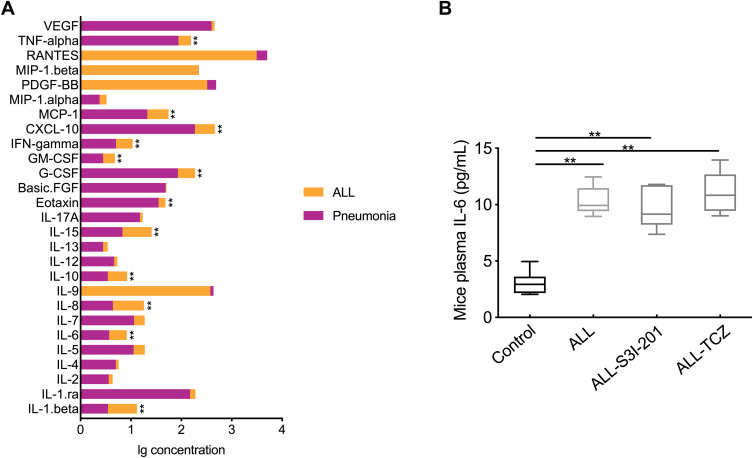
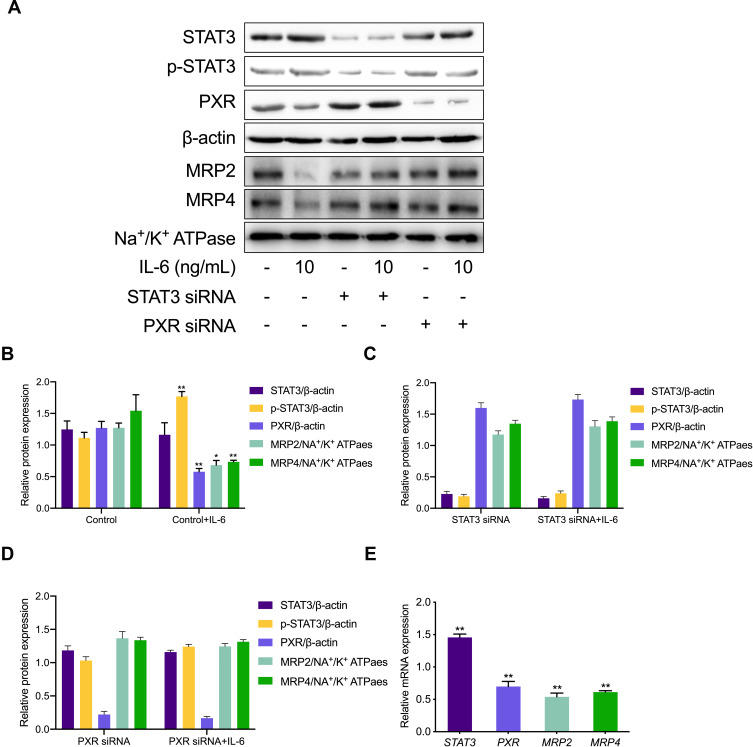
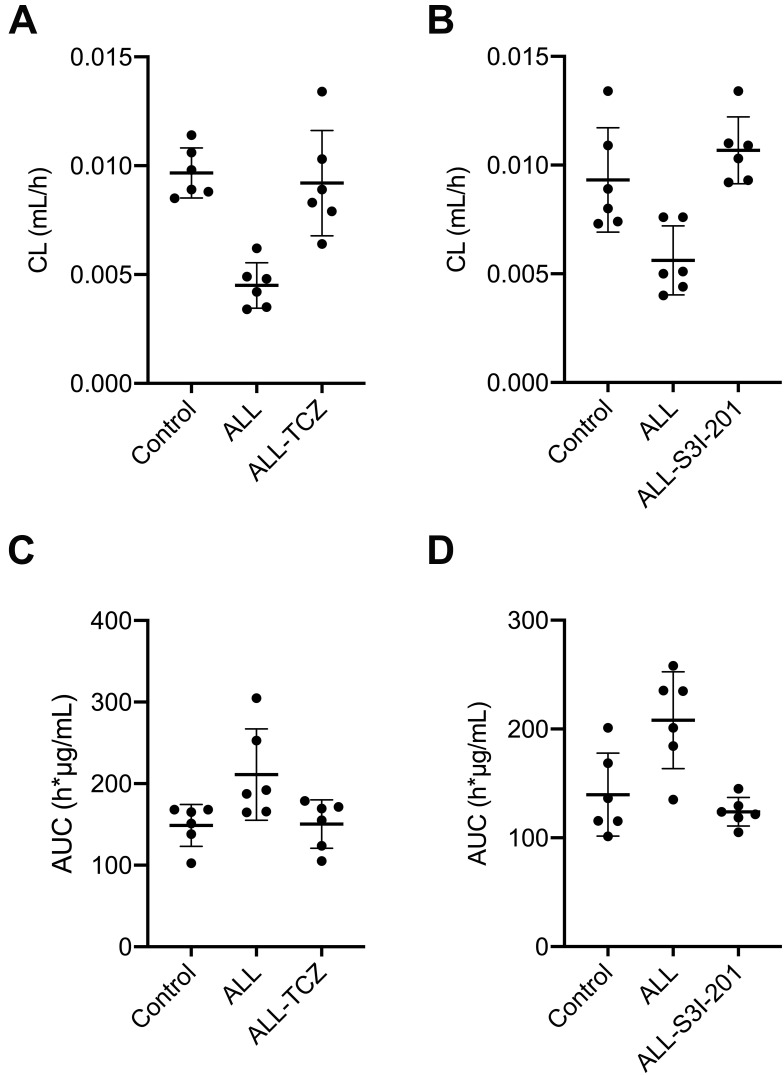
Plasma IL-6 levels in patients with newly diagnosed ALL were increased compared to children with pneumonia. Similarly, plasma IL-6 levels in ALL, ALL-tocilizumab (TCZ, an IL-6 receptor inhibitor) and ALL-S3I-201 (a selective inhibitor of STAT3) mice were increased compared to the control group. The MRP2, MRP4, and PXR expression in HK-2 cells treated with IL-6 were decreased, whereas the p-STAT3 expression was significantly increased compared to the control group results. These results are consistent with clearance of MRPs-mediated MTX in the ALL group. These effects were attenuated by blocking IL-6/STAT3/PXR signaling pathway.
Inflammation-mediated changes in pharmacokinetics are thought to be executed through pathways IL-6-activated pathways, which can facilitate a better understanding of the potential for the use of IL-6 to predict the severity of adverse outcomes and the major implications on potential ALL treatments.
鉴于先前对急性淋巴细胞白血病(ALL)小鼠肾多药耐药相关蛋白(MRP)2和4转运体减少的研究,我们试图确定ALL中IL-6/STAT3/PXR介导的MRP2和MRP4表达变化的潜在机制。
建立ALL异种移植模型,并在NOD/SCID小鼠中静脉注射MRPs底物甲氨蝶呤(MTX)。通过蛋白质印迹和免疫细胞化学检测MRPs的蛋白表达及相关机制。使用高效液相色谱-串联质谱(HPLC-MS/MS)测定MTX的血浆浓度。
与肺炎患儿相比,新诊断ALL患者的血浆IL-6水平升高。同样,与对照组相比,ALL、ALL-托珠单抗(TCZ,一种IL-6受体抑制剂)和ALL-S3I-201(一种STAT3选择性抑制剂)小鼠的血浆IL-6水平升高。与对照组结果相比,用IL-6处理的HK-2细胞中MRP2、MRP4和PXR表达降低,而p-STAT3表达显著增加。这些结果与ALL组中MRPs介导的MTX清除一致。通过阻断IL-6/STAT3/PXR信号通路,这些作用减弱。
炎症介导的药代动力学变化被认为是通过IL-6激活的途径执行的,这有助于更好地理解使用IL-6预测不良结局严重程度的潜力以及对ALL潜在治疗的主要影响。