Lab of Immune Regulation, Research Institute of Pharmaceutical Sciences, College of Pharmacy, Seoul National University, Seoul, South Korea
Division of Life Sciences, College of Life Science and Bioengineering, Incheon National University, Incheon, South Korea.
J Immunother Cancer. 2021 Jun;9(6). doi: 10.1136/jitc-2021-002603.
Multiple types of immune cells producing IL-17 are found in the tumor microenvironment. However, their roles in tumor progression and exhaustion of CD8 tumor-infiltrating lymphocytes (TILs) remain unclear.
To determine the role of type 17 immunity in tumor, we investigated the growth of B16F10 melanoma and the exhaustion of CD8 TILs in mice, mice, RORγt inhibitor-treated mice, or their respective control mice. Adoptive transfer of tumor-specific IL-17-producing T cells was performed in B16F10-bearing congenic mice. Anti-CD4 or anti-Ly6G antibodies were used to deplete CD4 T cells or CD11bGr-1 myeloid cells , respectively. Correlation between type 17 immunity and T cell exhaustion in human cancer was evaluated by interrogating TCGA dataset.
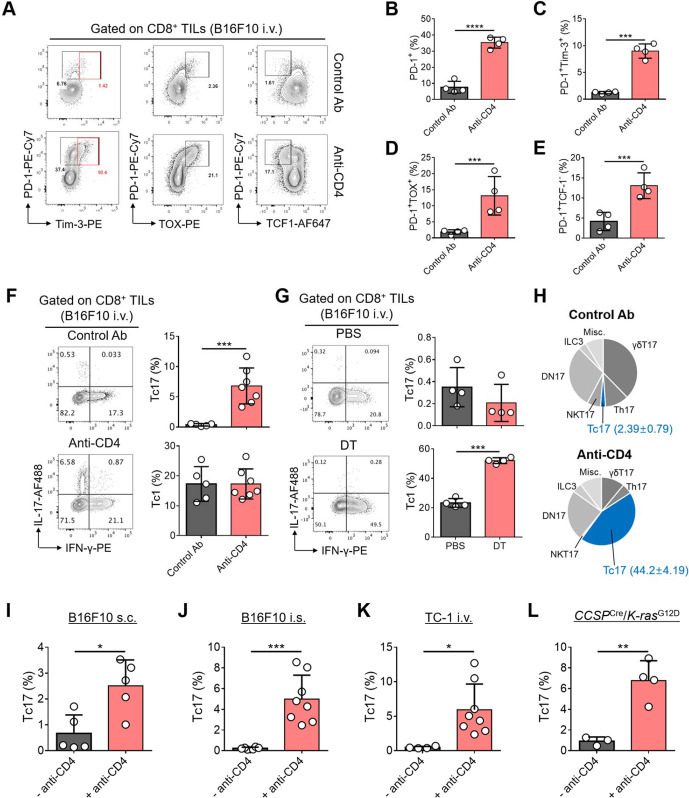
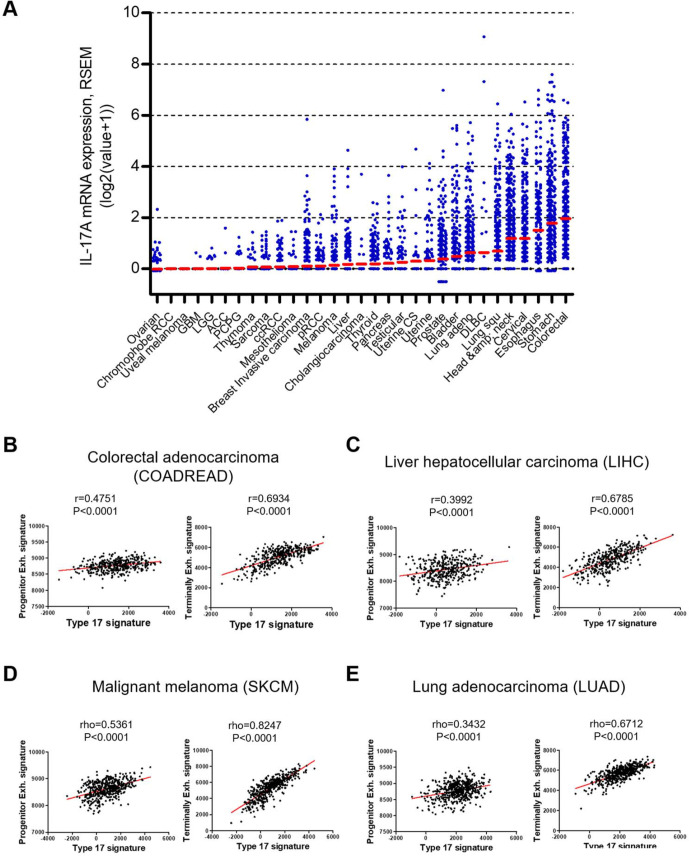
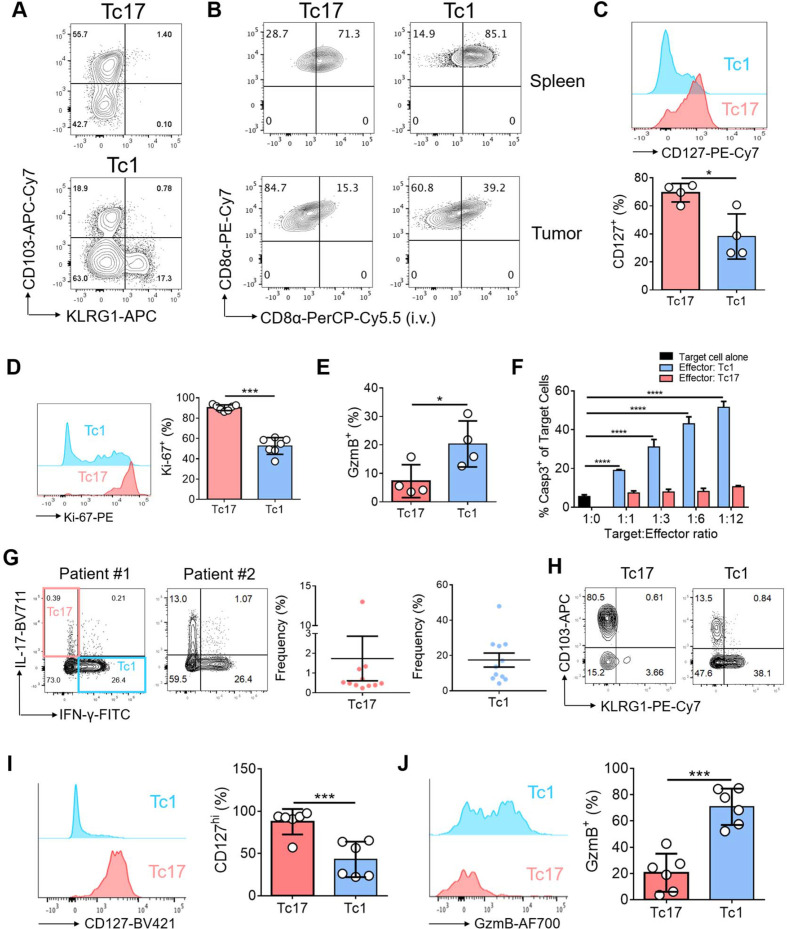
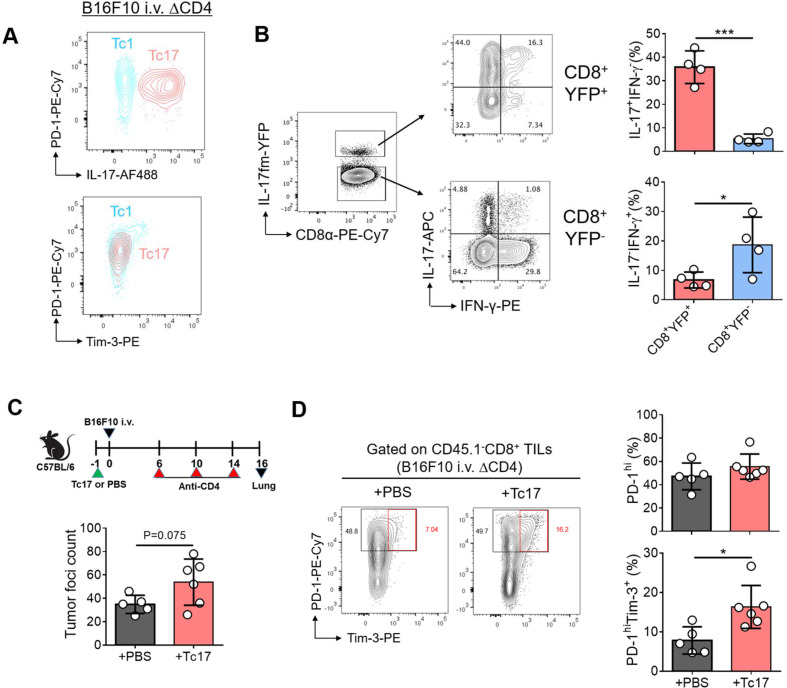
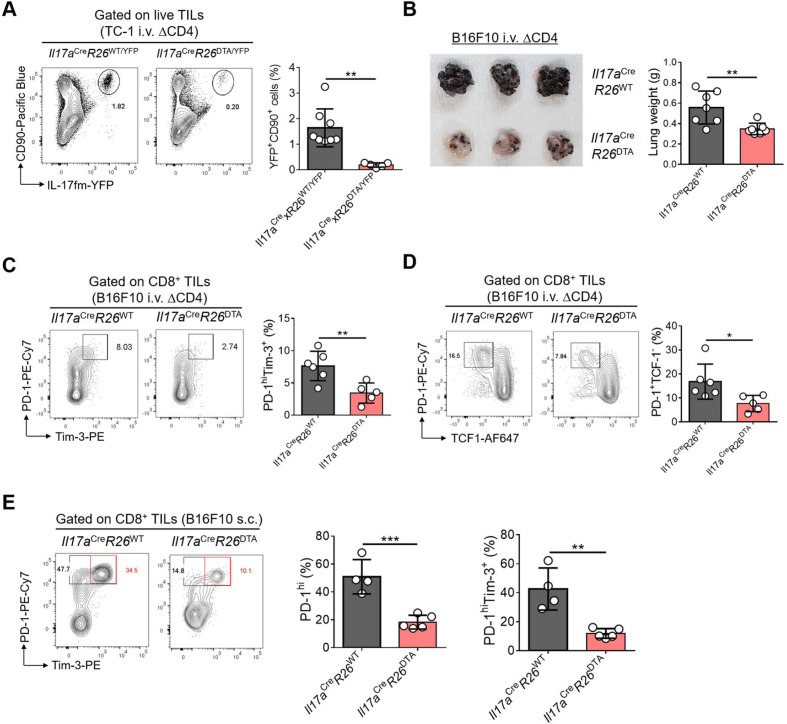
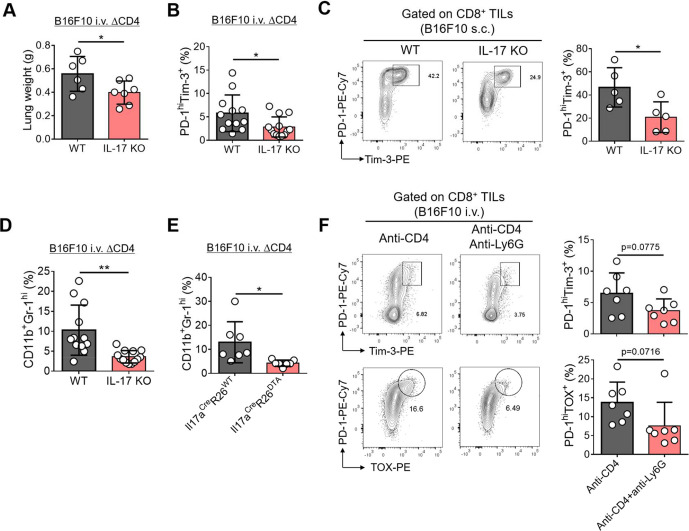
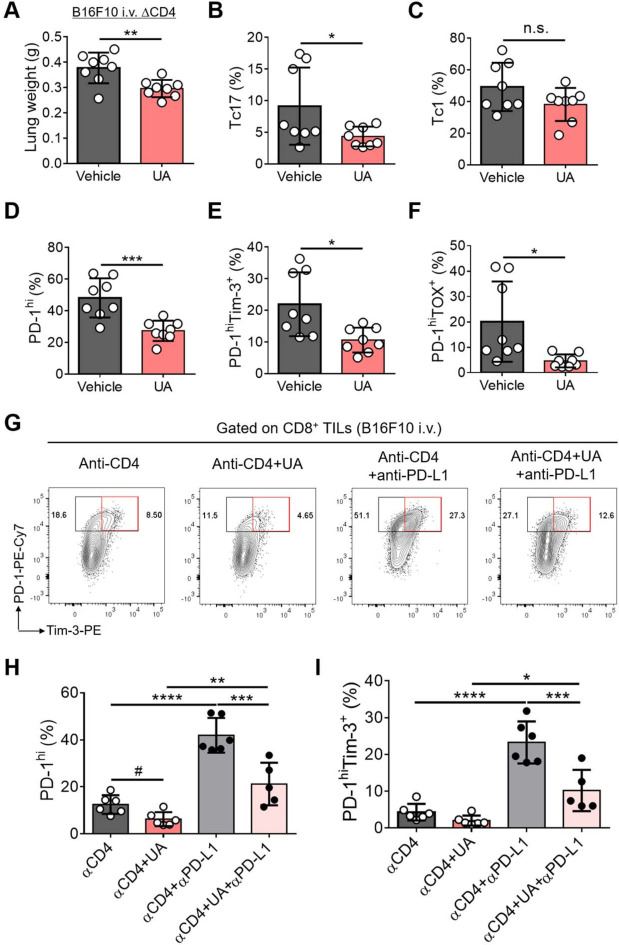
Depletion of CD4 T cells promotes the exhaustion of CD8 T cells with a concomitant increase in IL-17-producing CD8 T (Tc17) cells in the tumor. Unlike IFN-γ-producing CD8 T (Tc1) cells, tumor-infiltrating Tc17 cells exhibit CD103KLRG1IL-7Rα tissue resident memory-like phenotypes and are poorly cytolytic. Adoptive transfer of IL-17-producing tumor-specific T cells increases, while depletion of IL-17-producing cells decreases, the frequency of PD-1Tim3TOX terminally exhausted CD8 T cells in the tumor. Blockade of IL-17 or RORγt pathway inhibits exhaustion of CD8 T cells and also delays tumor growth . Consistent with these results, human TCGA analyses reveal a strong positive correlation between type 17 and CD8 T cell exhaustion signature gene sets in multiple cancers.
IL-17-producing cells promote terminal exhaustion of CD8 T cells and tumor progression , which can be reversed by blockade of IL-17 or RORγt pathway. These findings unveil a novel role for IL-17-producing cells as tumor-promoting cells facilitating CD8 T cell exhaustion, and propose type 17 immunity as a promising target for cancer immunotherapy.
在肿瘤微环境中发现了多种产生 IL-17 的免疫细胞。然而,它们在肿瘤进展和耗尽 CD8 肿瘤浸润淋巴细胞 (TIL) 中的作用仍不清楚。
为了确定 17 型免疫在肿瘤中的作用,我们在 、 、RORγt 抑制剂处理的小鼠或各自的对照小鼠中研究了 B16F10 黑色素瘤的生长和 CD8 TIL 的耗竭。在携带 B16F10 的同基因小鼠中进行了肿瘤特异性产生 IL-17 的 T 细胞的过继转移。使用抗 CD4 或抗 Ly6G 抗体分别耗尽 CD4 T 细胞或 CD11bGr-1 髓样细胞。通过查询 TCGA 数据集评估 17 型免疫与人类癌症中 T 细胞耗竭之间的相关性。
耗尽 CD4 T 细胞会促进 CD8 T 细胞的耗竭,同时肿瘤中产生 IL-17 的 CD8 T(Tc17)细胞增加。与产生 IFN-γ 的 CD8 T(Tc1)细胞不同,浸润肿瘤的 Tc17 细胞表现出 CD103KLRG1IL-7Rα 组织驻留记忆样表型,且细胞毒性较差。过继转移产生 IL-17 的肿瘤特异性 T 细胞会增加,而耗尽产生 IL-17 的细胞会降低肿瘤中 PD-1Tim3TOX 终末耗尽的 CD8 T 细胞的频率。阻断 IL-17 或 RORγt 通路可抑制 CD8 T 细胞的耗竭,并延迟肿瘤生长。与这些结果一致,人类 TCGA 分析显示在多种癌症中,17 型和 CD8 T 细胞耗竭特征基因集之间存在强烈的正相关。
产生 IL-17 的细胞促进 CD8 T 细胞的终末耗竭和肿瘤进展,阻断 IL-17 或 RORγt 通路可逆转这种情况。这些发现揭示了产生 IL-17 的细胞作为促进肿瘤的细胞促进 CD8 T 细胞耗竭的新作用,并提出 17 型免疫作为癌症免疫治疗的有前途的靶点。