Department of Leukemia, The University of Texas MD Anderson Cancer Center, Houston, TX, USA.
Blood Cancer J. 2021 Jun 3;11(6):107. doi: 10.1038/s41408-021-00497-1.
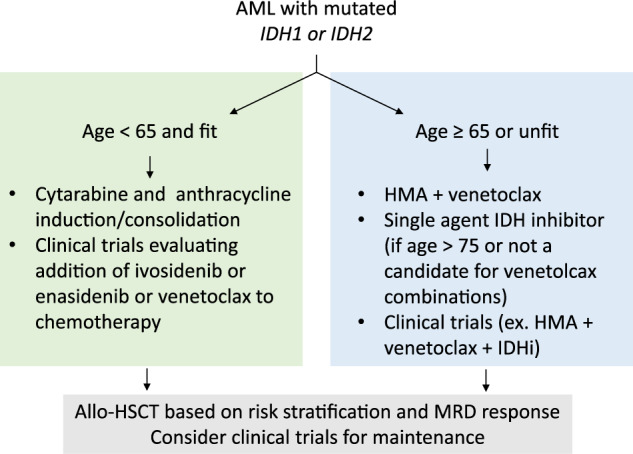
Acute myeloid leukemia is a genetically heterogeneous hematologic malignancy; approximately 20% of AML harbors a mutation in the isocitrate dehydrogenase (IDH) genes, IDH1 or IDH2. These recurrent mutations in key metabolic enzymes lead to the production of the oncometabolite 2-hydroxyglutarate, which promotes leukemogenesis through a block in normal myeloid differentiation. Since this discovery, selective oral inhibitors of mutant IDH1 and IDH2 have subsequently been developed and are now approved as single agent therapy, based on clinical efficacy observed within the original first-in-human trials. The investigation of IDH inhibitors in combination with standard therapies such as azacytidine, with intensive chemotherapy, and with other small molecule targeted therapies in rational combinations are currently under evaluation to further improve upon clinical efficacy.
急性髓系白血病是一种遗传异质性血液恶性肿瘤;约 20%的 AML 存在异柠檬酸脱氢酶(IDH)基因、IDH1 或 IDH2 的突变。这些关键代谢酶的反复突变导致致癌代谢物 2-羟戊二酸的产生,通过阻断正常髓样分化促进白血病发生。自这一发现以来,随后开发了突变型 IDH1 和 IDH2 的选择性口服抑制剂,目前基于原始首次人体试验中观察到的临床疗效被批准为单一药物治疗。目前正在评估 IDH 抑制剂与标准疗法(如阿扎胞苷)、强化化疗以及其他小分子靶向疗法的联合治疗,以合理组合的方式进一步提高临床疗效。