Haun Andrew M
Center for Sleep and Consciousness, Department of Psychiatry, University of Wisconsin-Madison, WI, USA.
Neurosci Conscious. 2021 Jun 1;2021(1):niab006. doi: 10.1093/nc/niab006. eCollection 2021.
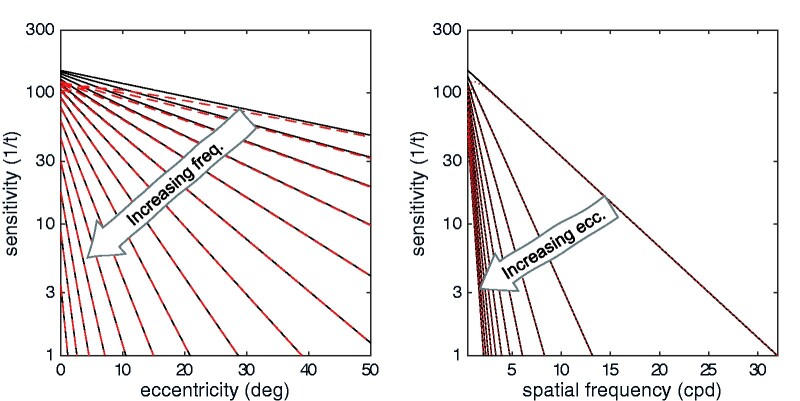
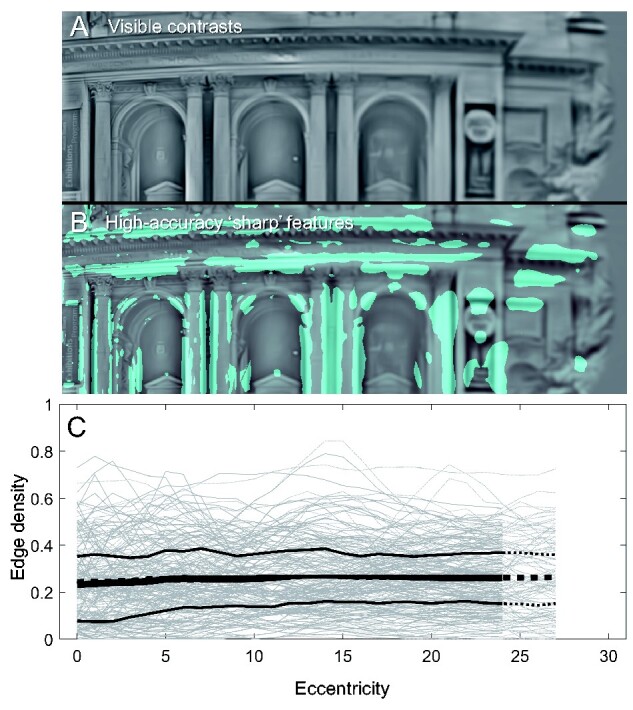
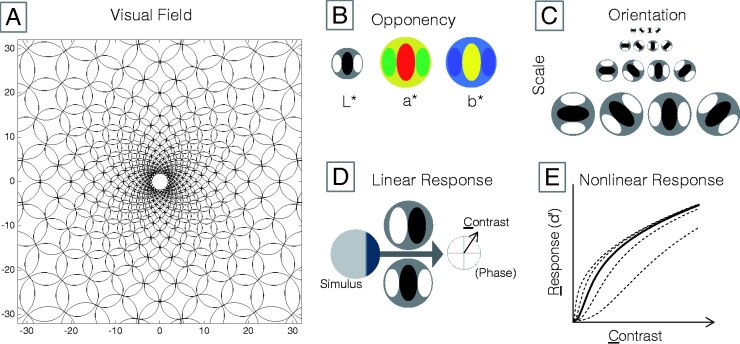
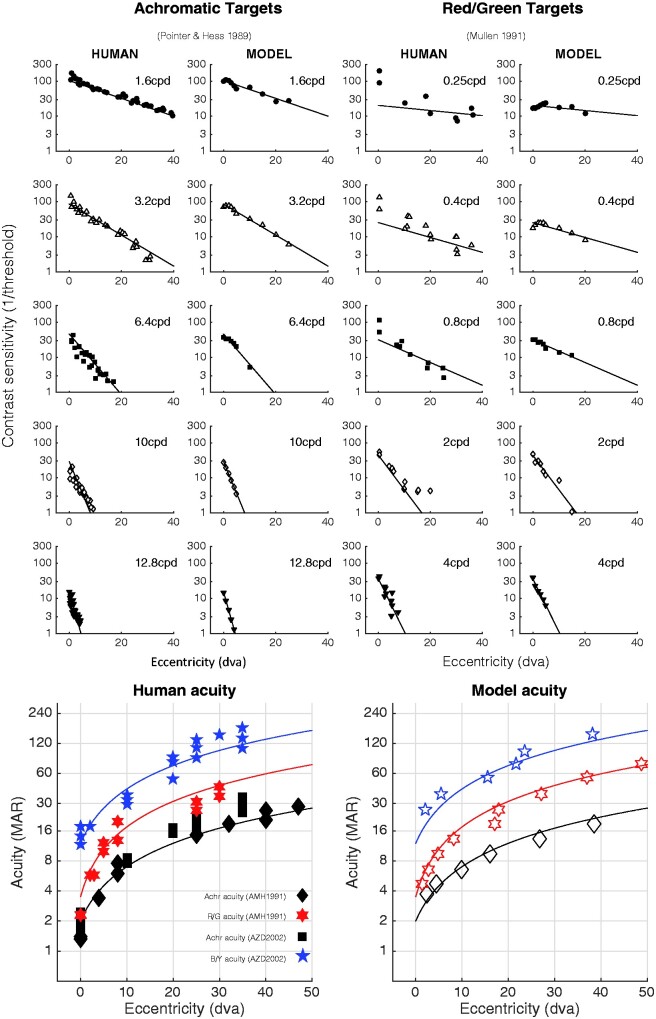
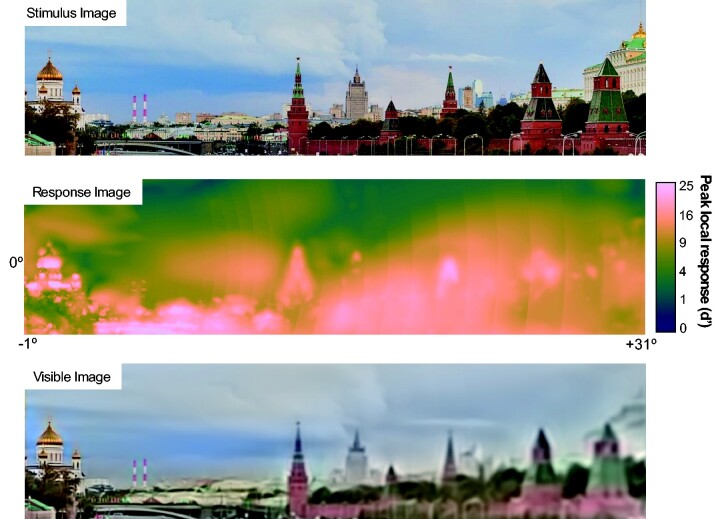
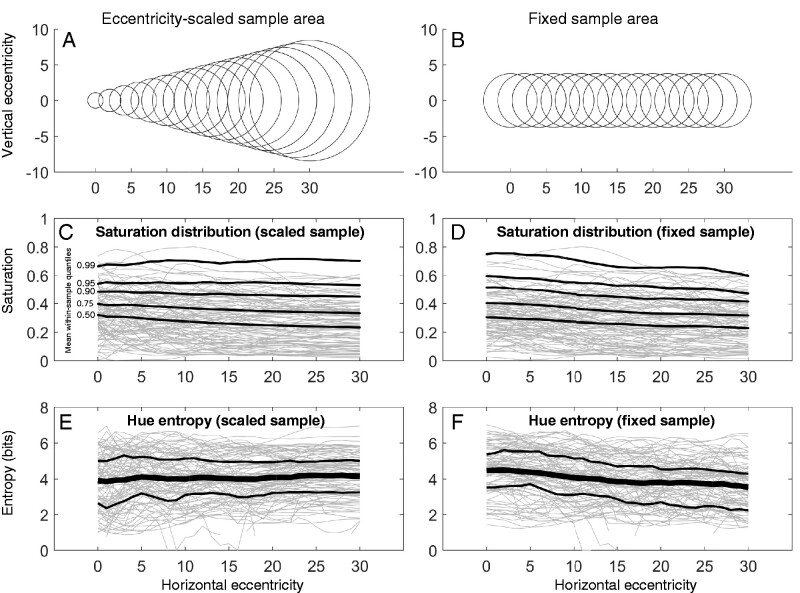
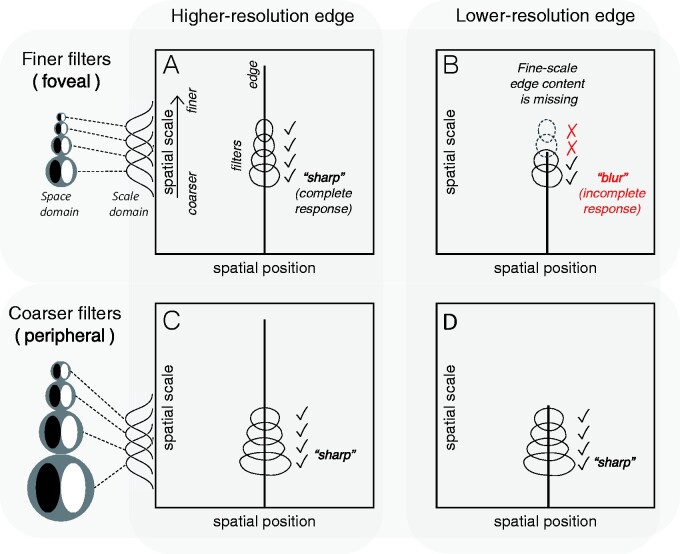
It is sometimes claimed that because the resolution and sensitivity of visual perception are better in the fovea than in the periphery, peripheral vision cannot support the same kinds of colour and sharpness percepts as foveal vision. The fact that a scene nevertheless seems colourful and sharp throughout the visual field then poses a puzzle. In this study, I use a detailed model of human spatial vision to estimate the visibility of certain properties of natural scenes, including aspects of colourfulness, sharpness, and blurriness, across the visual field. The model is constructed to reproduce basic aspects of human contrast and colour sensitivity over a range of retinal eccentricities. I apply the model to colourful, complex natural scene images, and estimate the degree to which colour and edge information are present in the model's representation of the scenes. I find that, aside from the intrinsic drift in the spatial scale of the representation, there are not large qualitative differences between foveal and peripheral representations of 'colourfulness' and 'sharpness'.
有时人们认为,由于中央凹的视觉分辨率和敏感度优于周边区域,所以周边视觉无法支持与中央凹视觉相同类型的颜色和清晰度感知。然而,整个视野中的场景看起来仍然色彩丰富且清晰,这一事实就构成了一个谜题。在本研究中,我使用一个详细的人类空间视觉模型来估计自然场景某些属性的可见性,包括整个视野中的色彩丰富度、清晰度和模糊度等方面。该模型的构建旨在重现一系列视网膜偏心度下人类对比度和颜色敏感度的基本方面。我将该模型应用于色彩丰富、复杂的自然场景图像,并估计颜色和边缘信息在模型对场景的表示中呈现的程度。我发现,除了表示的空间尺度存在内在漂移外,“色彩丰富度”和“清晰度”在中央凹和周边表示之间并没有很大的质的差异。